









Understanding how much you should be paid can be confusing. Whether you are starting your first job, moving to the United Kingdom for work, or running a small business, getting the numbers right is crucial. The laws around pay are strict, and they change almost every year. If you have been searching online for “whats the minimum wage uk,” you have come to the right place. This guide will walk you through everything you need to know about the National Minimum Wage and the National Living Wage.
We will cover the current rates, how they differ by age, and what to do if you aren’t getting paid enough. We will also look at how apprenticeships work and what changes are on the horizon. By the end of this article, you will have a clear picture of your rights and responsibilities.
Key Takeaways
- Two Main Types: There is the National Living Wage (for those 21 and over) and the National Minimum Wage (for those under 21).
- Annual Changes: Rates usually change every April, so it is vital to stay updated.
- Apprentice Rules: Apprentices have their own specific rate depending on their age and year of apprenticeship.
- Legal Rights: Employers must pay these rates by law; failing to do so can lead to big fines.
Understanding the Basics of UK Pay
Before diving into the exact numbers, it is helpful to understand the system itself. The UK government sets a baseline for pay to ensure that workers are treated fairly. This prevents employers from paying extremely low wages that people cannot live on. When people ask, “whats the minimum wage uk,” they are usually referring to a set of rates that depend largely on how old you are.
It is not just one single number for everyone. The system is tiered. This means a 16-year-old school leaver will have a different minimum pay rate than a 25-year-old professional. The government reviews these rates every year based on recommendations from an independent body called the Low Pay Commission. They look at the economy, inflation, and business costs before suggesting new rates.
This system is designed to protect vulnerable workers. Without a legal minimum, some companies might try to pay as little as possible. This law ensures a basic standard of living. It is enforced by HM Revenue and Customs (HMRC), who have the power to investigate companies and ensure workers get what they are owed.
The Difference Between Minimum Wage and Living Wage
You will often hear two terms thrown around: the National Minimum Wage (NMW) and the National Living Wage (NLW). It is easy to mix them up. The National Living Wage is essentially the minimum wage for the oldest age bracket. As of recent changes, this applies to anyone aged 21 and over. It is the highest tier of the legal pay structure.
The National Minimum Wage refers to the rates for younger workers. This covers those who are under 21 years old and apprentices. The idea is that younger workers might have fewer skills or less experience, so their wage floor is slightly lower to encourage businesses to hire and train them. However, the gap between the two has been closing in recent years.
There is also a third term you might see: the “Real Living Wage.” This is a voluntary rate set by the Living Wage Foundation, not the government. It is calculated based on what people actually need to live on. While many employers choose to pay this higher rate, they are not legally required to. When asking “whats the minimum wage uk,” you are asking about the legal requirement, not the voluntary one.
Current National Living Wage Rates (Ages 21+)
If you are aged 21 or older, you are entitled to the National Living Wage. This is the standard rate that most adult workers in the UK will look at. The government has been pushing to increase this rate to help people cope with the rising cost of living. As of April 2024, the eligibility age dropped from 23 to 21, making more young adults eligible for the higher rate.
The current rate is £11.44 per hour. This was a significant jump from previous years. For a full-time worker doing 37.5 hours a week, this adds up to a decent annual salary compared to previous minimums. This rate applies regardless of the size of the company you work for. Whether it is a tiny local cafe or a massive supermarket chain, the rule remains the same.
Employers cannot make excuses to pay less than this if you are 21 or over. It doesn’t matter if you are on a temporary contract, a zero-hours contract, or a permanent deal. If you are working, this is your floor. We discuss these financial shifts often on platforms like Silicon Valley Time, where staying updated on economic trends is key.
Who Qualifies for the Living Wage?
To get the National Living Wage, you simply need to be 21 years old or older. You must also be what is classed as a “worker.” This covers most people in employment, including agency workers, casual labourers, and part-time staff. It also includes people working in agriculture, though they might have additional rules.
There are very few exceptions. Self-employed people running their own business generally do not qualify because they set their own rates. Volunteers are also exempt. However, if you have a contract that sets out your hours and duties, you are likely a worker entitled to this wage. It is not about your job title; it is about your employment status.
It is worth noting that this rate applies to foreign workers too. If you are legally working in the UK, you are entitled to the same minimum wage as a British citizen. Employers cannot pay you less just because you are from another country. This is a common misconception, but the law is very clear on equal treatment for pay rates.
National Minimum Wage for Ages 18 to 20
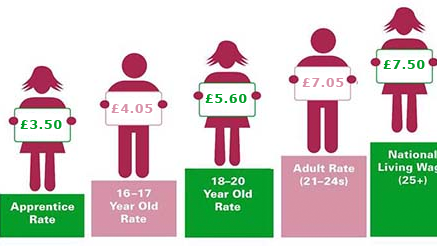
For young adults who haven’t yet reached the age of 21, the rates are different. If you fall into the 18 to 20 age bracket, your minimum hourly pay is currently £8.60. This rate recognizes that workers in this age group are often transitioning from education to full-time employment. They might be gaining their first significant work experience.
While this is lower than the living wage, it has also seen increases. The government aims to balance fair pay with the need to keep youth unemployment low. If the rate for 18-year-olds was too high, some argue that employers might be less willing to take a chance on someone with a limited CV.
It is important to track your birthday carefully. The moment you turn 21, your pay must go up to the National Living Wage rate. This change takes effect from the first full pay reference period after your birthday. You shouldn’t have to ask for it; your employer should update your payroll automatically.
Why is there an age gap in pay?
The logic behind the tiered system is about employability. Younger workers typically require more supervision and training. By allowing a lower wage for this group, the government hopes to encourage businesses to hire young people and invest in their skills. It acts as a stepping stone into the workforce.
However, many campaigners argue that if you do the same job as an older colleague, you should get the same pay. Because of this pressure, many progressive employers choose to ignore the age brackets. They pay everyone the full National Living Wage regardless of age. But legally, they can pay the lower rate if they choose to.
If you are 18, 19, or 20, you should still check your payslip regularly. Ensure you are getting at least £8.60. If your role involves tips or service charges, these cannot count towards your minimum wage. Your base hourly rate must meet the legal threshold on its own.
Rates for Under 18s and School Leavers
If you are under 18 but over the school leaving age, you are entitled to the 16-17 year old rate. The current rate for this group is £6.40 per hour. This applies until you turn 18. This is the starting point for many teenagers getting their first Saturday job or summer work.
Work rules for this age group are strict. There are limits on how many hours you can work and at what times of day. But when you are working, you must be paid at least this amount. It is a great way for young people to learn about money management and responsibility.
Even though £6.40 is the minimum, many employers pay more to attract reliable staff. In retail and hospitality, for example, it is common to find starting rates higher than this legal floor. But if you are wondering “whats the minimum wage uk” for a 16-year-old, this is the figure you need to know.
Special Rules for School Age Workers
Children who are not yet over the compulsory school leaving age have different protections. Strictly speaking, there is no National Minimum Wage for children under 16. However, there are strict local and national laws about how much they can work to ensure their education doesn’t suffer.
Once you reach the official school leaving age (usually the last Friday in June of the school year you turn 16), you move into the £6.40 bracket. Before that date, pay is a matter of agreement between the employer and the young worker (or their parents).
Despite the lack of a set minimum, ethical employers will usually pay a fair rate similar to the 16-17 bracket. If you are a parent of a teenager looking for work, it is worth discussing pay upfront. Make sure the employer is treating your child fairly, even if the strict minimum wage law doesn’t technically apply yet.
The Apprenticeship Wage Explained
Apprenticeships are a fantastic way to learn a trade while earning money. However, the pay structure is unique. If you are an apprentice, your minimum hourly rate is £6.40. This is the same as the 16-17 year old rate, but the rules on who it applies to are a bit more complex.
This £6.40 rate applies if you are:
- Aged under 19.
- Aged 19 or over but in the first year of your apprenticeship.
This is a crucial distinction. The government subsidizes apprentice wages heavily because the employer is providing education and training. The lower wage reflects the fact that you are spending a lot of time learning rather than just working.
What happens after the first year?
If you are an apprentice aged 19 or over and you have completed the first year of your apprenticeship, you are entitled to the minimum wage for your age group. This is a massive jump in pay for many people.
For example, if you are 22 years old and start an apprenticeship, you get £6.40 for the first year. The moment you start your second year, your pay must jump to the National Living Wage of £11.44. That is a significant increase. It stops employers from keeping skilled older apprentices on low wages indefinitely.
If you are under 19, you stay on the apprentice rate until you turn 19 or finish your first year, whichever happens later. It can be tricky to calculate, so always double-check your contract. Resources like Silicon Valley Time often highlight how career paths like apprenticeships are evolving in the modern economy.
2025 Pay Rate Summary Table
To make things easy to visualize, here is a table summarizing the current rates applicable for the 2024/2025 tax year.
|
Category |
Age Group |
Hourly Rate (£) |
|---|---|---|
|
National Living Wage |
21 and over |
£11.44 |
|
National Minimum Wage |
18 to 20 |
£8.60 |
|
National Minimum Wage |
Under 18 |
£6.40 |
|
Apprentice Rate |
Under 19 (or 1st year) |
£6.40 |
Note: These rates are usually reviewed every April. Always check for the latest government updates if you are reading this later in the year.
What Counts as Working Hours?
When you ask “whats the minimum wage uk,” you also need to know what counts as “work.” It is not just the time you spend sitting at your desk or standing behind a counter. The definition is quite broad to protect workers from being underpaid for their time.
Working hours generally include:
- Time spent training or traveling for work (not commuting).
- Time on call at the workplace.
- Standby time where you are required to be at a specific place.
If your employer asks you to come in 15 minutes early every day to set up, that time must be paid. If it isn’t, and your total pay divided by total hours drops below the minimum wage, your employer is breaking the law.
Deductions and Uniforms
Employers can make certain deductions from your pay, like tax and National Insurance. However, they cannot make deductions for items like uniforms or tools if those deductions take your pay below the minimum wage.
For example, if you earn exactly £11.44 an hour and your boss deducts £20 for a branded shirt, your hourly rate has technically dropped below the legal limit for that pay period. This is illegal. The employer must provide the uniform for free or pay you enough extra to cover the cost without dipping below the minimum.
Accommodation is the only benefit that can technically count towards the minimum wage, but there is a specific “accommodation offset” rate. It is complex, but basically, there is a limit on how much rent an employer can deduct from your pay packet.
Accommodation Offset Rates
Some jobs come with a place to live. This is common in hotel work, care homes, and agriculture. The “Accommodation Offset” is a specific value that can be counted towards your minimum wage pay. The current daily offset rate is £9.99 (or £69.93 per week).
This means if your employer provides you with free accommodation, they can technically pay you slightly less cash, because the value of the room is counted as part of your “pay.” Conversely, if they charge you rent, they cannot charge more than the offset limit if you are on minimum wage.
It prevents employers from charging exorbitant rent to low-paid workers, effectively taking back all their wages. If an employer charges more than the offset rate for rent, the extra amount is taken off the worker’s pay for minimum wage calculations. This often results in the employer underpaying the minimum wage illegally.
How to Check If You Are Being Underpaid
If you suspect your pay is too low, you need to do some math. Take your total gross pay (before tax) and divide it by the total number of hours you worked in that pay period. Does the result match the rate for your age group?
Keep your own record of hours. Sometimes electronic timekeeping systems make mistakes, or managers edit hours to save budget. Having a personal diary of your start and finish times is your best evidence.
There are online calculators provided by the UK government that can help you work this out. You just plug in your age, your pay frequency, and your hours. It will tell you instantly if you are being paid correctly.
Common Tricks to Watch Out For
Unscrupulous employers have a few tricks to avoid paying the full rate. One common tactic is “unpaid trial shifts.” While a short trial of an hour or two to test skills might be legal, working a full shift for free is generally not.
Another issue is rounding down hours. If you work 8 hours and 45 minutes, but they only pay you for 8.5 hours, that is wage theft. Over a year, those 15 minutes add up to hundreds of pounds.
Finally, watch out for “volunteer” status. If you are doing work that has a clear economic value and you have fixed hours, you might legally be a worker entitled to pay, even if they call you a volunteer or intern. Genuine volunteering is different and usually much more flexible.
What to Do If You Are Underpaid
Discovering you have been underpaid is stressful. The first step is usually to talk to your employer informally. It might be a genuine mistake in the payroll software. Show them your calculations and the official government rates.
If they refuse to correct it, you have rights. You can report them to HMRC. You do not have to give your name if you are scared of losing your job; you can make an anonymous complaint. HMRC takes these reports very seriously and will investigate.
You can also contact ACAS (Advisory, Conciliation and Arbitration Service). They provide free, independent advice on employment rights. They can help you draft letters or prepare for a tribunal if it goes that far. Remember, it is illegal for an employer to fire you for asking for the minimum wage.
Future Projections for UK Wages
The landscape of UK wages is always shifting. The government has a target to keep the National Living Wage at two-thirds of median earnings. This suggests that as average wages rise, the minimum wage will continue to climb.
We are likely to see further increases in April 2026. Experts predict the rate could cross the £12 mark soon, depending on inflation rates. The goal is to ensure work pays enough to afford a decent standard of living without relying heavily on state benefits.
There is also political pressure to remove the age bands entirely. Many unions campaign for a single “real living wage” for everyone over 18. While this hasn’t happened yet, the lowering of the adult rate age to 21 shows the direction of travel. Keeping an eye on business news sites like Silicon Valley Time is a good way to stay ahead of these policy shifts.
The Impact on Small Businesses
For small business owners, rising minimum wages are a challenge. It increases the cost of running a business significantly. However, it also means workers have more money to spend in the local economy.
Smart businesses are focusing on productivity. If you have to pay more, you need your staff to be more efficient. This often leads to better training and investment in technology.
Ultimately, a higher minimum wage aims to create a high-skill, high-wage economy. It forces businesses to move away from “cheap labour” models and towards adding more value.
Frequently Asked Questions (FAQ)
Here are some common questions people have when searching “whats the minimum wage uk.”
Q: Does the minimum wage include tips?
A: No. Tips, gratuities, and service charges are on top of your wages. Your employer must pay you the minimum wage before any tips are added.
Q: Can I agree to work for less than minimum wage?
A: No. Any contract that sets a pay rate below the legal minimum is void. You cannot sign away your rights to the minimum wage, even if you want the job badly.
Q: Do part-time workers get the same rate?
A: Yes. Part-time workers are entitled to the same hourly rates as full-time workers. There is no difference based on hours worked.
Q: What if I am paid a salary, not hourly?
A: You still have minimum wage rights. Your annual salary divided by your annual working hours must not fall below the minimum hourly rate. If you work unpaid overtime that drags your average hourly pay down, your employer must top up your salary.
Q: Does the minimum wage apply to interns?
A: It depends. If you are a “worker” (with set hours and duties), you should be paid. Students doing an internship as a required part of a higher education course are often exempt. Voluntary interns with no set hours are also exempt.
Conclusion
Knowing “whats the minimum wage uk” is about more than just a number; it is about knowing your value and your rights. The UK system provides a safety net that ensures work pays a fair amount. Whether you are earning £6.40 as a young apprentice or £11.44 as an experienced adult, these laws are there to protect you.
As we move through 2025, keep an eye on your payslips. Ensure your hours are tracked correctly and that you are moving up the pay brackets when your birthday arrives. If you are an employer, stay compliant to avoid fines and keep your workforce motivated.
Fair pay is the foundation of a healthy economy. By staying informed, you ensure that you—and the people around you—are getting the deal you deserve. Check back with reliable sources regularly, as these figures will continue to evolve with the economy.



