





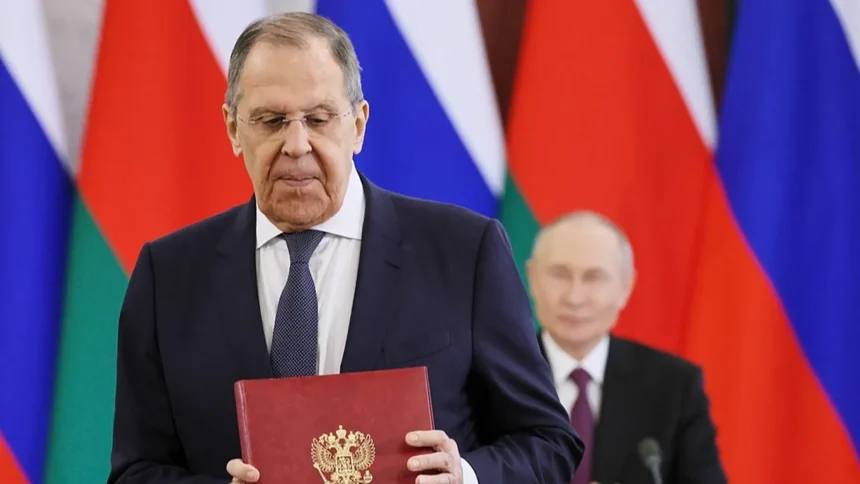

When people discuss modern international relations, certain names come up again and again. One of those names is lavrov. Specifically, Sergey Lavrov has been a massive figure in Russian politics for decades. Serving as the Minister of Foreign Affairs of Russia since 2004, he is one of the longest-serving foreign ministers in the world. His face and voice are recognizable to almost anyone who follows the news.
But who is he really? Beyond the press conferences and the high-stakes meetings, there is a long history of diplomatic work. This article will break down his life, his career path, and why he matters so much in today’s world. We will look at his early years, his time at the United Nations, and his current role. Whether you are a student of history or just curious about world leaders, this guide will help you understand the man behind the headlines.
Key Takeaways
- Decades of Service: Sergey Lavrov has been Russia’s Foreign Minister since 2004, making him a veteran in global diplomacy.
- UN Experience: Before leading the foreign ministry, he spent many years as Russia’s representative to the United Nations in New York.
- Diplomatic Style: He is known for his tough negotiation tactics, sharp wit, and strong defense of Russian interests.
- Multilingual: Lavrov speaks fluent English, French, and Sinhalese, showing his deep background in international study.
- Personal Life: Despite his serious job, he is known to enjoy rafting and writes poetry.
Who Is Sergey Lavrov?
Early Life and Education
Sergey Viktorovich Lavrov was born on March 21, 1950, in Moscow. Like many diplomats of his generation, his early life was shaped by the Soviet Union. His father was Armenian and his mother was Russian, working in the Soviet Ministry for Foreign Trade. This early exposure to the world of trade and international dealings likely planted a seed for his future career. From a young age, it was clear that he had a talent for languages and learning.
He attended the Moscow State Institute of International Relations (MGIMO), which is famous for training diplomats. It is a very prestigious school, and graduating from there is a big deal. In 1972, he graduated, ready to start his career. During his time at school, he studied not just politics but also languages. This education gave him the tools he would need to navigate the complex world of international relations later in life.
The Beginning of a Diplomatic Career
Right after graduation, lavrov was sent to Sri Lanka. This was his first real taste of diplomacy. He worked as an advisor at the Soviet Embassy in Colombo. This is where he put his language skills to the test, as he had learned Sinhalese, the language spoken in Sri Lanka. Spending four years there helped him understand how diplomacy works on the ground, far away from the halls of power in Moscow.
After his time in Sri Lanka, he returned to Moscow to work in the Department of International Organizations. This was a crucial stepping stone. It was here that he began to understand the inner workings of huge organizations like the United Nations. He wasn’t just a low-level worker; he was climbing the ladder quickly. His ability to handle complex paperwork and navigate the bureaucracy of the Soviet system made him stand out among his peers.
The United Nations Years
Rising Through the Ranks at the UN
In the 1980s, Sergey Lavrov was sent to New York City to work at the Soviet mission to the United Nations. This was a very tense time in history, often called the late Cold War period. Working at the UN meant dealing with American diplomats and representatives from all over the world every single day. He started as a senior advisor and eventually moved up the ranks.
Living in New York gave him a unique perspective. He saw how Western diplomacy worked up close. He became known for his ability to network and his sharp understanding of international law. Even as the Soviet Union began to collapse in the early 1990s, Lavrov remained a steady hand. He transitioned from representing the USSR to representing the Russian Federation without missing a beat.
Becoming the Permanent Representative
In 1994, lavrov was appointed as the Permanent Representative of Russia to the United Nations. This is a huge job. It meant he was the main voice for Russia on the global stage in New York. He held this position for ten years, until 2004. During this decade, he dealt with major world crises, from conflicts in the Balkans to situations in the Middle East.
He earned a reputation for being tough but charming. Journalists and other diplomats often noted that while he defended his country’s policies fiercely, he was also someone you could talk to. He was known for his love of smoking, often challenging UN rules about where he could light up. These years cemented his status as a heavyweight in the world of diplomacy.
Minister of Foreign Affairs
Taking the Top Job
In 2004, President Vladimir Putin appointed Sergey Lavrov as the Minister of Foreign Affairs. This was a return to Moscow for him, leaving behind the skyscrapers of New York. As Foreign Minister, he became the face of Russian foreign policy. He wasn’t just executing orders; he was helping to shape how Russia interacted with the rest of the world.
His tenure has seen Russia’s relationship with the West change dramatically. In the early years, there was more cooperation. However, over time, things became more complicated. Through it all, lavrov has been the constant figure at press conferences and summits. He has outlasted many American Secretaries of State and European Foreign Ministers, giving him an advantage of institutional memory.
Key Policies and Stances
Under his leadership, the foreign ministry has focused on re-establishing Russia as a great power. He often talks about a “multipolar world,” which means a world where power is shared among several countries, not just dominated by the United States. He has worked to build stronger ties with countries in Asia, Africa, and Latin America.
He is also a strong defender of the United Nations Charter, often arguing that international law should be respected above all else. However, critics often argue about how these laws are interpreted. Regardless of the controversy, his ability to articulate Russia’s position clearly and forcefully is undeniable. He is a master of the press conference, often using sarcasm and wit to deflect difficult questions.
Lavrov’s Diplomatic Style
Tough Negotiation Tactics
One thing everyone agrees on is that Sergey Lavrov is a tough negotiator. He does not give up easily. He is known for being extremely well-prepared. When he walks into a room, he knows the details of the issue better than almost anyone else. This allows him to control the conversation and steer it in the direction he wants.
He can be very stern when he needs to be. There are many stories of him getting into heated debates with other diplomats. Yet, he also knows when to use humor. A well-placed joke can sometimes break the tension in a room, and he is very good at doing that. This mix of toughness and charm makes him a formidable opponent at the negotiating table.
Relationship with Western Counterparts
Over the years, lavrov has worked with many different leaders from the West. His relationship with them has had ups and downs. With some, he developed a respectful working relationship, famously having friendly interactions with former U.S. Secretary of State John Kerry. They spent hours negotiating deals on Syria and other issues.
However, relationships have cooled significantly in recent years. As political tensions have risen, the meetings have become shorter and more formal. Despite this, he remains the primary channel for communication. Even when countries are not getting along, they still need to talk, and he is usually the one doing the talking for Russia.
Personal Life and Interests
Not Just a Politician
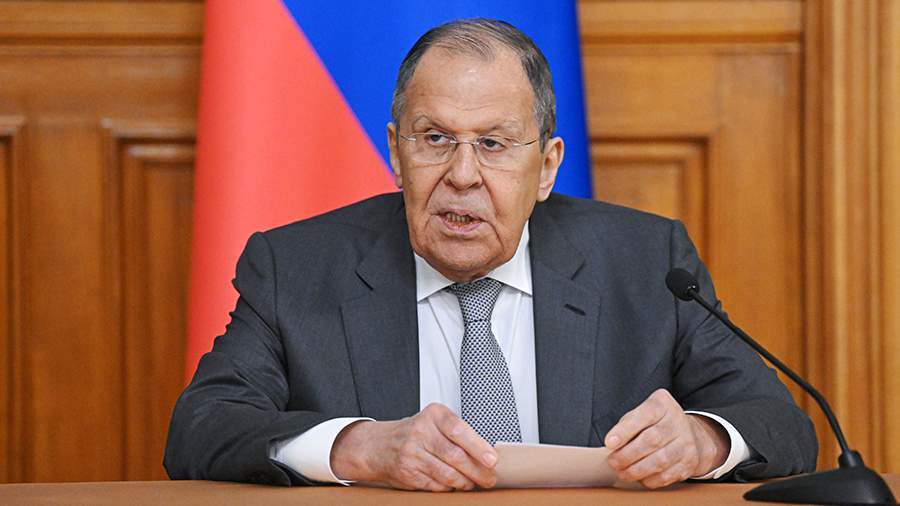
It is easy to think of diplomats as robots who only work, but Sergey Lavrov has a life outside of politics. He is married and has a daughter, Ekaterina. His family life has generally been kept private, which is common for high-ranking officials in Russia. However, we do know some interesting facts about his hobbies.
He is an avid sportsman. One of his favorite activities is whitewater rafting. Every year, he tries to take time off to go rafting with friends in the wild rivers of Russia. This adventurous side contrasts sharply with his suit-and-tie image. He also plays soccer and is a fan of the sport, supporting the club Spartak Moscow.
Poetry and Languages
Another surprising fact about lavrov is that he writes poetry. He has published poems in Russian magazines. This artistic side shows a different layer to his personality. It suggests a thoughtful and reflective nature that isn’t always visible in his political speeches.
We also cannot forget his linguistic skills. As mentioned earlier, he speaks English, French, and Sinhalese. His English is excellent, and he often speaks it in interviews without needing a translator. This direct communication helps him get his point across clearly to international audiences without the risk of translation errors.
The Role of the Foreign Ministry
How the Ministry Works
The Ministry of Foreign Affairs is a massive organization. It is not just one man. There are thousands of employees working in embassies and consulates all over the world. However, the tone is set at the top. lavrov manages this huge network, ensuring that everyone is on the same page.
The ministry handles everything from issuing visas to negotiating peace treaties. They help Russian citizens who are in trouble abroad and promote Russian culture. It is a complex machine with many moving parts. Keeping it running smoothly for over nearly two decades is a significant management achievement.
Major Challenges
Running the ministry comes with big challenges. The world is unpredictable. Wars break out, economies crash, and pandemics happen. The foreign ministry has to react to all of these events instantly. They have to gather information, analyze it, and advise the President on what to do.
In recent years, the workload has increased as global tensions have risen. Sanctions and diplomatic expulsions have made the job harder. Yet, the ministry under lavrov has adapted. They have shifted focus to new partners and found new ways to operate in a changing world.
Impact on Global Politics
A Long-Lasting Legacy
No matter what you think of his politics, Sergey Lavrov’s impact is undeniable. He has been involved in almost every major international agreement involving Russia for the last 20 years. His signature is on countless documents. Historians will be studying his tenure for a long time.
He represents a specific era of Russian history—the resurgence of the country on the world stage after the difficult years of the 1990s. His style of diplomacy, characterized by sovereignty and national interest, has defined this era. He has become a symbol of Russian resilience in the diplomatic arena.
The Future of Diplomacy
Looking ahead, the style of diplomacy practiced by lavrov will influence future generations of diplomats. Young students at MGIMO look up to him as the ultimate professional. His methods of negotiation and public speaking are studied carefully.
The world is changing, with new technologies and new players emerging. However, the fundamentals of diplomacy—talking, negotiating, and representing your country—remain the same. Sergey Lavrov serves as a bridge between the old school of Cold War diplomacy and the modern digital age.
Comparison of Lavrov’s Roles
|
Role |
Years Active |
Key Responsibilities |
|---|---|---|
|
Soviet Embassy Advisor (Sri Lanka) |
1972–1976 |
assisting with local relations, translation, cultural exchange |
|
UN Representative (New York) |
1994–2004 |
representing Russia at the UN Security Council, voting on resolutions |
|
Minister of Foreign Affairs |
2004–Present |
leading foreign policy, meeting world leaders, managing the ministry |
Controversies and Criticisms
Handling of International Conflicts
It is impossible to be a Foreign Minister for so long without facing criticism. Western nations have often criticized lavrov for his defense of Russia’s actions in places like Ukraine and Syria. They argue that his diplomatic skills are used to cover for aggressive policies.
He is often accused of spreading disinformation or “spinning” the truth to suit his government’s narrative. In press conferences, he is often asked tough questions about human rights and democracy. His answers usually focus on the idea that Western countries are hypocritical and that Russia has the right to manage its own affairs.
The “Dr. No” Reputation
Much like his Soviet predecessor Andrei Gromyko, who was known as “Mr. No,” Lavrov has sometimes earned a reputation for obstructionism at the UN Security Council. Russia has used its veto power many times to block resolutions supported by Western countries.
Supporters say this is necessary to prevent Western dominance and protect Russia’s allies. Critics say it paralyzes the international community and prevents solutions to urgent problems. This dynamic has been a central feature of his time in office.
Why Lavrov Matters Today
The Voice of Russia
In today’s news cycle, when you hear a statement from Russia regarding foreign policy, it usually comes from lavrov. He is the primary explainer of what Russia wants and why it is doing what it is doing. Understanding his words is key to understanding the geopolitical landscape.
For businesses and travelers, keeping an eye on his statements can be important. Diplomatic rows can lead to visa restrictions or trade barriers. His announcements often signal shifts in policy that can have real-world effects on the economy and travel.
Staying Power
One of the most remarkable things about him is simply his survival. In the turbulent world of Russian politics, staying in such a high-profile job for two decades is rare. It suggests he has the total trust of President Putin and is viewed as indispensable to the state.
This stability provides consistency for Russia’s partners. Even if they don’t like the message, they know the messenger. They know that when they speak to him, they are speaking to someone with authority and experience.
Frequently Asked Questions (FAQ)
Q: How many languages does Sergey Lavrov speak?
A: He is fluent in Russian, English, French, and Sinhalese.
Q: How long has he been Foreign Minister?
A: He has served as the Minister of Foreign Affairs since 2004.
Q: Does Sergey Lavrov have any hobbies?
A: Yes, he enjoys whitewater rafting, playing soccer, and writing poetry.
Q: Where did he go to college?
A: He graduated from the Moscow State Institute of International Relations (MGIMO).
Q: Is he married?
A: Yes, he is married and has one daughter.
Conclusion
Sergey Lavrov is a complex figure who has played a massive role in shaping the modern world. From his early days in Sri Lanka to the high-pressure environment of the United Nations, and finally to the top job in Moscow, his career has been defined by service to his country. He is a skilled linguist, a tough negotiator, and a survivor in the political arena.
While his policies and statements often draw criticism from the West, his influence is undeniable. He remains the face of Russian diplomacy, a position he has held for a generation. Understanding lavrov helps us understand the broader context of international relations today. For more insights on global news and tech trends, you can always visit https://siliconvalleytime.co.uk/.
As we look to the future, his legacy will likely be debated by historians for years to come. Whether viewed as a brilliant strategist or a controversial defender of tough policies, Sergey Lavrov is a name that will remain in the history books. You can find more biographical details about him on this Wikipedia page.



