







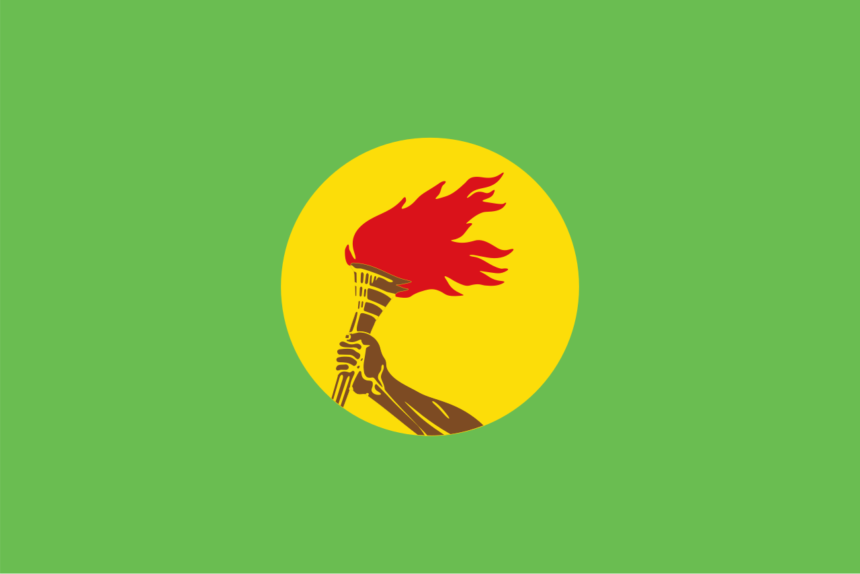

Welcome to an exploration of a nation that, for a time, held a unique place on the world map.# Zaire a Country: A Journey Through History and Culture
Welcome to an exploration of a nation that, for a time, held a unique place on the world map. When people talk about Zaire a country, they are referring to a specific period in the history of a vast Central African nation. This nation, known today as the Democratic Republic of the Congo (DRC), was called the Republic of Zaire from 1971 to 1997. Understanding Zaire means diving into a fascinating story of independence, political change, and cultural identity. It’s a tale of a nation forging its own path after a long period of colonial rule.
This article will guide you through the story of Zaire a country of immense natural wealth and cultural diversity. We will explore its origins, the powerful leader who shaped its destiny for decades, its unique cultural policies, its eventual transformation, and its lasting legacy. Prepare to learn about the geography, the people, and the significant events that defined this era in African history. It’s a journey back in time to understand a name that represents a pivotal chapter in the life of the Congo.
Key Takeaways
- Zaire a country was the name for the Democratic Republic of the Congo (DRC) from October 27, 1971, to May 17, 1997.
- The country was led by President Mobutu Sese Seko, a dominant figure who ruled for over three decades.
- The name change was part of a broader cultural policy called Authenticité, aimed at removing colonial influences and promoting a unique African identity.
- Zaire faced significant economic challenges, despite being rich in natural resources like copper, cobalt, and diamonds.
- The period ended with the First Congo War, which led to Mobutu’s overthrow and the country being renamed the DRC.
The Birth of Zaire: From Belgian Congo to a New Identity
Before it was known as Zaire, the nation had a different and painful history. It was the Belgian Congo, a colony of Belgium from 1908 to 1960. The path to independence was turbulent. After gaining freedom on June 30, 1960, the newly formed Republic of the Congo was immediately plunged into chaos, including regional secessions and political assassinations. This period of instability is often called the Congo Crisis.
In the midst of this turmoil, a young army chief of staff named Joseph-Désiré Mobutu rose to prominence. In 1965, he seized power in a military coup, promising to restore order and stability. For the first few years, he consolidated his control over the vast country. Then, in 1971, he embarked on a radical project to reshape the nation’s identity. This project was called Authenticité, and its most visible change was renaming the country. The Congo River was renamed the Zaire River, and the nation itself became the Republic of Zaire. This made Zaire a country with a new name, a new flag, and a new national anthem, all designed to erase the colonial past.
Mobutu Sese Seko: The Man Who Defined Zaire
It is impossible to discuss Zaire a country without focusing on its leader, Mobutu Sese Seko. After taking power, he became one of Africa’s most iconic and longest-serving rulers. He presented himself as the “Father of the Nation,” a unifying figure who brought stability after years of civil strife. His image was everywhere—on television, on currency, and in public buildings.
The Rise to Absolute Power
Mobutu established a one-party state centered around his political party, the Popular Movement of the Revolution (MPR). All citizens of Zaire were automatically members of the MPR from birth. This system gave him complete control over the country’s political, economic, and social life. He centralized power, weakening regional authorities and ensuring all decisions came from him. This absolute control allowed him to rule for 32 years, a period marked by both grand ambitions and deep-seated problems that would eventually lead to the nation’s downfall.
Cult of Personality
Mobutu cultivated a powerful cult of personality. He adopted the name Mobutu Sese Seko Kuku Ngbendu Wa Za Banga, which translates to “The all-powerful warrior who, because of his endurance and inflexible will to win, goes from conquest to conquest, leaving fire in his wake.” He was often seen wearing his signature leopard-skin hat (a toque) and carrying a carved wooden stick, symbols of traditional African leadership and authority. The evening news on television always began with an image of him descending from the heavens, reinforcing his god-like status in the eyes of the public.
The Policy of Authenticité: Forging a Zairian Identity
The policy of Authenticité (Authenticity) was the ideological cornerstone of Mobutu’s Zaire. It was a state-led effort to decolonize the minds of the people and create a proud, unified national identity based on traditional African values. This policy had a profound impact on everyday life in the country.
One of the most significant changes was the mandatory adoption of African names. Citizens were forced to drop their European or Christian names in favor of “authentic” Zairian ones. Mobutu himself led by example, changing his name from Joseph-Désiré Mobutu. This was a direct rejection of the influence of Christian missionaries who had been a major force during the colonial era. For many, this was a powerful symbol of cultural reclamation and a source of national pride.
Dress Code and Cultural Expression
Authenticité also dictated how people dressed. Mobutu outlawed the Western suit and tie for men, promoting instead a tunic-style suit called the abacost. The name abacost was a French abbreviation for “à bas le costume,” which means “down with the suit.” Women were encouraged to wear traditional African dresses. These measures were designed to create a distinct visual identity for Zaire a country trying to stand apart from the West. This policy influenced not just clothing but also art and music, encouraging a vibrant cultural scene that blended traditional and modern forms.
The Geography and Economy of Zaire
Zaire was, and as the DRC remains, a country of immense size and geographical diversity. Located in the heart of Africa, it is the second-largest country on the continent. It is dominated by the Congo River basin, which is home to the world’s second-largest tropical rainforest. This rich environment supports incredible biodiversity but also presents challenges for transportation and infrastructure.
The nation’s true wealth, however, lies beneath the ground. Zaire a country was blessed with vast deposits of valuable natural resources.
|
Mineral Resource |
Primary Use |
Importance to Zaire’s Economy |
|---|---|---|
|
Copper |
Electrical wiring, plumbing |
A major export and source of revenue |
|
Cobalt |
Batteries, superalloys |
Zaire was a leading global producer |
|
Diamonds |
Jewelry, industrial tools |
Both formal and informal mining sectors |
|
Gold |
Jewelry, finance |
Attracted significant mining activity |
|
Coltan |
Electronics (capacitors) |
Became crucial later for mobile phones |
An Economy of Contradictions
Despite this incredible mineral wealth, the economy of Zaire was plagued by corruption and mismanagement. While the ruling elite, led by Mobutu and his inner circle, became fabulously wealthy, the majority of the population remained in poverty. State-owned mining companies were inefficiently run, and a significant portion of the revenue from resource extraction was siphoned off into foreign bank accounts. This system, sometimes called a “kleptocracy” (rule by thieves), crippled the nation’s development. Infrastructure like roads, schools, and hospitals crumbled from neglect, even as the country was a major player in global commodity markets.
Daily Life for the People of Zaire
For the average person, life in Zaire was a mix of national pride and daily struggle. In the early years of Mobutu’s rule, there was a sense of optimism. The country was stable, and the Authenticité movement gave many a feeling of purpose and identity. The vibrant music scene, with genres like Congolese rumba, became famous across Africa and the world, serving as a cultural export and a source of joy.
However, as the economy declined through the 1980s and 1990s, life became increasingly difficult. Hyperinflation made the currency, the Zaire, nearly worthless. Basic goods became scarce, and public services collapsed. People had to be resourceful to survive. Many relied on the informal economy, known as “Système D,” a term for the art of débrouillardise, or making do. This involved finding clever ways to get by outside the formal structures of the state. It highlighted the resilience and ingenuity of the Zairian people in the face of systemic failure.
“Rumble in the Jungle”: Zaire on the World Stage
One of the most famous events to ever take place in Zaire a country was the “Rumble in the Jungle.” This legendary 1974 heavyweight championship boxing match pitted the reigning champion, George Foreman, against the challenger, Muhammad Ali. Mobutu’s government spent millions of dollars to host the event in the capital, Kinshasa.
For Mobutu, this was a massive public relations victory. It put Zaire in the global spotlight and presented it as a modern, capable African nation. The fight was accompanied by a major music festival, Zaire 74, featuring top African and American artists like James Brown and B.B. King. For a moment, the world’s attention was fixed on Zaire, and the event became a symbol of Black pride and connection across the diaspora. Ali himself was hugely popular in Zaire, and his victory over the seemingly invincible Foreman became a legendary moment in sports history.
The Decline and Fall of Mobutu’s Regime
By the early 1990s, the foundations of Mobutu’s regime were cracking. The end of the Cold War was a major blow. During the Cold War, Western powers, particularly the United States and France, had supported Mobutu as a bulwark against Soviet influence in Africa. They often turned a blind eye to his corruption and human rights abuses. With the Soviet Union gone, that strategic importance vanished, and international pressure for democratic reforms began to mount.
Internally, discontent was growing. The failing economy, combined with decades of political repression, led to widespread opposition. A Sovereign National Conference was convened in 1991 to chart a path toward democracy, but Mobutu skillfully manipulated the process to cling to power. However, his authority was fatally weakened. The country was fragmenting, and his control outside the capital was slipping. For more on the changing political landscape of the era, one might look at broader tech and global trends, such as those covered on sites like https://siliconvalleytime.co.uk/, which illustrate how interconnected the world was becoming.
The First Congo War
The final blow came from a crisis in neighboring Rwanda. Following the 1994 Rwandan genocide, millions of Hutu refugees, including perpetrators of the genocide, fled into eastern Zaire. This destabilized the region and led to the formation of a rebel alliance led by Laurent-Désiré Kabila. Supported by Rwanda and Uganda, Kabila’s forces launched an offensive in late 1996.
The Zairian army, poorly paid and demoralized, collapsed almost immediately. Kabila’s rebellion swept across the country with surprising speed. On May 16, 1997, after months of fighting, Mobutu Sese Seko fled the country. The next day, Kabila’s forces entered Kinshasa and he declared himself president. One of his first acts was to rename the country. The name Zaire was abolished, and the nation became the Democratic Republic of the Congo once again, closing the chapter on the era of Zaire a country of unique identity.
The Legacy of Zaire
The legacy of Zaire is complex and multifaceted. On one hand, the period is associated with dictatorship, economic ruin, and systemic corruption that continues to affect the DRC today. The name “Zaire” itself is often seen as a symbol of Mobutu’s authoritarian rule and the squandering of the nation’s potential.
On the other hand, the Authenticité movement left a lasting mark on the nation’s cultural consciousness. It fostered a sense of pride in African heritage and identity that persists. The vibrant artistic and musical culture that flourished during that time remains a powerful part of the Congolese identity.
The era of Zaire a country serves as a crucial historical lesson about the challenges of post-colonial nation-building, the dangers of absolute power, and the enduring resilience of a people. Understanding this period is essential for anyone seeking to comprehend the modern-day Democratic Republic of the Congo, a nation still grappling with the shadows of its past as it strives to build a better future. For further detailed history, the public record available on platforms like Wikipedia provides extensive information on the historical entity once known as Zaire.
Frequently Asked Questions (FAQ)
Q1: Is Zaire still a country?
No, Zaire is not still a country. The nation was renamed the Democratic Republic of the Congo (DRC) on May 17, 1997, after President Mobutu Sese Seko was overthrown.
Q2: Why was the country named Zaire?
The country was named Zaire in 1971 as part of President Mobutu’s Authenticité policy. The name “Zaire” is a Portuguese corruption of the Kikongo word nzere or nzadi (“the river that swallows all rivers”), which was a local name for the Congo River. The name change was intended to remove colonial influences and promote a unique African identity.
Q3: Who was the leader of Zaire?
The primary leader of Zaire was Mobutu Sese Seko. He ruled as an authoritarian president from his coup in 1965 until he was overthrown in 1997, a total of 32 years. He was the defining figure of the Zairian era.
Q4: What was the “Rumble in the Jungle”?
The “Rumble in the Jungle” was a famous heavyweight boxing championship match held in Kinshasa, Zaire, in 1974. It featured Muhammad Ali defeating George Foreman to reclaim the heavyweight title. The event was a major international spectacle that brought global attention to Zaire.
Q5: What is the capital of the country formerly known as Zaire?
The capital city during the Zaire era was Kinshasa. It remains the capital of the modern-day Democratic Republic of the Congo. During the colonial period, it was named Léopoldville. The name was changed to Kinshasa in 1966 as part of the move away from colonial names.



