






Key Takeaways
- Cultural Significance: Day of the Dead art is not about fear; it is a joyful celebration of life and memory.
- Symbolism: Common symbols like skulls (calaveras) and skeletons (calacas) represent the cycle of life with humor and color.
- Materials: Traditional art uses fragile materials like paper and sugar to symbolize the fragility of life itself.
- Global Impact: This unique artistic style has influenced fashion, tattoos, and pop culture worldwide.
When people hear about holidays involving skeletons and graveyards, their minds usually jump straight to Halloween. But if you look a little closer at Mexican culture, you will find a celebration that is vibrant, colorful, and deeply meaningful. We are talking about Día de los Muertos, and specifically, the incredible day of the dead art that brings this holiday to life. This isn’t about spooky ghosts or scary monsters. Instead, it is a heartfelt tribute to loved ones who have passed away.
The artwork associated with this holiday is instantly recognizable. From intricate paper cutouts fluttering in the breeze to grinning skulls painted with bright flowers, the visuals are unforgettable. Understanding the art helps us understand the holiday itself. It teaches us that death is not the end, but a natural part of the human experience. In this guide, we will dive deep into the history, symbols, and modern expressions of this unique artistic tradition.
What is Day of the Dead Art?
At its core, day of the dead art is a collection of folk art traditions used to celebrate Día de los Muertos. This holiday, observed on November 1st and 2nd, blends ancient indigenous beliefs with Spanish Catholic traditions. The art serves a specific purpose: to honor the deceased and mock death itself. You won’t find gloomy colors here. The palette is exploding with hot pink, bright orange, vivid turquoise, and deep purple.
The art is created to decorate ofrendas (altars), gravesites, and public spaces. It acts as a welcoming beacon for spirits returning to the world of the living for a brief visit. While some of the imagery might seem grim to outsiders—after all, there are skeletons everywhere—the tone is actually humorous and festive. The skeletons are rarely lying in coffins; they are dancing, playing guitars, getting married, or riding bicycles. This artistic choice reminds us that our ancestors are still “alive” in our memories and that death is just another step in our journey.
Many people confuse this art style with general Mexican folk art, but specific elements set it apart. It is temporary by nature. Much of the traditional art, like sugar skulls and tissue paper banners, is not meant to last forever. This ephemeral quality is a poetic reminder that life is short and fragile.
The History of Calaveras and Calacas
To truly appreciate day of the dead art, you have to know the difference between a calavera and a calaca. These two Spanish words appear constantly when discussing this topic. A calavera is a skull, often made of sugar or clay. A calaca is a full skeleton figure. Both have deep roots in Mexican history, stretching back thousands of years to the Aztec empire.
The Aztecs had a different view of death than Europeans. They kept skulls as trophies and displayed them during rituals to symbolize death and rebirth. When the Spanish arrived, they tried to suppress these rituals, but the traditions were too strong. Instead, the indigenous customs blended with All Saints’ Day. Over centuries, the grim skulls of the Aztecs transformed into the whimsical, decorated skulls we see today.
Jose Guadalupe Posada: The Father of Modern Skeletons
We cannot discuss this art form without mentioning Jose Guadalupe Posada. He was a Mexican printmaker and lithographer in the late 19th and early 20th centuries. Posada is responsible for the popular image of the skeleton as a humorous, everyday figure. He drew skeletons wearing fancy European clothes to satirize the upper class. His most famous etching, La Calavera Catrina, depicts a female skeleton wearing only a hat with feathers.
Posada’s work cemented the satirical tone of day of the dead art. He showed that in death, everyone is equal. Rich or poor, we all end up as skeletons. His influence is still massive today. Whenever you see a skeleton dressed in a suit or a dress, participating in daily life, you are seeing Posada’s legacy.
The Symbolism of Sugar Skulls (Calaveras de Azúcar)
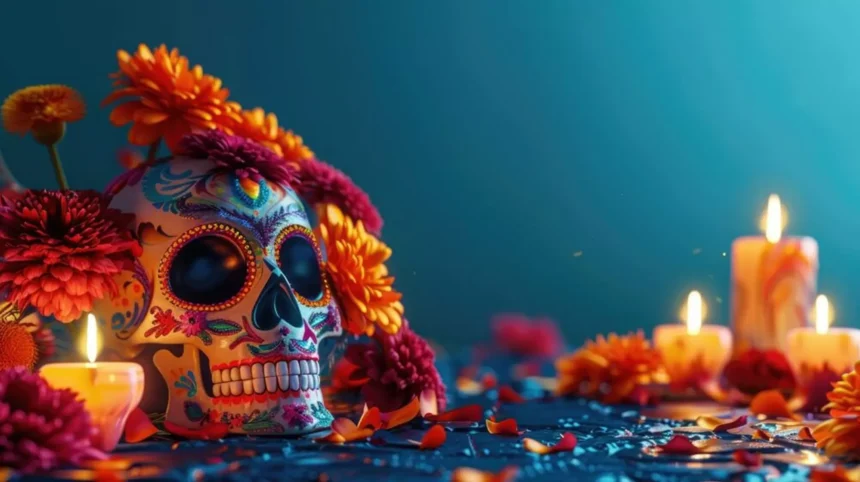
One of the most iconic examples of day of the dead art is the sugar skull. These small, skull-shaped treats are made from granulated white sugar mixed with meringue powder and water. They are pressed into molds and then decorated with brightly colored icing, foil, and sometimes sequins. While they are technically edible, they are mostly used for decoration on altars.
Why Sugar?
The use of sugar has a practical history. In colonial Mexico, sugar was abundant and cheap, while money for fancy imported decorations was scarce. People learned to make beautiful art out of what they had. The sweetness of the sugar is also symbolic. It balances the bitterness of death, reminding families to focus on the sweet memories of their departed loved ones.
Reading the Decorations
The designs on a sugar skull aren’t just random doodles. They have meanings:
- Flowers: Specifically marigolds, represent life.
- Cobwebs: Symbolize death and the passage of time.
- Burning Candles: represent the soul of the departed.
- Names: A name is often written on the forehead of the skull in icing. This personalizes the offering for a specific spirit.
Making sugar skulls is a family activity. It allows children to engage with the concept of death in a non-threatening, creative way. They learn that remembering ancestors is a joyful responsibility, not a sad burden.
Papel Picado: The Art of Perforated Paper
If you walk through a Mexican town during the holiday, you will see strings of colorful tissue paper fluttering above the streets. This is papel picado, another essential form of day of the dead art. The name literally translates to “perforated paper.” Artisans stack dozens of layers of tissue paper and use chisels and hammers to punch out intricate designs.
The Element of Wind
On the ofrenda (the altar), every element represents something. Water is for the thirsty spirits, candles represent fire, and food represents earth. Papel picado represents the element of wind. Because the paper is so light, it moves with the slightest breeze. When the banners sway, it is said that the spirits have arrived and are moving through the room.
The designs often feature skeletons, flowers, birds, and religious crosses. Like sugar skulls, papel picado is fragile. It tears easily and fades in the sun. It is not meant to be preserved in a museum; it is meant to be enjoyed in the moment. This reinforces the central theme of the holiday: enjoy life while it is here.
The Magnificent Ofrendas (Altars)
The altar is the centerpiece of the celebration, and building one is an act of creating day of the dead art. An ofrenda is essentially an art installation in the home. It is a tiered structure covered in a bright tablecloth and loaded with symbolic items. It requires an artistic eye to arrange the photos, food, candles, and flowers in a way that is beautiful and respectful.
Layers of Meaning
A traditional altar often has levels:
- Top Tier: Usually features a religious image or a cross.
- Middle Tier: Dedicated to the deceased, featuring their photos and favorite things.
- Bottom Tier: Often includes candles, washing basins, and incense to help the spirit refresh themselves upon arrival.
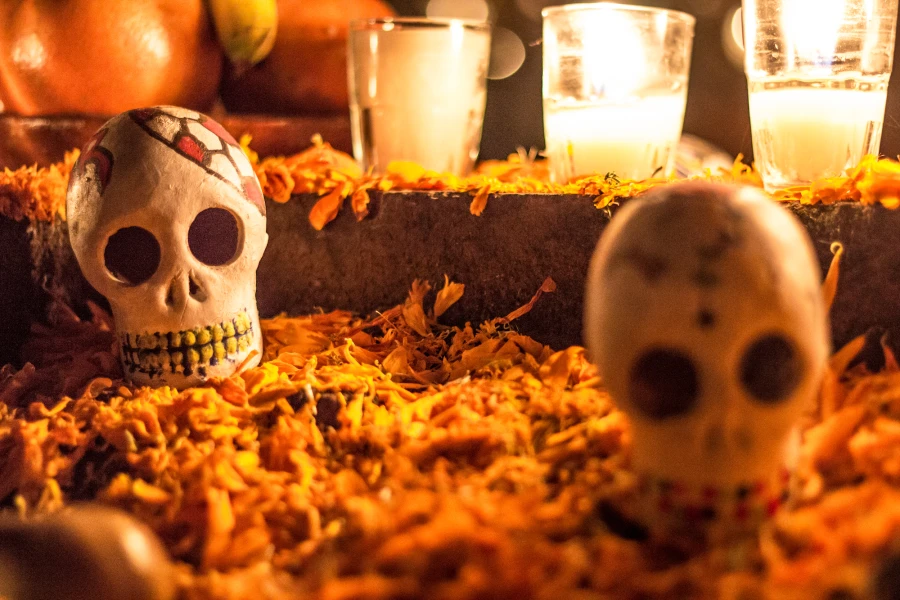
The artistic arrangement of marigolds (cempasúchil) is crucial. These bright orange flowers are often pulled apart to make petals paths. The vibrant color and strong scent guide the spirits to the altar. The entire setup is a labor of love and a stunning visual display of family history.
Alebrijes: Spirit Guides in Neon Colors
While not exclusively for the Day of the Dead, alebrijes have become closely linked to the holiday’s artistic imagery, especially after movies like Coco. These are brightly colored Mexican folk art sculptures of fantastical creatures. They might have the body of a lizard, the wings of a dragon, and the head of a dog.
Originating in Mexico City in the 1930s by artist Pedro Linares, alebrijes were born from a fever dream. Linares dreamt of a strange forest where these animals shouted “Alebrijes!” at him. When he woke up, he began creating these creatures out of cardboard and papier-mâché.
In the context of day of the dead art, these creatures are often interpreted as spirit guides. Their neon patterns and impossible shapes fit perfectly with the magical realism of the holiday. They add an element of fantasy and protection to the celebration.
Comparison of Art Forms
|
Art Form |
Material |
Purpose |
Symbolism |
|---|---|---|---|
|
Sugar Skulls |
Sugar, icing, foil |
Decoration for altars |
Sweetness of life vs. bitterness of death |
|
Papel Picado |
Tissue paper |
Decoration for streets/altars |
The element of wind; fragility of life |
|
Calacas |
Clay, wood, papier-mâché |
Humor, storytelling |
Life continues after death; joy |
|
Alebrijes |
Wood or papier-mâché |
Spiritual protection |
Spirit guides; dream worlds |
La Catrina: The Grand Dame of Death
We touched on Posada earlier, but La Calavera Catrina deserves her own section. She is arguably the most famous image of day of the dead art worldwide. Originally a political cartoon, she has evolved into the symbol of the holiday itself.
Today, you will see thousands of people painting their faces to look like La Catrina. This “living art” is a huge part of modern celebrations. The makeup involves whitening the face to look like a skull, circling the eyes in black or colors, and drawing “stitches” across the cheeks.
Artists create elaborate statues of Catrina made from clay, ceramic, or papier-mâché. She is always elegant, usually wearing a wide-brimmed hat and a fancy dress. She reminds us to embrace our mortality with style and grace. Whether you are a billionaire or a beggar, eventually, we all dance with Catrina.
Floral Art: The Role of Marigolds
In the world of day of the dead art, nature provides the paint. The Mexican marigold, or cempasúchil, is known as the “flower of the dead.” Its brilliant orange color is distinct and powerful. During the holiday, you don’t just put flowers in a vase; you create art with them.
Huge arches made of marigolds are constructed over altars to represent the gateway between the worlds. Petals are scattered on the ground in intricate patterns or simple paths to lead spirits home. The contrast of the bright orange flowers against the black of the night or the white of the sugar skulls is a key aesthetic of the holiday.
Why Orange?
The Aztecs believed the marigold collected the heat and light of the sun. By using them, people were essentially lighting a path for the dead using the sun’s energy. It is a beautiful example of how ancient beliefs are preserved through artistic choices.
Regional Variations in Art
Mexico is a large country, and day of the dead art changes depending on where you are. In some regions, the art is solemn and religious; in others, it is a loud street party.
- Oaxaca: Known for its sand tapestries (tapetes de arena). Artists create massive pictures on the ground using colored sand, sawdust, and seeds. These often depict religious scenes or skeletons.
- Michoacán: Famous for its intricate clay work and elaborate floral arches over gravesites. The indigenous Purépecha people here hold night-long vigils that are visually stunning.
- Mexico City: Hosts massive parades featuring giant puppet skeletons and floats. This is a newer tradition (inspired by a James Bond movie!) but has quickly become a major showcase for large-scale papier-mâché art.
Understanding these regions shows us that the art is living and evolving. It isn’t a static museum exhibit; it changes with the people who create it.
The Influence on Tattoos and Fashion
The aesthetic of day of the dead art has crossed borders and entered the world of pop culture. It is incredibly popular in the tattoo industry. “Sugar skull” tattoos are a staple in shops from Los Angeles to London. People are drawn to the design because it allows them to memorialize a loved one without having a gloomy or depressing image on their body.
In fashion, designers have used the bold colors and floral patterns in clothing lines. The imagery of the elegant skeleton fits well with gothic and alternative fashion styles. However, this popularity brings up questions of cultural appropriation. It is important for artists and consumers to understand the deep spiritual meaning behind the images, rather than treating them as just “cool Halloween decorations.”
DIY: Creating Your Own Art
One of the best ways to understand day of the dead art is to make it yourself. You don’t need expensive materials. The tradition is rooted in using humble materials to create something magical.
Making a Shoebox Altar (Diorama)
This is a popular project for students.
- Box: Take a shoebox and turn it on its side.
- Background: Paint the inside or paste colorful paper.
- Figures: Make small skeletons out of pipe cleaners or clay.
- Details: Add miniature food made of clay, tiny paper banners, and photos cut from magazines.
This “nichos” style art is very traditional. It creates a tiny, contained world where the spirits can be honored.
Drawing a Calavera
You can try drawing a skull and filling it with patterns.
- Start with the outline of a skull.
- Draw two large circles for eyes and an upside-down heart for the nose.
- Fill the eye sockets with flower petals.
- Use bright markers to add swirls, dots, and geometric shapes.
Remember, symmetry is key in this art style!
Modern Interpretations and Movies
In recent years, movies like The Book of Life and Pixar’s Coco have brought day of the dead art to a massive global audience. These films didn’t just tell stories; they were visual love letters to the art style.
The animators studied the way light hits the papel picado, the texture of the sugar skulls, and the glowing orange of the marigolds. They captured the “Land of the Dead” not as a scary gray place, but as a neon-colored metropolis. This has helped a new generation of children see skeletons as friendly characters rather than monsters.
These movies also highlighted the music that accompanies the art. You can’t separate the visual art from the auditory art of the mariachi bands and folk songs that play during the holiday. They go hand in hand.
Collecting Folk Art
For art collectors, authentic day of the dead art is highly prized. Collectors look for specific artisans who have passed down techniques for generations. Clay figures from Metepec or wood carvings from Oaxaca can be very valuable.
When looking for authentic art, look for:
- Handmade imperfections: Real folk art isn’t factory-perfect.
- Signatures: Many artists sign their work on the bottom.
- Material: Authentic alebrijes are made of Copal wood; authentic skulls are clay or sugar.
If you want to read more about trends in collecting and art valuation, you might find interesting insights on sites like https://siliconvalleytime.co.uk/, which often covers lifestyle and cultural trends.
FAQ: Common Questions About Day of the Dead Art
Q: Is Day of the Dead art the same as Halloween art?
A: No. Halloween art is usually designed to be scary, featuring gore, witches, and monsters. Day of the dead art is designed to be respectful, humorous, and colorful, celebrating the lives of ancestors.
Q: Can anyone make this kind of art?
A: Yes! While it is a Mexican tradition, the concept of honoring ancestors through art is universal. As long as it is done with respect and understanding of the culture, anyone can participate.
Q: Why are the skeletons always smiling?
A: The smiling skeletons represent the joy of the afterlife and the idea that death is not something to be feared. It mocks death, showing that the human spirit is stronger.
Q: What happens to the art after the holiday?
A: Sugar skulls are often thrown away or fed to animals (if they haven’t gone stale). Papel picado is taken down. However, clay and wood art pieces are kept and displayed year-round or packed away for next year.
Q: Do the colors mean specific things?
A: Yes. Purple signifies pain or mourning, pink signifies celebration, white signifies purity and hope, and orange signifies the sun and a guide for the spirits.
Conclusion
Day of the dead art is much more than just pretty decorations. It is a visual language that tells the story of life, death, and memory. It teaches us that while our bodies may be temporary, our love for family and our stories can last forever. Through sugar, paper, clay, and flowers, this tradition transforms grief into a celebration.
Whether you are admiring a towering ofrenda in a museum, watching a movie featuring colorful spirit guides, or simply drawing a skull in a sketchbook, you are engaging with a deep and beautiful history. The skeletons may be dancing, but the message is serious: Remember your loved ones, and live your life with color and joy.
For further reading on the cultural history and details of these traditions, you can visit https://www.wikipedia.org/ and search for Day of the Dead to learn even more about this fascinating topic.



