






Have you ever wondered what it takes to gain a millisecond advantage in the world of high-stakes finance? It might sound like a tiny amount of time, but in high-frequency trading, a millisecond can be the difference between making millions and losing a fortune. This is the thrilling real-world premise behind the hummingbird project, a story that digs into the ambition, obsession, and incredible lengths people will go to for a competitive edge. It’s a tale that blends technology, finance, and human drama, showing just how far innovation can be pushed when immense profits are on the line.
This article will explore the fascinating details behind the hummingbird project. We will dive into the core concept of the film, understand the technology that drives it, and meet the characters at the heart of this high-speed drama. We will also look at the real-world implications of high-frequency trading and the ethical questions this intense competition raises.
Key Takeaways
- The hummingbird project is a film based on the competitive world of high-frequency trading (HFT).
- The central plot involves building a straight fiber-optic cable from Kansas to New Jersey to reduce data travel time by a few milliseconds.
- The film highlights the extreme measures taken in the financial industry to gain a technological advantage.
- It explores themes of ambition, family dynamics, and the ethical gray areas of technological advancement for profit.
- The story is a fictionalized account but is rooted in the real-world practices and technological arms race of HFT.
What Is the Hummingbird Project?
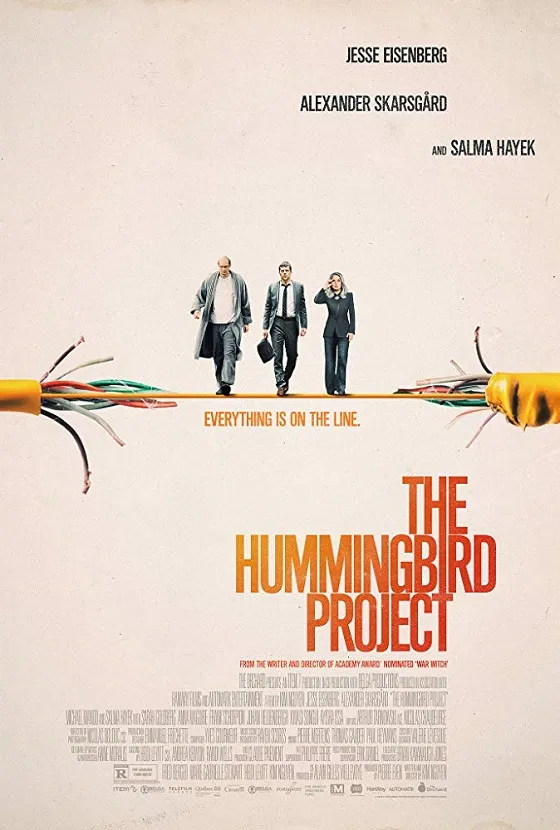
At its core, the hummingbird project is a 2018 thriller film that dramatizes the fiercely competitive environment of high-frequency trading. The story centers on two cousins, Vincent and Anton Zaleski, who quit their jobs at a powerful New York trading firm to embark on a seemingly impossible mission. Their goal is to build a perfectly straight fiber-optic cable line stretching 1,000 miles from the Kansas Electronic Exchange data center to the New York Stock Exchange servers in New Jersey.
Why go to such extraordinary lengths? The purpose of this massive undertaking is to shave a single millisecond off the communication time for stock market data. In the world they inhabit, information is money, and the speed at which you receive that information is paramount. A straighter line means a shorter path for light to travel, giving them a 16-millisecond connection time, one millisecond faster than their competitors. This tiny advantage would allow them to execute trades before anyone else, potentially generating hundreds of millions of dollars in profit. Their former boss, the ruthless and powerful Eva Torres, becomes their main antagonist, racing to find her own way to beat them at their own game.
The Minds Behind the Mission: Key Characters
The story of the hummingbird project is driven by its compelling and flawed characters. Their personalities and motivations are central to the unfolding drama.
Vincent Zaleski: The Visionary Hustler
Vincent, played by Jesse Eisenberg, is the face and the driving force of the operation. He is the fast-talking salesman, the deal-maker, and the one who believes in the project with an almost fanatical devotion. Vincent is the one who navigates the complex web of logistics, from securing land rights from reluctant farmers to managing construction crews. He is relentless and charismatic, but his ambition often blinds him to the immense personal and financial risks involved. His health deteriorates as the pressure mounts, symbolizing the physical toll of his obsessive quest for success.
Anton Zaleski: The Reclusive Genius
In stark contrast to his cousin, Anton (played by Alexander Skarsgård) is the technical wizard behind the scenes. He is a brilliant but socially awkward programmer who designs the complex code needed to capitalize on the speed advantage. Anton is more concerned with the purity of the technical challenge than the financial rewards. He is the one who figures out the physics and the programming, but he struggles to operate in the high-pressure, cutthroat world Vincent thrives in. His reclusive nature and moral compass often put him at odds with the more pragmatic and aggressive approach of his cousin.
Eva Torres: The Formidable Antagonist
Eva Torres, portrayed by Salma Hayek, is the cousins’ former employer and the story’s primary antagonist. She is a brilliant and intimidating figure in the world of finance, representing the corporate power they are rebelling against. When Vincent and Anton leave her firm, taking their intellectual property with them, she becomes determined to stop them. Eva is just as ambitious and intelligent as they are, and she uses her vast resources and influence to build her own competing project, creating a thrilling race against time. She is a powerful representation of the established system that innovators often find themselves fighting against.
The Technology of Speed: High-Frequency Trading Explained
To truly appreciate the hummingbird project, it’s essential to understand the technology at its heart: high-frequency trading, or HFT. This is a type of algorithmic trading that uses powerful computers and complex programs to transact a massive number of orders in fractions of a second.
What Is High-Frequency Trading (HFT)?
HFT firms do not rely on long-term investment strategies or fundamental analysis of companies. Instead, they profit from tiny, fleeting price discrepancies in the market. Their algorithms are designed to detect these small opportunities and execute thousands or even millions of trades per day to capitalize on them. Because these price differences may only exist for a microsecond, speed is the single most important factor for success. The first firm to act on a piece of market data is often the only one that profits. This has created a technological arms race where firms invest billions in infrastructure to get their orders to the exchange a few nanoseconds faster than their rivals.
The Role of Fiber Optics
Fiber-optic cables are the backbone of modern communication, including the financial markets. These cables transmit data as pulses of light through thin strands of glass. The speed of light in a vacuum is a physical constant, but light slows down when it passes through a medium like glass. This is where the hummingbird project gets its core idea. A standard fiber-optic cable has many twists and turns as it follows existing infrastructure like roads and railways. The film’s protagonists theorize that a perfectly straight cable, tunneling through mountains and under rivers, would create a shorter physical path. This shorter path would allow light pulses to arrive faster, even if only by a millisecond, giving them a decisive edge.
Milliseconds to Millions: Why Speed Matters
In HFT, a millisecond is an eternity. Consider this simplified scenario:
|
Event |
Competitor A (Standard Cable) |
Competitor B (The Hummingbird Project) |
|---|---|---|
|
Market Signal Broadcast |
Receives Signal at T+17ms |
Receives Signal at T+16ms |
|
Algorithm Analyzes |
Analysis complete at T+17.1ms |
Analysis complete at T+16.1ms |
|
Trade Order Sent |
Order sent at T+17.2ms |
Order sent at T+16.2ms |
|
Trade Execution |
Order arrives too late |
Order executes and captures profit |
This table illustrates how a one-millisecond advantage allows Competitor B to see the market signal, analyze it, and execute a profitable trade before Competitor A can even react. When this process is repeated millions of times a day, that tiny time advantage translates into enormous financial gains. This is the very prize that Vincent and Anton are chasing.
The Real-World Basis for the Story
While the hummingbird project is a fictional film, it is heavily inspired by real events and trends in the financial industry. The pursuit of faster data transmission is not a Hollywood invention; it’s a reality that has shaped financial markets for over a decade.
The Race for a Straighter Line
The central plot of the movie—building a new, straighter fiber-optic line—is based on a real project undertaken by a company called Spread Networks. In the late 2000s, this company spent hundreds of millions of dollars to build a new fiber-optic cable between Chicago and New York. Just like in the film, the goal was to create a shorter, more direct path to reduce data latency for high-frequency traders. They tunneled through the Allegheny Mountains in Pennsylvania to shave crucial milliseconds off the trip. This real-life project proves that the seemingly outlandish premise of the hummingbird project is firmly grounded in reality.
Microwave Towers: The Next Frontier
Interestingly, just as the characters in the film face unexpected competition, the real world of HFT has already moved beyond fiber optics. After the Spread Networks cable was built, other companies looked for an even faster way. They realized that data signals could travel faster through the air than through glass. This led to the construction of networks of microwave towers to transmit trading data between financial centers.
While more susceptible to weather, these microwave networks offered another incremental speed advantage, continuing the technological arms race. This mirrors the plot point where Eva Torres explores using microwave technology to beat the cousins’ fiber line. For deeper insights into this ever-evolving landscape, you might find articles on platforms like Silicon Valley Time to be quite informative.
Key Themes Explored in the Film
Beyond the technical aspects, the hummingbird project is a compelling human story that explores several powerful themes.
Ambition and Obsession
The film is a deep dive into the nature of ambition. Vincent’s drive is all-consuming, pushing him to sacrifice his health, his relationships, and his financial security. His ambition slowly morphs into a dangerous obsession where the project’s completion becomes the only thing that matters. The movie serves as a cautionary tale about how the relentless pursuit of a goal, especially one tied to immense wealth, can have devastating personal consequences. It asks the audience to consider the true cost of success and at what point ambition becomes self-destructive.
The Human Cost of Innovation
While the technological feat of the project is impressive, the film consistently highlights the human toll. This is seen in the physical challenges of the construction, such as drilling through solid bedrock and navigating swamplands. It’s also evident in the personal sacrifices made by the main characters. Vincent’s health declines under the immense stress, a physical manifestation of the project’s burden. Anton’s mental health is strained as he is forced to operate in a high-stakes corporate environment that conflicts with his personal ethics. The film suggests that progress and innovation are never without a human cost.
Morality in a World of Profit
The hummingbird project also raises important ethical questions. Is it right for a small group of individuals to manipulate the financial system for personal gain, even if they are doing so “legally” through technological superiority? Anton, in particular, grapples with this question. He is more fascinated by the elegance of the technical solution than the money it will generate. Throughout the film, he questions the morality of their endeavor. This internal conflict adds a layer of philosophical depth to the story, forcing viewers to think about the broader societal implications of a system where a millisecond advantage can be worth billions.
The Lasting Impact and Legacy of the Hummingbird Project
Ultimately, the hummingbird project is more than just a thriller about the stock market. It is a story about the modern condition, where technology and finance intersect in ways that can feel both miraculous and deeply unsettling. The film captures a specific moment in time when the race for speed in financial markets reached a fever pitch, resulting in incredible feats of engineering. It stands as a compelling narrative about human ingenuity and the timeless pursuit of an edge.
The story highlights a fundamental truth about technology: as soon as one innovation creates an advantage, the race begins to find the next one. The film’s ending, without giving too much away, suggests that the victory one chases may be fleeting and that the true value might lie in the journey itself. The narrative serves as a fascinating case study in the broader history of financial markets and technological development, a topic extensively covered in resources like Wikipedia’s articles on high-frequency trading. The film leaves audiences pondering the very nature of progress and the relentless human desire to be first.
Frequently Asked Questions (FAQ)
Is the hummingbird project based on a true story?
The film is not a direct adaptation of a single true story but is heavily inspired by real events. The core plot of building a straight fiber-optic cable for a speed advantage is based on the real-life project by Spread Networks, which built a similar line between Chicago and New York in the late 2000s.
How much of an advantage did the project provide?
In the film, the goal of the hummingbird project was to achieve a data transmission time of 16 milliseconds, which would be one millisecond faster than the competition’s 17 milliseconds. While this seems incredibly small, in high-frequency trading, this one-millisecond advantage could lead to hundreds of millions of dollars in profit.
What is the significance of the “hummingbird” in the title?
The hummingbird is a metaphor for the speed and precision the project aims to achieve. A hummingbird’s wings can beat up to 80 times per second, which is about 12.5 milliseconds per beat. This mirrors the millisecond-level timeframes that are critical in high-frequency trading.
What technology did Eva Torres use to compete with the Zaleski cousins?
While Vincent and Anton were focused on their fiber-optic cable, their former boss, Eva Torres, began exploring newer technologies to gain an even greater speed advantage. She investigated using a network of microwave towers and even custom-developed neutrinos, pushing the boundaries of what was considered possible to transmit data even faster.
Did the main characters succeed in the end?
The film’s conclusion is complex and focuses more on the personal journey of the characters than on the financial outcome of the project. It explores themes of success, failure, and what is truly important, leaving the audience with a thought-provoking and somewhat ambiguous ending regarding the project’s ultimate profitability.