




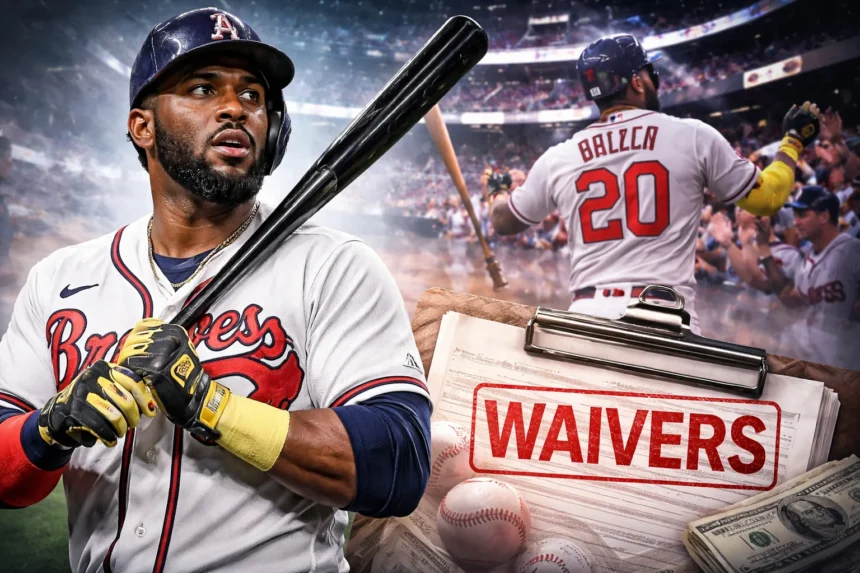

The Atlanta Braves and Marcell Ozuna have had a complex relationship, marked by incredible highs and challenging lows. Once a feared slugger and a key piece of the lineup, Ozuna’s journey has led to discussions that few would have predicted just a few years ago. Now, a significant question looms over the organization and its fanbase: Is Marcell Ozuna a waiver candidate? This analysis explores the performance, the contract, and the difficult decisions facing the Braves’ front office.
Exploring the possibility of a Braves Marcell Ozuna waiver candidate scenario requires a deep dive into his recent performance, the financial implications of his contract, and the strategic needs of the team. We will break down what it means for a player to be placed on waivers and analyze the potential outcomes for both Ozuna and the Braves.
Introduction to Marcell Ozuna and His Role with the Braves
To understand the current situation, it’s essential to look back at Marcell Ozuna’s career and his impact on the Atlanta Braves since his arrival.
Who is Marcell Ozuna?
Marcell Ozuna, nicknamed “The Big Bear,” is a powerful outfielder and designated hitter from the Dominican Republic. He made his Major League Baseball debut in 2013 with the Miami Marlins, where he established himself as a two-time All-Star. After a stint with the St. Louis Cardinals, Ozuna signed with the Atlanta Braves ahead of the 2020 season, bringing his formidable power to an already potent lineup.
Overview of His Career with the Atlanta Braves
Ozuna’s first season in Atlanta was nothing short of spectacular. During the pandemic-shortened 2020 season, he led the National League in both home runs (18) and runs batted in (56), finishing sixth in MVP voting. This incredible performance earned him a four-year, $65 million contract to remain with the Braves. However, the years following that contract have been a rollercoaster, featuring injuries, off-field issues, and periods of inconsistent production at the plate.
Why Marcell Ozuna is a Key Player for the Braves
When he is performing at his best, Ozuna provides a crucial power threat in the middle of the Braves’ order. As a designated hitter, his sole job is to produce runs. His presence lengthens the lineup, making it more difficult for opposing pitchers to navigate. His veteran experience and past success are assets, but the team needs consistent output from the DH spot to justify his significant salary and roster position.
Understanding the Waiver Process in Major League Baseball
The term “waivers” is often heard in sports, but its mechanics can be confusing. Understanding this process is key to grasping the Braves Marcell Ozuna waiver candidate discussion.
What is a Waiver in MLB?
In Major League Baseball, waivers are a mechanism that allows a team to remove a player from their 40-man roster. Before a team can release a player who is under contract or send him to the minor leagues, they must first place him on waivers. This gives every other MLB team an opportunity to claim that player and take on his existing contract.
How Does the Waiver Process Work?
Once a player is placed on waivers, the other 29 MLB teams have a set period (typically 47 hours) to submit a claim. If a team claims the player, they are awarded him based on a priority system. The priority is determined by the league and team records; teams with worse records get higher priority. If multiple teams put in a claim, the team with the worse record in the player’s league gets him. If no team in his league claims him, the process moves to the other league.
Why Teams Place Players on Waivers
Teams use waivers for several reasons:
- To Free Up a Roster Spot: A team might need to open a spot on the 40-man roster for a younger prospect or a newly acquired player.
- To Unload a Contract: If a player is underperforming relative to his salary, a team might hope another club claims him, thereby taking the financial obligation off their hands.
- To Send a Player to the Minors: If a player is out of minor league options, he must clear waivers before he can be assigned to a minor league affiliate.
Marcell Ozuna’s Performance with the Braves
Ozuna’s tenure in Atlanta has been a tale of two extremes. His incredible 2020 season stands in stark contrast to the struggles that have followed.
Highlights of Ozuna’s Career with the Braves
The 2020 season remains the pinnacle of Ozuna’s time in Atlanta. He was an offensive force, leading the league in major power categories and becoming a fan favorite. He also had a resurgence in 2023, hitting 40 home runs and driving in 100 runs, reminding everyone of the “Big Bear” of old. These flashes of brilliance are what make the conversation so complicated.
Recent Performance Trends
Unfortunately, the seasons surrounding those peaks have been marked by significant slumps. His production in 2021 and 2022 was well below expectations, hampered by injuries and a notable drop in his batting average and on-base percentage. The 2025 season has seen another downturn, with his power numbers declining and his strikeout rate climbing, making the Braves Marcell Ozuna waiver candidate discussion more prominent than ever.
Key Statistics from the 2025 Season
A look at the numbers from the current season helps paint a clearer picture of his struggles.
|
Statistic |
2023 Season |
2025 Season (Current) |
|---|---|---|
|
Batting Average |
.274 |
.215 |
|
Home Runs |
40 |
12 |
|
Runs Batted In |
100 |
35 |
|
On-Base Percentage |
.346 |
.278 |
|
Strikeout Rate |
22.9% |
31.2% |
These statistics highlight a significant regression. His inability to get on base and the increase in strikeouts are major concerns for a player whose primary value is his bat.
Why Marcell Ozuna is Considered a Waiver Candidate
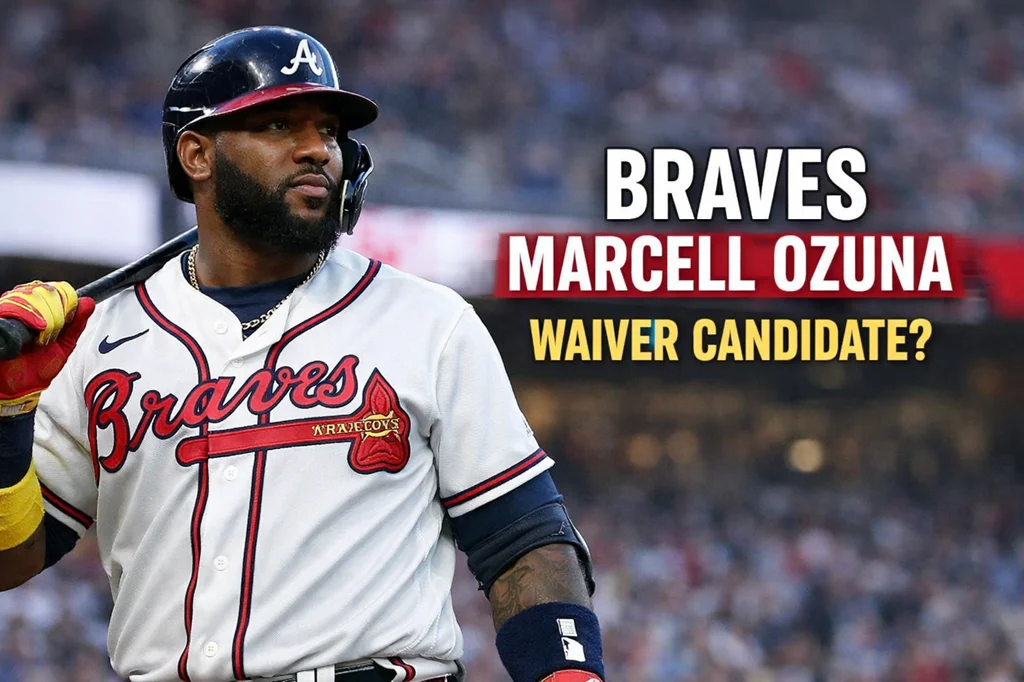
Several factors contribute to the speculation that Ozuna could be placed on waivers. It’s a combination of performance, finances, and team strategy.
Factors Leading to Waiver Consideration
The primary factor is his on-field production. For a designated hitter earning a substantial salary, the lack of consistent offense is a major issue. When a player in this role isn’t hitting, they offer very little value to the team. The Braves have a championship-caliber roster and cannot afford to have a non-productive spot in the heart of their lineup for an extended period.
Contract and Financial Implications
Marcell Ozuna is in the final year of his four-year, $65 million contract. He is owed the remainder of his $16 million salary for the 2025 season. If the Braves place him on waivers and another team claims him, that team would be responsible for the rest of his salary. However, given his performance and high salary, it is highly unlikely any team would claim him. This means the Braves would still be on the hook for his full salary even if they release him. The decision then becomes whether the roster spot is more valuable than the sunk cost of his contract.
Team Dynamics and Roster Adjustments
The Braves have a deep farm system with several young, hungry players waiting for an opportunity in the major leagues. Keeping an underperforming veteran on the roster can block the path for these prospects. A front office must balance loyalty to a veteran player with the need to put the best possible team on the field. This difficult calculus is at the heart of the Braves Marcell Ozuna waiver candidate debate. It’s a situation many teams face, and as one source at siliconvalleytime.co.uk notes, front office decisions often prioritize future flexibility over past performance.
Pros and Cons of Placing Marcell Ozuna on Waivers
The Braves’ front office faces a difficult decision with significant consequences, regardless of the path they choose.
Benefits for the Braves
- Roster Flexibility: Releasing Ozuna would open a spot on both the 26-man active roster and the 40-man roster. This would allow the Braves to call up a promising young hitter from Triple-A Gwinnett or add another player via trade.
- Improved Lineup Production: Replacing Ozuna with a more productive hitter could provide an immediate boost to the offense and help the team win more games.
- Sending a Message: Moving on from an underperforming, high-priced veteran sends a message to the entire organization that performance is paramount.
Potential Risks and Drawbacks
- Dead Money: The Braves would still have to pay the remainder of Ozuna’s salary, getting nothing in return. This is a significant financial hit.
- Player Morale: Ozuna is a veteran presence in the clubhouse. Releasing him could negatively impact team chemistry, though this is often overstated.
- He Could Find Success Elsewhere: There is always the risk that Ozuna, freed from the pressure in Atlanta, could sign with another team for the league minimum and rediscover his swing, making the Braves look foolish.
Impact on Team Morale and Fanbase
The fanbase is divided. Some fans remember his 2020 heroics and 2023 comeback and want to give him more time to work through his slump. Others see his current struggles as a liability for a team with World Series aspirations and are ready to move on. A decision either way is sure to be met with both praise and criticism.
Conclusion
The situation surrounding the Braves Marcell Ozuna waiver candidate topic is a classic sports dilemma, balancing past achievements against current performance and future needs. Marcell Ozuna has delivered some unforgettable moments for the Atlanta Braves, but his recent struggles have forced the organization into a difficult position. The decision to place him on waivers would be a purely financial and strategic one, acknowledging that his on-field production no longer justifies his roster spot, despite the sunk cost of his salary.
Ultimately, the Braves’ front office must decide if the roster spot Ozuna occupies could be used more effectively to help the team win now and in the future. Whether they choose to part ways with the “Big Bear” or give him one more chance to turn things around, the outcome will be a significant storyline for the remainder of the season. For more information on the intricacies of player contracts and movements in baseball, the Major League Baseball waiver wire has a detailed history that provides context for these types of team decisions.