




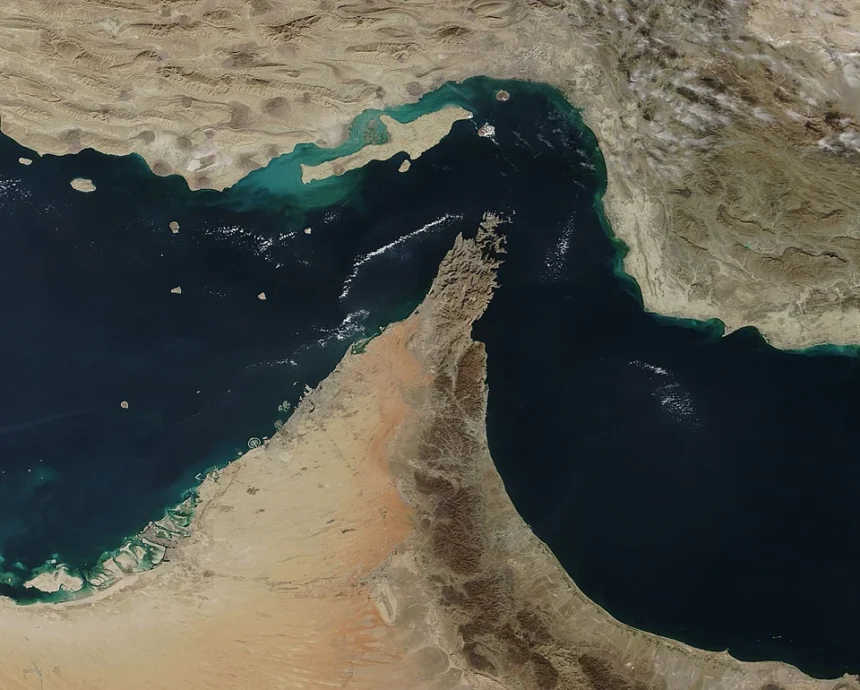

Have you ever wondered how the fuel that powers your car, heats your home, and runs countless industries gets across the globe? A massive portion of that energy travels through a surprisingly narrow waterway known as the Strait of Hormuz. This small stretch of ocean holds immense power over the global economy, directly impacting prices at the gas pump right here in the United States.
In this article, we will explore exactly what makes this chokepoint so crucial. We will dive into its history, geography, and the reasons why international navies patrol its waters day and night. By the end of this guide, you will understand the intricate details of global trade and why this specific waterway demands constant global attention.
Key Takeaways About the Strait of Hormuz
Before we dive into the deep details, let us look at the most important facts you need to know about the Strait of Hormuz:
- It is a narrow waterway connecting the Persian Gulf to the Gulf of Oman and the Arabian Sea.
- Roughly 20% to 30% of the world’s total oil consumption passes through this strait every single day.
- At its narrowest point, the strait is only 21 miles wide, making navigation tight for massive supertankers.
- The United States and other global powers maintain a strong naval presence nearby to ensure safe and open trade.
- Any disruption in this area can cause immediate spikes in global energy prices.
What is the Strait of Hormuz?
The Strait of Hormuz is a crucial maritime chokepoint. Think of a chokepoint like a narrow doorway that everyone in a crowded stadium must use to exit. Because so much traffic must squeeze through such a small space, the area becomes incredibly important and highly sensitive to any disruptions. The strait serves as the only sea passage from the Persian Gulf to the open ocean, making it a lifeline for global energy markets. Ships carrying millions of barrels of crude oil and massive shipments of natural gas must navigate these waters to reach destinations in Asia, Europe, and the Americas. Without this passage, the global economy would face severe energy shortages.
The Exact Location and Geography
If you look at a map of the Middle East, you will spot the Strait of Hormuz acting as a bridge between the Persian Gulf and the Gulf of Oman. Its physical geography is quite unique. At its absolute narrowest, the strait spans just 21 miles across. However, the shipping lanes that large vessels use are much narrower. Ships must stay within two-mile-wide traffic lanes—one for inbound traffic and one for outbound traffic—separated by a two-mile buffer zone. This strict traffic separation scheme helps prevent catastrophic collisions between massive oil tankers. The waters here are deep enough to accommodate the world’s largest ships, but the tight space requires careful and precise navigation by experienced captains.
The Countries Bordering the Strait
The geography of the Strait of Hormuz means it is shared by several nations, each with its own interests. To the north lies Iran, which holds a long coastline along the waterway. To the south sits the Sultanate of Oman (specifically an exclave called Musandam) and the United Arab Emirates. Because these borders are so close together, the territorial waters of Oman and Iran actually meet in the middle of the strait. This means ships passing through must briefly enter the territorial waters of one of these countries. The strategic positioning of these nations gives them significant influence over the ships that pass through, making diplomatic relations in this region incredibly important for global trade.
The History of the Strait of Hormuz
Long before massive steel oil tankers existed, the Strait of Hormuz was a bustling hub of human activity. For centuries, merchants have used this waterway to connect the markets of the Middle East with those of India, East Africa, and eventually Europe. Spices, silk, pearls, and precious metals flowed through these waters, enriching the empires that controlled the shores. Portuguese explorers were among the first Europeans to recognize its value, establishing forts in the 16th century to control the lucrative spice trade. Over the centuries, control and influence shifted between various empires, but the intrinsic value of the waterway never diminished. It simply evolved from a route for spices to a route for energy.
Ancient Trade Routes and Early Navigators
Thousands of years ago, early sailors navigated the Strait of Hormuz using simple wooden dhows. They relied on the stars, monsoon winds, and their deep knowledge of the tides to move goods across the Arabian Sea. The ancient city of Hormuz, located on an island near the strait, became an incredibly wealthy trading post. Merchants from all over the known world would gather there to buy and sell exotic goods. Historical records show that everyone from the Romans to the ancient Chinese engaged in trade that eventually passed through this region. These early navigators laid the groundwork for the massive global shipping networks we rely on today, proving that geography has always dictated human progress.
Modern Era Shifts in Power
As the industrial revolution swept the globe and oil became the world’s most vital resource, the Strait of Hormuz gained a new level of strategic importance. In the 20th century, massive oil reserves were discovered in the countries surrounding the Persian Gulf. Suddenly, the entire world needed access to this specific body of water. British forces maintained heavy influence in the area for decades to protect their trade interests. Later, as the United States became a global superpower with a massive appetite for energy, it also established a strong presence in the region. The modern history of the strait is defined by international agreements, naval patrols, and occasionally, tense diplomatic standoffs over the right of safe passage.
Why is the Strait of Hormuz So Important?
To understand the true value of the Strait of Hormuz, you must look at the numbers. It is not just a trade route; it is the trade route for the modern energy economy. Nearly a third of all seaborne traded oil passes through its waters. This means that if you drive a car, fly in an airplane, or buy goods transported by truck, you are likely relying on fuel that once floated through this narrow gap. When tensions rise in the strait, oil prices on the global market tend to spike, which directly impacts inflation and the cost of living for everyday people in the United States and beyond. Its importance simply cannot be overstated.
The Role of Global Oil Supply
The countries surrounding the Persian Gulf—including Saudi Arabia, Iraq, Kuwait, and the United Arab Emirates—are home to some of the largest oil fields on the planet. To sell this oil to buyers in Asia, Europe, and North America, it must be loaded onto tankers and sent through the Strait of Hormuz. There are very few alternative routes. While some pipelines exist, they cannot carry the sheer volume of oil that ships can. Therefore, the global oil supply chain is heavily dependent on this single waterway remaining open and peaceful. If the strait were ever fully blocked, the global market would lose millions of barrels of oil per day, causing immediate economic panic.
How Much Oil Passes Through Daily?
The sheer volume of energy moving through the Strait of Hormuz is staggering. On average, about 21 million barrels of oil flow through the strait every single day. To put that into perspective, that is roughly 21% of the total petroleum liquids consumed globally.
|
Product Type |
Estimated Daily Volume |
Percentage of Global Sea Trade |
|---|---|---|
|
Crude Oil |
~15-16 million barrels |
20% |
|
Petroleum Products |
~5-6 million barrels |
15% |
|
Liquefied Natural Gas (LNG) |
~300+ million cubic meters |
20% |
These numbers highlight why global leaders monitor the region so closely. Any delay, even for a few days, creates massive logistical headaches for refineries around the world.
Natural Gas Shipments and Energy Markets
While oil often gets the most attention, the Strait of Hormuz is equally critical for natural gas. Qatar, which shares a massive underwater gas field with Iran, is one of the world’s leading exporters of Liquefied Natural Gas (LNG). They rely entirely on the strait to ship their LNG to international buyers, particularly in Asia and Europe. As the world tries to transition away from heavily polluting fuels like coal, natural gas has become a popular alternative. This means the flow of LNG through the strait is becoming more important every year. A safe and secure passage is vital for keeping electricity grids running smoothly in many developed nations.
The United States and the Strait of Hormuz
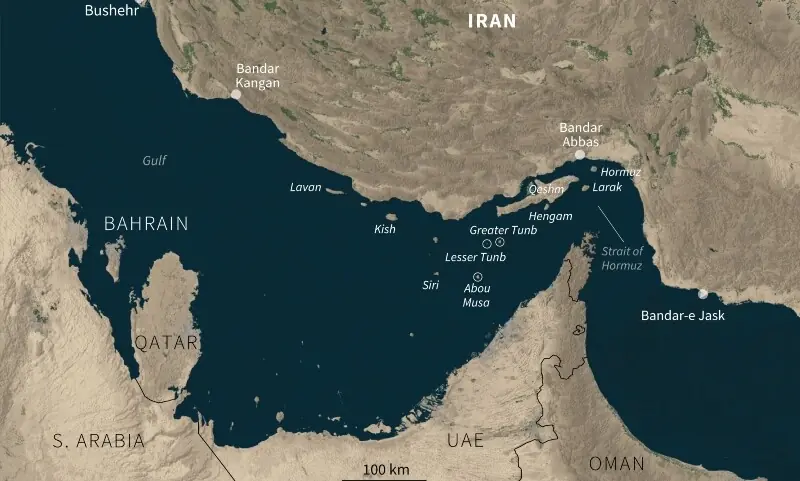
For the United States, the Strait of Hormuz represents a critical national security interest. Even though the US produces a vast amount of its own oil and gas today, the global energy market is entirely interconnected. If oil cannot leave the Middle East, the global supply drops, and prices shoot up everywhere, including at American gas stations. Furthermore, many of America’s closest allies in Europe and Asia rely heavily on energy from the Persian Gulf. By helping to keep the strait open, the United States supports the economic stability of its partners and maintains its position as a guarantor of global maritime security.
Protecting Maritime Security
Keeping the Strait of Hormuz safe requires constant effort and international cooperation. The threat of piracy, sea mines, or state-sponsored harassment of commercial vessels is a serious concern for shipping companies. To counter this, multinational naval task forces patrol the waters around the clock. These forces provide escorts for vulnerable commercial ships, monitor radio traffic, and respond quickly to distress calls. Their goal is not to provoke conflict, but to deter it. By showing a strong, united presence, these navies ensure that the massive supertankers can travel through the tight, 21-mile-wide gap without fear of being attacked or seized.
The Role of the US Navy
The United States Navy plays a leading role in these maritime security efforts. Specifically, the US Fifth Fleet, headquartered in nearby Bahrain, is responsible for operations in the Persian Gulf, the Red Sea, the Arabian Sea, and parts of the Indian Ocean. The Fifth Fleet utilizes a combination of aircraft carriers, destroyers, submarines, and advanced surveillance drones to keep a watchful eye on the Strait of Hormuz.
They conduct regular training exercises with allied nations to ensure they are prepared for any emergency scenario. Their presence provides a massive reassurance to the commercial shipping industry, which must constantly navigate these politically sensitive waters. For more insights on technology and global movements that shape our world, you might enjoy reading updates from https://siliconvalleytime.co.uk/.
Alternative Routes for Oil Export
Because relying on a single chokepoint is risky, countries in the Middle East have spent billions of dollars trying to find ways around the Strait of Hormuz. If a conflict were to close the waterway, they would still need to sell their oil to keep their economies afloat. As a result, several massive engineering projects have been built to bypass the strait altogether. However, these alternatives are limited in their capacity and come with their own unique sets of challenges. Understanding these backup plans is key to grasping the full picture of Middle Eastern energy logistics.
Pipelines Across the Middle East
The most practical alternative to the Strait of Hormuz is the use of overland pipelines. Two major pipelines currently serve this purpose. Saudi Arabia operates the East-West Pipeline, which carries oil from the Persian Gulf side of the country to the Red Sea, completely bypassing the strait. The United Arab Emirates operates the Abu Dhabi Crude Oil Pipeline, which moves oil to the port of Fujairah on the Gulf of Oman. While these pipelines are incredible feats of engineering, they simply cannot carry the 21 million barrels a day that ships can. At best, they can handle a fraction of the daily output, making them a helpful backup but not a total replacement.
Why Shipping Remains the Top Choice
Despite the risks of the Strait of Hormuz, sending oil by sea remains the preferred method for energy exporters. Simply put, massive supertankers are the most cost-effective way to move huge volumes of liquid across long distances. A single Very Large Crude Carrier (VLCC) can hold up to 2 million barrels of oil. Loading this oil onto a ship is much cheaper than maintaining thousands of miles of complex pipeline infrastructure across harsh desert environments. Furthermore, ships offer flexibility. If demand in Asia drops, a ship can change course and head to Europe instead. A pipeline only goes to one specific destination.
The Environmental Impact of High Traffic
With thousands of massive ships passing through a narrow channel every year, the environment inevitably takes a toll. The Strait of Hormuz is not just a highway for ships; it is also a living marine ecosystem. The intense volume of commercial traffic creates unique environmental challenges that often go unnoticed by the general public. From the noise pollution generated by massive propellers to the risk of devastating oil spills, the heavy use of this waterway puts significant stress on the local environment.
Marine Life and Pollution Concerns
The waters in and around the Strait of Hormuz are home to a variety of marine life, including dolphins, sea turtles, and numerous species of fish. However, the constant hum of huge ship engines disrupts the communication and navigation abilities of marine mammals. Furthermore, the risk of an oil spill is a constant nightmare for environmentalists. Even minor leaks from tankers or routine discharges of ballast water introduce pollutants and invasive species into the local ecosystem. While international maritime laws have grown stricter regarding pollution, the sheer density of traffic means the waters remain under constant ecological pressure.
Future Outlook for the Strait of Hormuz
As we look toward the future, the role of the Strait of Hormuz may begin to shift. The global push for clean energy and the rise of electric vehicles will eventually change the way the world consumes power. However, this transition will not happen overnight. For the foreseeable future, oil and natural gas will remain critical components of the global economy, meaning the strait will maintain its strategic importance. In fact, as energy demand grows in developing nations, traffic through this chokepoint might even increase before it eventually starts to decline.
Renewable Energy and Trade Shifts
As countries invest heavily in wind, solar, and nuclear power, their reliance on imported fossil fuels will slowly decrease. If global oil demand drops over the next few decades, the volume of ships passing through the Strait of Hormuz will also decrease. This could potentially lower geopolitical tensions in the region, as the waterway becomes less critical to global economic survival. However, the countries bordering the strait are also adapting by investing in hydrogen fuel production and expanding their non-oil trade. The cargo passing through the strait might change, but the passage itself will remain a vital link between the East and the West.
Frequently Asked Questions (FAQs)
How wide is the Strait of Hormuz?
At its narrowest point, the strait is only 21 miles (33 kilometers) wide. The actual shipping lanes are even narrower, restricted to two miles in each direction.
Who controls the Strait of Hormuz?
No single country “controls” it. It is an international strait, meaning all ships have the right of transit passage under international maritime law. However, it borders the territorial waters of Iran, Oman, and the UAE.
What would happen if the Strait of Hormuz closed?
If the strait were blocked, it would cause a massive shock to the global economy. Oil and natural gas prices would skyrocket immediately, causing inflation and energy shortages worldwide.
Is it safe to sail through the Strait of Hormuz?
Generally, yes. Despite occasional political tensions, thousands of commercial ships pass through safely every year, often under the protective watch of international naval forces.
Conclusion
The Strait of Hormuz is much more than just a small blue patch on a world map. It is the beating heart of global energy logistics. From the ancient merchants sailing wooden dhows to the modern captains navigating steel supertankers, humans have relied on this narrow passage for centuries. Understanding its geography, history, and incredible economic importance helps us make sense of the complex world we live in.
As long as the world runs on energy, the safety and security of this waterway will remain a top priority for nations across the globe. For those looking to dive even deeper into geographical facts and broad historical context, exploring comprehensive resources like https://www.wikipedia.org/ can provide incredible supplementary details about this fascinating part of the world.