




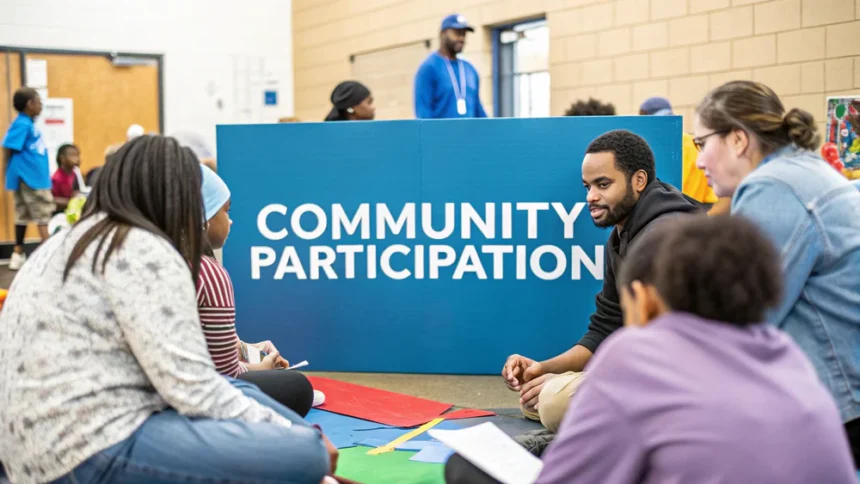

One of the more misunderstood parts of an NDIS plan is the funding set aside for community participation. Some participants assume it’s only for organised group activities or specific programs. Others aren’t sure whether the things they want to do actually qualify. And some aren’t using this funding at all, simply because no one has clearly explained what it covers.
This post breaks down what community participation funding actually includes, how it works within an NDIS plan, and what kinds of activities it can genuinely support.
Where This Funding Sits in Your Plan
Community participation funding falls under the Core Supports budget, specifically in a category called Assistance with Social, Economic and Community Participation. You might see it referenced in your plan as community access or social and community participation depending on how your plan is written.
Core Supports funding is generally the most flexible part of an NDIS plan. In many cases, you can move funds between subcategories within Core Supports if your circumstances change, though it’s worth confirming this with your support coordinator or plan manager before making changes.
What It’s Actually Designed to Cover
The purpose of this funding is straightforward: it helps participants take part in social, recreational, educational, and community activities they would struggle to access or manage independently because of their disability.
That scope is broader than many people realise. It’s not limited to disability-specific programs or group settings. It’s about supporting a person to be part of their community in whatever way is meaningful to them.
Support Workers for Community Activities
One of the most common uses of this funding is paying for a support worker to accompany a participant during community activities. This might look like:
- Going to a sporting event, gym, or fitness class
- Attending a local community group or club
- Visiting a library, gallery, or community centre
- Catching up with friends or family in a social setting
- Attending religious or cultural events
- Going shopping or running errands that involve social interaction
The support worker’s role in these situations is to assist the participant in accessing and engaging with the activity, not to simply attend it themselves. The nature of the support depends on what the participant needs, whether that’s physical assistance, communication support, prompting, or simply having someone present to help manage the environment.
Group-Based Community Activities
Funding can also cover participation in group programs run by disability service providers. These are structured activities where a small group of participants take part together, supported by staff.
Examples include community gardening programs, art and craft groups, cooking classes, social outings organised by a provider, and sports or recreation programs designed for people with disability.
Group-based activities tend to cost less per hour than one-to-one support because the cost of the support worker is shared across participants. For people who enjoy social settings and want to connect with others, these programs can be a good option.
Building Skills for Community Life
Community participation funding isn’t only about getting out and doing things right now. It also covers supports that help participants build the skills and confidence to engage more independently over time.
This might include working with a support worker to practise catching public transport, learning to navigate a new environment, building social skills in a supported setting, or gradually taking on more independence in activities that previously required significant assistance.
This skill-building dimension is an important part of what community participation NDIS funding is intended to achieve. The broader goal isn’t just access for today but greater capacity and independence in the longer term.
What It Doesn’t Cover
It’s worth being clear about what this funding isn’t designed to pay for. Community participation funding covers the support needed to access and participate in activities, not the cost of the activities themselves.
If a participant wants to join a local soccer club, for example, the registration fee and equipment are personal expenses. The funding can cover a support worker to attend training sessions and games with them. The same principle applies to cinema tickets, entry fees, membership costs, or class fees. Those come from the participant’s own pocket; the disability support that makes attendance possible is what the NDIS funds.
There are some exceptions and grey areas, and a plan manager or support coordinator can help clarify specific situations.
Transport to and From Activities
Getting to and from community activities is a real barrier for many participants. Transport support can sometimes be funded through community participation, though it depends on how your plan is structured and whether transport support is included elsewhere in your plan.
If transport is consistently making it difficult to access community activities, it’s worth raising this during your plan review and making a case for transport funding to be included explicitly.
How This Funding Connects to Your Goals
Community participation funding doesn’t exist in isolation. It should connect to the goals written into your NDIS plan. If your plan includes goals around social connection, community involvement, building independence, or improving wellbeing, this funding is one of the main tools for working toward those goals.
When your support coordinator or plan manager is setting up services, they should be linking your community participation supports back to specific goals. This matters practically because at your plan review, you’ll need to show how your funding was used and how it contributed to your goals. Well-documented community participation support makes that conversation much easier.
Choosing How Your Supports Are Delivered
Participants have real choice in how community participation supports are delivered. You can choose the provider you want, the activities you want to focus on, and how often supports occur, within the limits of your funding.
If your plan is self-managed or plan-managed, you have even more flexibility, including the option to use unregistered providers and independent support workers. Agency-managed participants need to use NDIS-registered providers, which is a narrower pool but still includes a wide range of options in most areas.
Making the Most of This Part of Your Plan
Community participation funding is one of the parts of an NDIS plan that can genuinely improve day-to-day quality of life. But it only works if it’s being used in a way that reflects what the participant actually wants.
If you’re not sure whether your current supports are using this funding well, or if you feel like you’re not getting out and doing the things that matter to you, that’s worth raising with your support coordinator. This funding is there to support your life in the community, and that’s exactly how it should be used.