




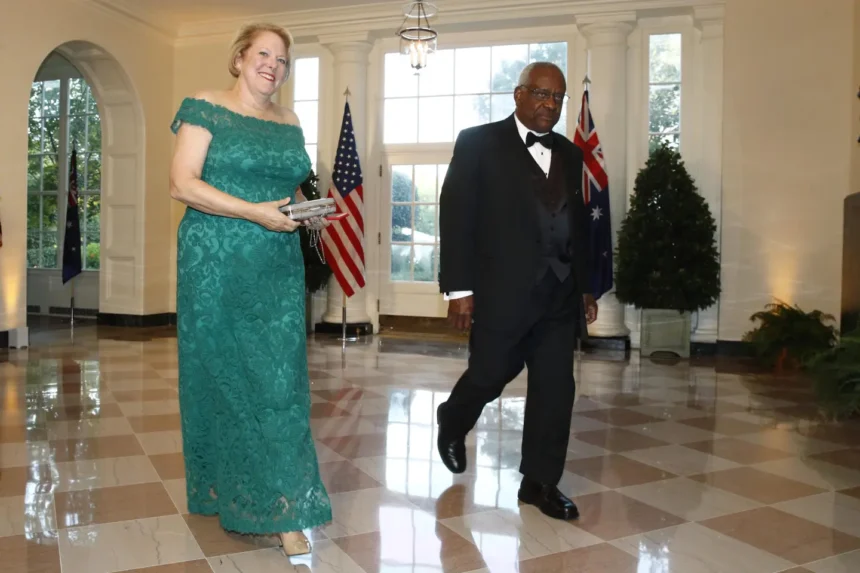

Clarence Thomas is one of the most talked-about figures in American legal history. He’s an associate justice on the U.S. Supreme Court, and he’s been there since 1991. Whether people agree with him or not, there’s no denying he’s left a big mark on the court.
Here’s the thing about Clarence Thomas — his story didn’t start with power or privilege. It started in a tiny, poor community in Georgia. And that journey from poverty to the highest court in the country is honestly one of the more remarkable paths anyone in government has taken.
Read more: Serena Williams: The Greatest Tennis Player of All Time
Quick Bio: Clarence Thomas at a Glance
|
Detail |
Information |
|---|---|
|
Full Name |
Clarence Thomas |
|
Date of Birth |
June 23, 1948 |
|
Age |
76 |
|
Birthplace |
Pin Point, Georgia, U.S. |
|
Profession |
Associate Justice, U.S. Supreme Court |
|
First Marriage |
Kathy Ambush (m. 1971; div. 1984) |
|
Second Marriage |
Virginia Lamp (m. 1987) |
|
Son |
Jamal Adeen Thomas |
|
Political Affiliation |
Republican |
Early Life and Background
Clarence Thomas was born on June 23, 1948, in Pin Point, Georgia. It was a small, rural community near Savannah. Life there wasn’t easy, especially for a Black family in the segregated South.
His father left the family when Clarence was just two years old. After a fire destroyed their home, his mother struggled to provide. So young Clarence and his brother were sent to live with their grandfather.
To be honest, that grandfather shaped a lot of who Thomas became. The man was strict, hardworking, and big on discipline. Those lessons stuck.
Growing Up in the Segregated South
Living through segregation left a deep impression on him. He attended Catholic schools, where nuns played a major role in his early education.
What’s interesting is that he originally thought about becoming a priest. He even entered a seminary. But he eventually left and changed direction toward law.
Education and Academic Path
College Years
Clarence Thomas attended Holy Cross College in Massachusetts. He graduated with a degree in English literature. During this time, he became more politically active and started forming his own views on race and society.
Law School
After college, he went to Yale Law School. He earned his law degree there in 1974. That Yale education would open doors, though Thomas has spoken openly about feeling that some people doubted his abilities because of affirmative action programs.
Early Legal Career
Right after law school, Clarence Thomas didn’t jump straight into something flashy. He started working as an assistant attorney general in Missouri.
From there, he moved into private practice for a bit, then into corporate law with Monsanto. But government work kept pulling him back.
Rising Through Government
He eventually moved to Washington, D.C., taking roles in the federal government. He served in the Department of Education and later led the Equal Employment Opportunity Commission, known as the EEOC.
That EEOC role was a big deal. It put him in charge of enforcing workplace discrimination laws, and it raised his national profile.
Becoming a Federal Judge
In 1990, President George H.W. Bush nominated Clarence Thomas to serve on the U.S. Court of Appeals for the D.C. Circuit. That’s one of the most respected courts in the country.
He didn’t stay there long, though. Bigger things were coming fast.
The 1991 Supreme Court Nomination
Here’s where the story really takes off. In 1991, President George H.W. Bush nominated Clarence Thomas for the Supreme Court. He was chosen to replace Thurgood Marshall, the first Black justice and a civil rights legend.
That made the nomination especially significant. Replacing someone like Marshall was no small thing, and it drew enormous attention.
The Anita Hill Controversy
You can’t talk about Clarence Thomas without mentioning the Anita Hill hearings. During his confirmation process, Anita Hill, who had worked under him at the EEOC, accused him of sexual harassment.
The hearings were televised, and the whole country watched. It became one of the most dramatic confirmation battles in U.S. history.
Thomas firmly denied the accusations. He famously called the process a “high-tech lynching.” In the end, the Senate confirmed him by a narrow vote of 52 to 48.
His Judicial Philosophy
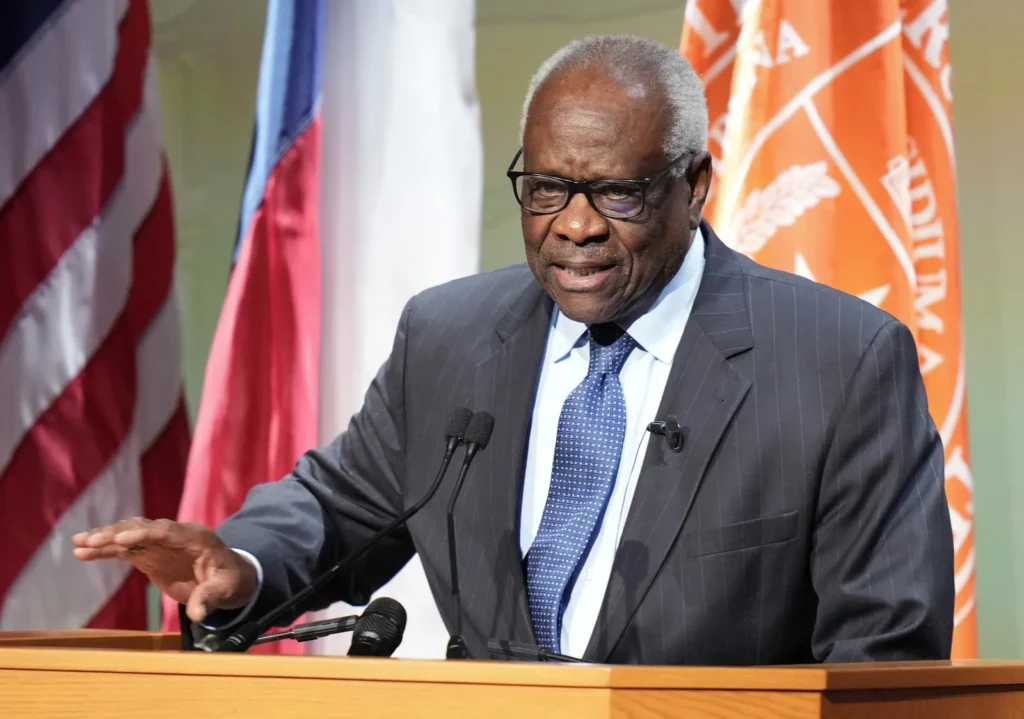
So what kind of justice is he? Clarence Thomas is known as an originalist. That means he believes the Constitution should be interpreted based on its original meaning when it was written.
He’s often grouped with the most conservative members of the court. He’s also known for sometimes standing alone in his opinions, even when other conservatives don’t fully agree with him.
Why He Stands Out
What’s interesting is how independent his thinking can be. Thomas isn’t afraid to write solo opinions explaining exactly why he sees a case differently. Some legal scholars actually admire that consistency, even when they disagree.
Key Rulings and Influence
Over his decades on the bench, Clarence Thomas has weighed in on huge cases. These touch on gun rights, free speech, federal power, and individual liberties.
He often pushes the court to reconsider older precedents. His written opinions have influenced younger conservative judges and shaped legal debates well beyond the courtroom.
To be honest, even critics admit his long-term influence is hard to ignore. Ideas he raised years ago sometimes show up in later majority decisions.
A Quieter Presence in Court
For a long time, Thomas was famous for rarely asking questions during oral arguments. He’d sit quietly while other justices fired off questions.
That changed in recent years, especially after the court shifted to remote hearings. He started speaking up more, and people noticed right away.
Personal Life
His Marriages
Clarence Thomas first married Kathy Ambush in 1971. They divorced in 1984. In 1987, he married Virginia Lamp, often called Ginni Thomas, who is active in conservative political circles.
His Family
He has one son, Jamal Adeen Thomas, from his first marriage. Thomas has often spoken warmly about family and the values his grandfather taught him growing up.
His Political Identity
Clarence Thomas has identified as a Republican since 1980. His conservative beliefs shape both his personal views and his approach to the law.
That said, he tends to frame his decisions around constitutional interpretation rather than pure politics. He argues his job is to read the law as written, not to push an agenda.
The Legacy of Clarence Thomas
Here’s the thing about his legacy — it’s still being written. As one of the longest-serving justices in American history, his influence keeps growing.
Supporters see him as a principled thinker who stayed true to his beliefs. Critics question some of his views and decisions. Either way, few justices spark this much conversation.
His personal journey, from a poor community in Georgia to the Supreme Court, remains a defining part of his story.
Final Thoughts
Clarence Thomas has lived a life full of challenges, big moments, and lasting impact. From his humble start in Pin Point to decades on the nation’s highest court, his journey is anything but ordinary.
Love him or not, his influence on American law is real and lasting. If you want to read more verified details about his life and career, you can check out his full profile on Wikipedia.