




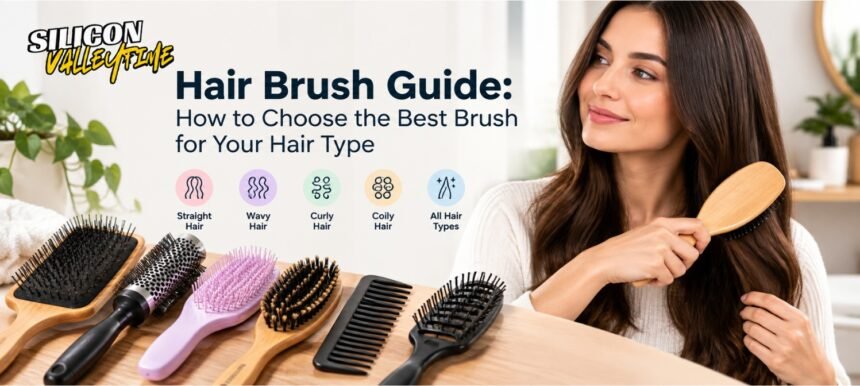

Choosing a Hair brush may seem like a small part of your hair-care routine, but the right brush can make detangling, smoothing, and styling much easier. The challenge is that there is no single hair brush that works perfectly for everyone. Fine hair, thick hair, curls, waves, and straight hair can all respond differently to the same brush.
The best choice depends on your hair texture, length, condition, and what you want the brush to do. A brush designed for detangling is not necessarily the best option for creating volume, while a round brush used for blow-drying serves a completely different purpose.
This guide explains the main hair brush types, what they are designed to do, and how to choose one that fits your hair.
What Is a Hair Brush and Why Does the Right One Matter?
A Hair brush is primarily used to detangle, smooth, shape, or style hair. Its bristle pattern, flexibility, shape, and size determine how it interacts with your hair.
For a basic overview of hairbrushes, their uses, and common types, you can also explore Hairbrush on Wikipedia.
Using the appropriate brush can make everyday styling more comfortable and reduce unnecessary pulling. On the other hand, aggressive brushing, excessive tension, or choosing a brush that does not suit your hair can contribute to mechanical damage. Dermatology research has documented that improper brush use can contribute to hair-shaft damage and traction-related problems.
That does not mean brushing is harmful. It means technique and brush selection matter.
Different Types of Hair Brushes Explained
There are several common brush designs, each with a particular purpose.
Paddle Hair Brush
A paddle brush has a broad, flat surface and is useful for smoothing and detangling larger sections of hair. It can be particularly practical for straight or wavy hair and longer lengths.
Round Hair Brush
Round brushes are commonly used with a blow dryer to create volume, bends, waves, or a smoother finish. Barrel size matters: smaller barrels generally offer more control for shorter hair, while larger barrels are useful for longer hair.
Detangling Hair Brush
Detangling brushes are designed to loosen knots with flexible bristles. They can be useful for many hair types, but fine or wet hair should be handled gently because wet strands are more vulnerable to breakage.
Vented Hair Brush
A vented brush has openings that allow air to move through the brush during blow-drying. It can help distribute airflow across larger sections and is available in different sizes.
Boar Bristle Brush
Boar-bristle brushes are often used for smoothing and distributing natural oils along the hair. They are generally more suitable for straight or wavy hair than very tightly curled textures. Soft bristles can be preferable when hair is fragile or damaged.
Wide-Tooth Comb
Although technically a comb rather than a hair brush, a wide-tooth comb deserves attention because it can be useful for detangling curly, coily, or thick hair. For curls, using it on wet hair with conditioner or another moisturizing product can make detangling easier.
How to Choose the Best Hair Brush for Your Hair Type
Your hair type should be the starting point when selecting a brush.
Best Hair Brush for Fine Hair
Fine hair can be more susceptible to breakage from excessive pulling. Look for a brush with flexible or relatively soft bristles and avoid repeatedly forcing it through knots.
When detangling, start at the ends and gradually work toward the roots rather than pulling through the entire length at once.
Best Hair Brush for Thick Hair
Thick hair usually benefits from a brush that can work through substantial sections without requiring excessive force. A sturdy paddle brush or suitable detangling brush can be a practical choice.
If your hair is both thick and curly, however, texture matters as much as density. A wide-tooth comb or curl-friendly detangling tool may be more appropriate.
Best Hair Brush for Curly or Coily Hair
Curly and coily hair needs special attention because aggressive dry brushing can disturb the curl pattern and create additional frizz.
For detangling, a wide-tooth comb or appropriate flexible detangling brush can work well on wet, conditioned hair. Work slowly from the ends upward and avoid forcing knots apart. Dermatology guidance specifically recommends gentle wet detangling for curly hair.
Best Hair Brush for Straight Hair
Straight hair offers more flexibility when choosing a brush. A paddle brush can help with everyday smoothing and detangling, while a boar-bristle brush can be useful when your primary goal is a polished, smooth appearance.
Best Hair Brush for Wavy Hair
Wavy hair often needs a balance between detangling and maintaining its natural texture. A suitable paddle or flexible detangling brush can help, while excessive brushing may make waves look less defined.
Best Hair Brush for Long Hair
Long hair can take more time to detangle because there is simply more length to manage. A large paddle brush or appropriate detangling brush can make the process more efficient. Divide very long or dense hair into sections rather than trying to brush everything at once.
Which Hair Brush Is Best for Different Styling Goals?
The “best” brush changes depending on what you are trying to accomplish.
For detangling: Choose a flexible detangling brush or wide-tooth comb appropriate for your texture.
For smoothing: A paddle brush or suitable boar-bristle brush may work well for straight or wavy hair.
For volume: A round brush is commonly used during blow-drying.
For faster blow-drying: A vented brush allows more airflow through the brush.
For curly hair: Prioritize gentle detangling and maintaining the natural curl pattern rather than aggressively smoothing the hair.
There is no need to own every brush type. In many cases, one everyday brush plus a specialized styling tool is enough.
How to Brush Your Hair Without Causing Breakage
Good technique is just as important as buying the right hair brush.
Start with the ends and gradually move upward. If you encounter a knot, do not repeatedly pull through it. Separate the section and work through the tangle gently.
Wet hair also deserves extra care because it can be more fragile. If your hair tangles easily, use a suitable conditioner or detangling product and work slowly. For curly hair, dermatology guidance recommends detangling while the hair is wet rather than dry.
Avoid excessive tension, particularly around the hairline. Constant pulling can place unnecessary stress on the hair and scalp.
How Often Should You Clean a Hair Brush?
A hair brush can collect loose hair, oils, skin cells, dust, and styling-product residue. Cleaning it regularly helps keep the tool in better condition.
Start by removing trapped hair. Then clean the bristles according to the brush material and allow the brush to dry thoroughly before using it again. The ideal cleaning frequency depends on how often you use the brush, your hair type, and how much product you apply.
If the bristles become damaged, bent, excessively dirty, or difficult to clean, replacing the brush may be sensible.
Common Hair Brush Mistakes to Avoid
Some of the most common mistakes are surprisingly simple:
- Using one brush for every hair type and styling task
- Pulling aggressively through knots
- Brushing curly hair dry when it causes excessive frizz
- Applying unnecessary tension around the hairline
- Using damaged or broken bristles
- Ignoring regular brush cleaning
- Using excessive heat while brushing and blow-drying
A good hair brush cannot compensate for rough technique. Gentle handling remains important regardless of which brush you choose.
Frequently Asked Questions
Which type of hair brush is best?
The best hair brush depends on your hair type and goal. A paddle brush is versatile for straight or wavy hair, a detangling brush helps with knots, and a round brush is useful for blow-drying and styling.
What is the best hair brush for curly hair?
For curly hair, a wide-tooth comb or suitable detangling brush used on wet, conditioned hair is often a practical choice. Gentle handling helps preserve the natural curl pattern.
Is it better to brush wet or dry hair?
It depends on your hair type and the purpose. Curly hair is often easier to detangle wet with conditioner, while wet hair in general should be handled gently because it can be more prone to breakage.
Can a hair brush cause hair breakage?
Yes, excessive pulling, aggressive brushing, and unsuitable tools can contribute to mechanical hair damage. Using the right brush and a gentle technique can reduce unnecessary stress on the hair.
How often should you replace a hair brush?
There is no universal replacement schedule. Replace it when the bristles become damaged, the brush can no longer be cleaned properly, or its condition makes brushing uncomfortable or less effective.
Final Takeaway
The best hair brush is not necessarily the most expensive or the most popular one. It is the brush that matches your hair texture, length, condition, and styling needs.
Fine hair generally benefits from gentler handling, thick hair may need a sturdier tool, and curly or coily hair often requires careful wet detangling. Paddle brushes are useful for everyday smoothing, round brushes are valuable for styling, and vented brushes can help during blow-drying.
Most importantly, focus on technique. Start at the ends, avoid unnecessary pulling, use suitable products when needed, and keep your brush clean. With the right combination of tool and technique, brushing can become a simple part of a healthy, manageable hair-care routine.