
Have you ever walked past a building and just stopped to stare? Some structures are more than just buildings; they are works of art that change how we see the world. For architects who design these incredible spaces, there is one award that stands above all others: the Pritzker Prize. Often called the “Nobel Prize of Architecture,” this award celebrates living architects whose work shows a combination of talent, vision, and a deep commitment to humanity.
This article will explore everything you need to know about the prestigious Pritzker Prize. We will look at its history, understand its importance, and meet some of the brilliant minds who have earned this top honor. From the iconic glass pyramids to groundbreaking sustainable designs, the laureates of this prize have shaped the very skylines of our cities and the spaces where we live, work, and connect.
Key Takeaways
- The Pritzker Prize is considered the most prestigious award in the field of architecture, honoring living architects for significant contributions.
- Founded in 1979 by Jay and Cindy Pritzker, the prize aims to inspire greater creativity and public awareness of architecture.
- Laureates are selected by an independent jury of experts and receive a $100,000 grant and a bronze medallion.
- The prize has recognized a diverse range of architects from around the world, including Zaha Hadid, the first woman to win, and Arata Isozaki, known for his global perspective.
- Winning the Pritzker Prize solidifies an architect’s legacy and often leads to major international commissions and global recognition.
What Is the Pritzker Prize?
The Pritzker Prize is an annual international award given to a living architect or architects. Its purpose is to honor those whose built work demonstrates a masterful blend of talent, vision, and commitment. The award’s official citation states that it is for architects “whose built work has produced consistent and significant contributions to humanity and the built environment through the art of architecture.” This isn’t just about designing a pretty building; it’s about creating spaces that serve people, enhance communities, and push the boundaries of what is possible. Think of it as the ultimate recognition for a lifetime of innovative and impactful work.
The prize was established to fill a void. While fields like literature, peace, and science had the Nobel Prizes, architecture had no equivalent honor of such global stature. The Pritzker family, famous for their Hyatt hotel chain and philanthropic efforts, saw this gap and decided to create an award that would encourage and stimulate not only a greater awareness of buildings but also inspire more creativity within the architectural profession. Winning the Pritzker Prize is a signal that an architect has reached the pinnacle of their profession, leaving a lasting mark on the world.
The History and Origins of the Award
The story of the Pritzker Prize begins with the Pritzker family of Chicago. Jay A. Pritzker and his wife, Cindy, were passionate patrons of architecture. Through their work developing the Hyatt Hotels group worldwide, they had firsthand experience with the power of great design. They understood that buildings were more than just shelters; they were environments that could influence human experience and well-being. They felt that architecture, as a creative endeavor, was not receiving the public recognition it deserved.
In 1979, they established the Pritzker Architecture Prize through their Hyatt Foundation. Their goal was simple yet profound: to honor a living architect who had produced significant and consistent work. The model was the Nobel Prize, aiming for a similar level of prestige and international respect. The Pritzkers wanted to celebrate architecture as one of the premier art forms and to encourage architects to explore new ideas. The first-ever recipient was Philip Johnson in 1979, an American architect known for his modernist and postmodernist works, including the famous Glass House. His selection set a high bar for all future laureates.
The Pritzker Family’s Vision
The Pritzker family’s vision was not just about giving out an award. They wanted to foster a global conversation about architecture. They believed that by highlighting the achievements of brilliant architects, they could elevate the entire profession and make the public more aware of the built environment around them. This vision is reflected in the prize’s selection process, which is modeled after the Nobel’s confidential and rigorous deliberation. The family’s ongoing commitment ensures the prize remains independent and true to its founding principles, celebrating architecture that enriches the human spirit. This enduring vision has made the Pritzker Prize a name synonymous with architectural excellence.
How Are the Winners Chosen?
The selection process for the Pritzker Prize is a serious and thoughtful affair, designed to be rigorous and impartial. It begins with nominations. Each year, the executive director of the prize actively seeks nominations from a wide range of people, including past laureates, academics, critics, and other professionals with expertise and interest in the field of architecture. What makes the process unique is that any licensed architect can also submit a nomination, making it a surprisingly open system. However, self-nominations are not permitted, ensuring the focus remains on external recognition of an architect’s contributions.
Once all nominations are received by November 1st each year, the jury begins its work. The jury is an independent panel of five to nine experts, typically comprising renowned architects, architectural critics, historians, and patrons of the arts. They review all the nominations and spend months deliberating, visiting sites, and discussing the candidates’ entire body of work. Their final decision is made in the early part of the following year, and the winner is announced to the public in the spring. This careful, confidential process ensures that the recipient of the Pritzker Prize is truly deserving of this immense honor.
The Role of the Jury
The jury is the heart of the selection process. Its members are chosen for their deep knowledge and diverse perspectives on architecture. The composition of the jury changes over time, bringing fresh eyes and new viewpoints to the table. This diversity is crucial for evaluating architects from different cultural backgrounds and with varied design philosophies. The jurors travel extensively to experience the nominated architects’ buildings in person. They believe that architecture must be experienced, not just viewed in photographs. This hands-on approach allows them to assess how a building interacts with its environment, how people use the space, and the quality of its construction. The jury’s final vote determines the laureate, and their citation explains the specific reasons for their choice, highlighting the winner’s unique contributions to the field.
What Do the Laureates Receive?
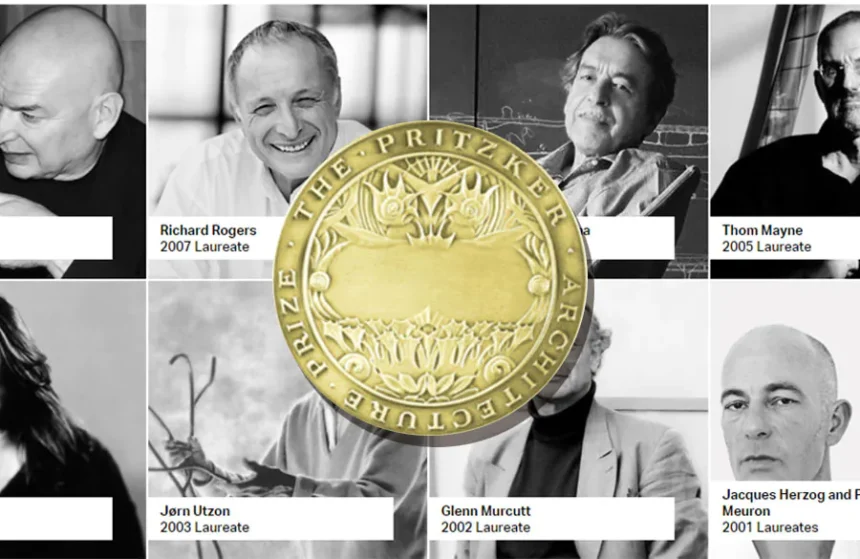
Winning the Pritzker Prize comes with three distinct components: a significant monetary award, a formal citation, and a beautiful bronze medallion. First, the laureate is awarded a prize of $100,000. While this amount is substantial, the Pritzker family has always emphasized that the prestige and recognition of the award far outweigh the monetary value. The financial grant provides the architect with the freedom to pursue further research, experiment with new ideas, or support a passion project without the typical constraints of client demands. It is a symbol of the profession’s faith in their continued ability to innovate and inspire.
In addition to the grant, the laureate receives a formal citation certificate. This document beautifully articulates why the architect was chosen, highlighting their specific achievements and their impact on architecture and humanity. Finally, each laureate is presented with a bronze medallion. The design of the medallion is based on the writings of the ancient Roman architect Vitruvius, featuring his core principles: firmitas, utilitas, venustas (durability, utility, and beauty). The awarding of these three elements—the grant, the citation, and the medallion—solidifies the winner’s place in architectural history, celebrating their past achievements and encouraging their future work.
|
Award Component |
Description |
Significance |
|---|---|---|
|
Monetary Grant |
$100,000 (USD) |
Provides financial freedom for research, experimentation, or personal projects. |
|
Bronze Medallion |
A custom-designed medal based on the works of the Roman architect Vitruvius. |
Symbolizes the core tenets of great architecture: durability, utility, and beauty. |
|
Formal Citation |
A written certificate detailing the jury’s reasons for selecting the laureate. |
Officially recognizes the architect’s specific contributions and impact on the field. |
|
Global Recognition |
Immense international prestige and media attention. |
Cements the architect’s legacy and often leads to major new commissions. |
The First Pritzker Prize Winner: Philip Johnson
The inaugural Pritzker Prize in 1979 was awarded to Philip Johnson, a towering figure in American architecture. His selection was a landmark moment, setting the tone for the award’s future. Johnson was known for his influential and often controversial role as an architect, critic, and curator. His career spanned several decades and embraced a variety of styles, from the rigid modernism of his early work to the playful and decorative elements of postmodernism later on. His most famous creation is arguably the Glass House in New Canaan, Connecticut, a minimalist masterpiece of glass and steel that became his personal residence and a landmark of modern design.
The jury’s citation for Johnson praised him for “50 years of imagination and vitality embodied in a multitude of museums, theaters, libraries, houses, gardens, and corporate structures.” His selection was significant because it recognized not only his work as a designer but also his powerful influence as a tastemaker and intellectual force in the architectural world. As a curator at the Museum of Modern Art (MoMA), he helped introduce European modernism to America. Awarding the first Pritzker Prize to Johnson was a statement: this was an award for visionaries who shape the very conversation around architecture.
Notable Female Laureates
For many years, the Pritzker Prize was criticized for its lack of female representation. That changed in 2004 when Zaha Hadid, an Iraqi-British architect, became the first woman to win the prestigious award. Hadid was a revolutionary force in architecture, known for her intensely futuristic designs characterized by sweeping curves, sharp angles, and fragmented geometry. Her buildings often look as if they are in motion, defying traditional notions of static structures. Some of her most famous works include the Vitra Fire Station in Germany, the MAXXI Museum in Rome, and the Guangzhou Opera House in China. Her win was a monumental moment, shattering a glass ceiling and inspiring a new generation of female architects.
Since Hadid’s groundbreaking win, several other women have been honored:
- Kazuyo Sejima (2010, with Ryue Nishizawa): A Japanese architect known for her clean, modernist buildings that emphasize light and open space.
- Carme Pigem (2017, with Rafael Aranda and Ramón Vilalta): A member of the Spanish firm RCR Arquitectes, celebrated for their poetic use of modern materials that connect deeply with the natural landscape.
- Yvonne Farrell and Shelley McNamara (2020): An Irish duo from Grafton Architects, praised for creating robust, humane spaces for education and public life.
- Anne Lacaton (2021, with Jean-Philippe Vassal): A French architect whose philosophy focuses on transforming and improving existing structures rather than demolishing them.
These laureates have not only contributed incredible buildings to the world but have also helped make the field of architecture more diverse and inclusive.
The Global Reach of the Pritzker Prize
From its inception, the Pritzker Prize was intended to be a truly international award, recognizing talent from all corners of the globe. A quick look at the list of laureates confirms this global vision. Winners have hailed from countries across Europe, Asia, North and South America, and Australia. This geographic diversity is a testament to the jury’s commitment to finding excellence wherever it exists, unbound by national borders or cultural styles. The prize has celebrated the minimalist aesthetics of Japanese architects like Tadao Ando, the vibrant modernism of Brazilian legend Oscar Niemeyer, and the sustainable, community-focused designs of Australian Glenn Murcutt.
This global reach is critical because it highlights the fact that great architecture is a universal language. While styles and materials may differ based on local climate, culture, and resources, the underlying principles of good design—utility, durability, and beauty—are shared worldwide. The Pritzker Prize has been instrumental in introducing architects from one part of the world to another, fostering a cross-pollination of ideas. For example, learning about the latest trends in sustainable architecture can be as easy as following news from outlets like https://siliconvalleytime.co.uk/ or by studying the work of Pritzker winners. By celebrating this global tapestry of talent, the prize enriches the entire architectural profession.
A Spotlight on Arata Isozaki (2019 Laureate)
A perfect example of the prize’s global perspective is the 2019 laureate, Arata Isozaki of Japan. The jury praised him for his “transnational” approach to architecture, noting that he never followed a single style but instead evolved his approach over a career spanning more than six decades. Having come of age after World War II, when his hometown was destroyed, Isozaki approached his work with a deep understanding of both loss and reconstruction. His early work was part of the Japanese Metabolism movement, but he quickly moved beyond it, creating a body of work that is incredibly diverse. His buildings can be found all over the world, from the Museum of Contemporary Art in Los Angeles to the Palau Sant Jordi in Barcelona, built for the 1992 Summer Olympics. Isozaki’s win celebrated an architect who truly bridged East and West.
The Impact of Winning the Pritzker Prize
Winning the Pritzker Prize is a career-defining moment for any architect. It is the ultimate seal of approval from their peers and instantly catapults them to a new level of fame and influence. The most immediate impact is a massive increase in public recognition. An architect who might have been well-known within professional circles suddenly becomes a household name, with their work featured in major news outlets around the world. This newfound celebrity status often translates into significant new commissions. Clients, from corporations to governments to cultural institutions, are eager to hire a “starchitect” to design their next landmark building.
Beyond fame and fortune, the Pritzker Prize has a deeper impact. It validates an architect’s unique vision and design philosophy. For architects who have spent their careers pushing boundaries and challenging conventions, the prize is a powerful affirmation that their risks have paid off. It gives them the creative freedom and clout to pursue even more ambitious projects. For the broader architectural community, each new laureate offers a moment of reflection. Their work is studied, debated, and analyzed by students and professionals alike, influencing design trends and inspiring new ways of thinking about the spaces we inhabit.
Architectural Styles Honored by the Prize
The Pritzker Prize does not favor any single architectural style. In fact, its list of laureates reads like a history of late 20th and early 21st-century architecture. The jury has celebrated a wide spectrum of design philosophies, from the sleek, glass-and-steel modernism of I.M. Pei to the sculptural deconstructivism of Frank Gehry. This stylistic diversity is one of the award’s greatest strengths. It recognizes that there are many different ways to create meaningful and beautiful architecture.
Here are a few of the styles represented by Pritzker laureates:
- Modernism: Characterized by clean lines, simple forms, and an absence of ornamentation. Laureates like Luis Barragán and I.M. Pei are masters of this style.
- Postmodernism: A reaction against modernism, this style incorporates historical references, humor, and bold colors. Philip Johnson and Robert Venturi are key figures.
- Deconstructivism: This style is known for its fragmented, disjointed, and often chaotic appearance, challenging traditional ideas of harmony and stability. Frank Gehry and Zaha Hadid are its most famous proponents.
- High-Tech Architecture: Celebrates the expressive use of technology and building materials, often exposing the building’s structure and services. Richard Rogers and Renzo Piano are pioneers of this style.
- Sustainable and Regionalist Architecture: This approach emphasizes environmentally friendly design and a deep connection to the local context and climate. Glenn Murcutt and Francis Kéré are leading examples.
By honoring such a diverse range of styles, the Pritzker Prize encourages innovation and reminds us that architecture is a constantly evolving art form.
Controversies and Criticisms
Despite its esteemed reputation, the Pritzker Prize has not been without its share of controversy and criticism. One of the most persistent critiques has been its historical tendency to overlook female architects. For many years, the prize was exclusively awarded to men, even when women were equal partners in a firm. A notable instance was in 1991 when Robert Venturi won, but his partner and wife, Denise Scott Brown, was excluded, despite their decades of collaborative work and co-authored seminal texts. This led to a petition signed by thousands demanding she be retroactively recognized. While the Pritzker committee declined, the outcry raised significant awareness, and in subsequent years, the prize has been awarded to several women and partnerships.
Another criticism revolves around the concept of the “starchitect.” Some argue that by focusing on a single, heroic individual, the Pritzker Prize perpetuates a myth that great buildings are the product of a lone genius. In reality, architecture is a highly collaborative process involving large teams of designers, engineers, and builders. Critics suggest the prize should do more to acknowledge this collaborative nature. Furthermore, some have argued that the prize has historically favored architects known for spectacular, expensive, and photogenic “icon” buildings over those focused on social housing, sustainability, and humble, community-oriented projects, although recent laureates like Francis Kéré (2022) signal a potential shift in focus.
Conclusion: The Enduring Legacy of the Pritzker Prize
For over four decades, the Pritzker Prize has stood as the ultimate symbol of architectural achievement. It has succeeded in its mission to bring public attention to architecture and to celebrate the creative minds who shape our built environment. From Philip Johnson’s bold modernism to Francis Kéré’s community-driven designs, the laureates represent a remarkable spectrum of vision, innovation, and dedication. The prize has not only honored individual architects but has also chronicled the evolution of architecture itself, reflecting its changing styles, priorities, and technologies over time.
While it has faced valid criticisms regarding representation and the “starchitect” phenomenon, the prize has shown a capacity to evolve. Recent selections have increasingly recognized architects focused on sustainability, social impact, and collaborative practice. The enduring legacy of the Pritzker Prize lies in its power to inspire. It challenges architects to dream bigger, to build more thoughtfully, and to create spaces that not only serve our needs but also elevate our spirits. It reminds all of us that the buildings we inhabit are more than just structures—they are a vital part of our shared human story.
Frequently Asked Questions (FAQ)
Q1: Who was the first person to win the Pritzker Prize?
The very first Pritzker Prize was awarded in 1979 to the American architect Philip Johnson. He was recognized for his 50 years of influence on the architectural world through his diverse body of work and his role as a curator and critic.
Q2: How many women have won the Pritzker Prize?
As of 2024, six women have been awarded the Pritzker Prize. They are Zaha Hadid (2004), Kazuyo Sejima (2010, jointly), Carme Pigem (2017, jointly), Yvonne Farrell and Shelley McNamara (2020, jointly), and Anne Lacaton (2021, jointly).
Q3: Is the Pritzker Prize always given to one person?
No, not always. While it is typically awarded to a single architect, there have been several instances where the prize was awarded to two or even three partners in recognition of their collaborative work. Examples include Kazuyo Sejima and Ryue Nishizawa in 2010, and Rafael Aranda, Carme Pigem, and Ramón Vilalta in 2017.
Q4: Has anyone ever rejected the Pritzker Prize?
No architect has ever rejected the Pritzker Prize. It is considered the highest honor in the field, and winning it is a universally celebrated achievement in an architect’s career.
Q5: Where is the award ceremony held?
The ceremony location changes each year. It is held in a different architecturally significant site around the world, paying homage to the art of architecture and the culture of the host country. This tradition makes each year’s ceremony a unique and memorable event.