








Key Takeaways
- Cultural Impact: The Austin Powers movies revitalized the spy genre with humor, satire, and catchy catchphrases that are still used today.
- The Trilogy: There are three main films in the franchise: International Man of Mystery, The Spy Who Shagged Me, and Goldmember.
- Mike Myers’ Genius: Mike Myers played multiple iconic roles, including Austin Powers, Dr. Evil, Fat Bastard, and Goldmember, showcasing his incredible range.
- Box Office Success: Despite a modest start, the series became a massive box office hit, earning hundreds of millions globally.
- Legacy: The movies are celebrated for their 1960s aesthetic, memorable soundtracks, and the lovable dynamic between Dr. Evil and Mini-Me.
Do you remember the first time you heard someone shout, “Yeah, baby!” in a questionable British accent? If you were around in the late 90s or early 2000s, it was impossible to escape. The Austin Powers movies didn’t just hit theaters; they crashed into pop culture like a velvet-clad wrecking ball. These films brought a unique blend of 1960s nostalgia, spy spoofing, and sheer absurdity that audiences hadn’t seen before.
This article is your ultimate guide to the shagadelic world of the Austin Powers movies. We are going to explore everything from the humble beginnings of the first film to the massive blockbuster success of the sequels. Whether you are a die-hard fan who knows every line or someone just discovering the International Man of Mystery, we have got you covered. We will look at the characters, the fashion, the villains, and why we still love these movies decades later. Let’s travel back in time and get our mojo working!
The Origins of Austin Powers
From Saturday Night Live to the Big Screen
Before he was a cryogenically frozen secret agent, Mike Myers was already a comedy star. He made his name on Saturday Night Live and with the success of Wayne’s World. However, the idea for the Austin Powers movies came from a much more personal place. Myers grew up watching British spy thrillers and comedies with his father. He wanted to create a character that paid tribute to that era—specifically the swinging 60s London scene.
The concept was simple but brilliant: take a spy who is completely stuck in the mindset and fashion of the 1960s and drop him into the cynical, modern world of the 1990s. This fish-out-of-water scenario provided endless opportunities for comedy. It wasn’t just about making fun of James Bond; it was about celebrating the cool, carefree attitude of a bygone era.
Why the Spoof Genre Needed a Hero
In the mid-90s, the spoof genre was a bit tired. We had seen plenty of parodies, but many felt lazy or mean-spirited. The Austin Powers movies changed the game because they came from a place of love. Mike Myers clearly adored the source material he was mocking.
Instead of just pointing and laughing at spy tropes, he embraced them. The villain’s overly complicated plans, the hero’s irresistible charm (despite his bad teeth), and the over-the-top henchmen were all exaggerated to hilarious levels. This affection for the genre is why the jokes landed so well. It felt like an inside joke that everyone was invited to join.
Austin Powers: International Man of Mystery (1997)
The Movie That Started It All
The first film in the series, Austin Powers: International Man of Mystery, was a bit of a sleeper hit. It didn’t shatter box office records immediately, but it found a massive audience on home video. The plot introduces us to Austin Powers, a top spy in 1967 who volunteers to be frozen so he can battle his nemesis, Dr. Evil, whenever he returns in the future.
When they both wake up in 1997, the culture clash is immediate. Austin tries to use a record player in a CD world, and Dr. Evil tries to hold the world ransom for… one million dollars (which wasn’t much money in the 90s). The film established the core humor: Austin’s outdated sexism vs. modern sensibilities, and Dr. Evil’s struggle to manage a criminal empire with a rebellious teenage son, Scott Evil.
Key Characters Introduced
- Austin Powers: The hero with the mojo.
- Dr. Evil: The pinky-biting villain.
- Vanessa Kensington: Austin’s partner and eventual wife, played by Elizabeth Hurley.
- Basil Exposition: The man who explains the plot (literally).
- Number Two: Dr. Evil’s corporate-minded second-in-command.
The chemistry between these characters set the foundation for the entire franchise. It was clear from the start that Mike Myers playing both the hero and the villain was a stroke of genius.
Austin Powers: The Spy Who Shagged Me (1999)
Bigger, Louder, and Groovier
After the first movie became a cult classic on VHS, the hype for the sequel was unreal. Austin Powers: The Spy Who Shagged Me took everything that worked in the first film and turned it up to eleven. The budget was bigger, the jokes were bolder, and the cultural impact was undeniable.
In this installment, Dr. Evil travels back in time to 1969 to steal Austin’s “mojo”—the source of his sexual confidence and spy skills. Austin must follow him back to the 60s to retrieve it. This plot allowed for even more 60s fashion, music, and references. It also introduced a new female lead, Felicity Shagwell, played by Heather Graham, who matched Austin’s energy perfectly.
The Arrival of Mini-Me
You cannot talk about the Austin Powers movies without mentioning Mini-Me. Played by the late Verne Troyer, Mini-Me was a clone of Dr. Evil, sized at one-eighth of the original. Despite having almost no dialogue, Mini-Me became an instant icon.
His physical comedy and the bizarre, affectionate relationship he had with Dr. Evil provided some of the funniest moments in the series. Whether he was fighting Austin or simply mimicking Dr. Evil’s gestures, Mini-Me stole every scene he was in. This character addition was crucial in keeping the villain side of the story fresh and engaging.
Austin Powers in Goldmember (2002)
The Grand Finale (So Far)
The third film, Austin Powers in Goldmember, brought the saga to a dazzling, star-studded conclusion. By this time, the franchise was a global phenomenon. The movie opens with a movie-within-a-movie starring Tom Cruise, Gwyneth Paltrow, and Danny DeVito, proving just how huge the series had become.
The plot involves Dr. Evil teaming up with a new villain, Goldmember (also played by Myers), a Dutch roller-skating enthusiast with a penchant for gold. They plan to use a tractor beam to pull a meteor made of gold into the Earth. To stop them, Austin teams up with Foxxy Cleopatra, played by Beyoncé in her theatrical film debut. The film also delves into Austin’s family history, introducing his father, Nigel Powers, played by the legendary Michael Caine.
Comparison of the Three Movies
|
Feature |
International Man of Mystery (1997) |
The Spy Who Shagged Me (1999) |
Goldmember (2002) |
|---|---|---|---|
|
Main Villain |
Dr. Evil |
Dr. Evil |
Goldmember / Dr. Evil |
|
Austin’s Partner |
Vanessa Kensington |
Felicity Shagwell |
Foxxy Cleopatra |
|
Key New Character |
Scott Evil |
Mini-Me |
Nigel Powers |
|
Box Office (Global) |
~$67 Million |
~$312 Million |
~$296 Million |
|
Primary Setting |
1997 London/Vegas |
1969 London/Moon |
1975 New York/Tokyo |
The Genius of Mike Myers
Playing Multiple Roles
One of the most impressive aspects of the Austin Powers movies is Mike Myers’ ability to play distinct characters in the same scene. In Goldmember, he plays four major roles: Austin, Dr. Evil, Fat Bastard, and Goldmember.
- Austin Powers: Cheerful, oblivious, and charming.
- Dr. Evil: Petulant, needy, and bizarrely relatable.
- Fat Bastard: Crude, loud, and Scottish.
- Goldmember: Weird, flexible, and obsessed with texture.
Each character has a unique voice, posture, and makeup design. It is a testament to his talent that you often forget it is the same actor talking to himself. The editing and special effects teams deserve credit too, but the comedic timing is all Myers.
Improvisation and Catchphrases
Much of the humor in the Austin Powers movies feels spontaneous. That is because Mike Myers and his collaborators were constantly improvising on set. Lines like Dr. Evil’s “Zip it!” or the extended sequences where characters just laugh or dance were often born in the moment.
These catchphrases became part of our daily language. “One million dollars,” “Throw me a frickin’ bone here,” and “Oh, behave!” are still quoted today. This ability to create earworms is a rare skill in comedy writing. It made the movies stick in people’s heads long after they left the theater.
The Villains We Love to Hate
Dr. Evil: The True Star?
While the movies are named after the hero, many fans argue that Dr. Evil is the real star. His backstory—raised by Belgians, attended evil medical school—is hilarious nonsense. He tries so hard to be menacing, but he is constantly undermined by modern bureaucracy, his insolent son, or his own incompetence.
Dr. Evil represents the mundane side of being a supervillain. We see him in group therapy, dealing with staff meetings, and trying to bond with his son. These “slice of life” moments make him incredibly lovable despite his plans for world domination.
The Henchmen
Dr. Evil’s entourage is just as funny as he is.
- Frau Farbissina: The shouting militant founder of the militant wing of the Salvation Army. Her romance with Dr. Evil is surprisingly sweet and disturbing.
- Number Two: He is the straight man, constantly trying to turn Dr. Evil’s schemes into profitable business ventures. He represents corporate evil versus Dr. Evil’s theatrical evil.
- Scott Evil: Played by Seth Green, Scott is the voice of reason. He constantly points out the flaws in his father’s plans (“Why don’t you just shoot him?”), only to be shushed. His transformation into a villain by the third movie is a great character arc.
Fashion and Style in Austin Powers Movies
The Swinging 60s Aesthetic
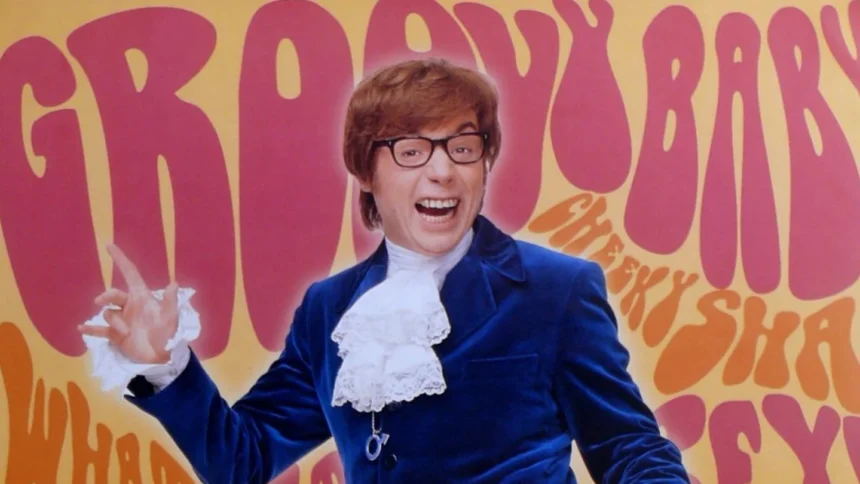
The visual style of the Austin Powers movies is a feast for the eyes. The costume designers went all out to recreate the psychedelic look of the 1960s. We see velvet suits, ruffled shirts, go-go boots, and incredibly bright colors.
This aesthetic wasn’t just for show; it was a character in itself. The vibrant sets and costumes contrasted sharply with the drab, grey tones often used to depict the modern 1990s world or Dr. Evil’s lair. It visually reinforced Austin’s joyful, life-affirming attitude against the coldness of his enemies.
Iconic Outfits
Certain outfits from the movies are instantly recognizable.
- The Blue Velvet Suit: Austin’s signature look.
- The Grey Nehru Jacket: Dr. Evil’s standard uniform.
- The Union Jack Dress: Worn by Elizabeth Hurley, paying homage to 60s British pride.
- Goldmember’s Gold Tracksuit: Tacky, shiny, and perfect for the character.
These costumes have become staples at Halloween parties for decades, proving the lasting visual impact of the franchise.
The Music That Got Us Dancing
Quincy Jones and “Soul Bossa Nova”
The theme song of the Austin Powers movies is “Soul Bossa Nova” by Quincy Jones. Before the movies, it was a catchy jazz tune; after the movies, it became the international anthem for spy comedy. As soon as you hear those opening flutes, you picture Austin dancing in the street.
The opening dance sequences in the films are legendary. They set the tone immediately: this is a movie where we are going to have fun. The choreography is silly but energetic, involving marching bands, synchronized swimmers, and random bystanders.
Madonna, Beyoncé, and the Soundtracks
The soundtracks for these movies were huge sellers. Madonna wrote “Beautiful Stranger” for the second film, which became a massive hit. Beyoncé, of course, brought her incredible talent to Goldmember with “Work It Out.”
The music choices were a perfect mix of classic 60s rock and pop (The Who, The Rolling Stones) and contemporary hits. This blend helped bridge the gap between the older generation who lived through the 60s and the younger generation watching the movies for the first time.
Why Austin Powers Movies Still Resonate
Nostalgia on Top of Nostalgia
When the movies first came out, they were nostalgic for the 1960s. Now, watching the Austin Powers movies is nostalgic for the late 90s and early 2000s. It is a double layer of cultural memory. We miss the 60s style, but we also miss the era when comedies could be this silly and unpretentious.
The humor, while sometimes crude, is generally good-natured. It laughs at stereotypes rather than enforcing them aggressively. In a world that can often feel very serious, revisiting these movies is like comfort food.
The Theme of Love vs. Evil
At their core, the movies have a sweet message. Austin Powers wins not because he is the strongest or smartest, but because he embraces love and joy. His “mojo” isn’t just about sex appeal; it is about zest for life. Dr. Evil is miserable because he is closed off and bitter.
The resolution of the third movie, where the enemies realize they are brothers (literally), reinforces this theme. Family and connection triumph over world domination. It’s a silly delivery system for a positive message, but it works.
FAQs About Austin Powers Movies
Will there be an Austin Powers 4?
Rumors of a fourth movie have circulated for years. Mike Myers has occasionally hinted that he would be open to it, and the director Jay Roach has expressed interest. However, as of now, nothing is officially in production. The death of Verne Troyer (Mini-Me) is a significant hurdle, as he was such a beloved part of the team.
What is the correct order to watch the Austin Powers movies?
You should watch them in release order:
- Austin Powers: International Man of Mystery (1997)
- Austin Powers: The Spy Who Shagged Me (1999)
- Austin Powers in Goldmember (2002)
Who played the fembots?
Various actresses played the deadly but beautiful fembots throughout the series. In the first film, they were played by models like Cindy Margolis. In later films, there were cameos by Britney Spears (as herself/fembot) in the opening of Goldmember.
Is Austin Powers based on James Bond?
Yes, primarily. Austin is a direct parody of the Sean Connery era of James Bond. However, he also draws inspiration from other 60s icons like Harry Palmer (played by Michael Caine) and the fashion photographer David Bailey.
Are the movies suitable for kids?
The movies are generally rated PG-13. They contain crude humor, sexual innuendo, and some mild language. They are likely fine for teenagers (13+), but parents might want to screen them for younger children due to the frequent sexual jokes.
Conclusion: Yeah, Baby, Yeah!
The Austin Powers movies are a rare trilogy where the energy never seems to dip. From the initial thaw in International Man of Mystery to the gold-plated madness of Goldmember, Mike Myers created a universe that is purely focused on fun. They reminded us not to take ourselves too seriously and that having a little bit of “mojo” can go a long way.
Even years later, the characters remain vivid, the jokes still make us chuckle, and the music still makes us want to dance. In the landscape of comedy history, Austin Powers stands tall in his platform boots, flashing a peace sign. Whether we ever get a fourth installment or not, the legacy of these films is secure. They are groovy, baby!
For more interesting reads on entertainment and technology, you might want to visit Silicon Valley Time.
If you want to dive deeper into the production history and cast details, you can find more information on Wikipedia related to the Austin Powers movies.



