





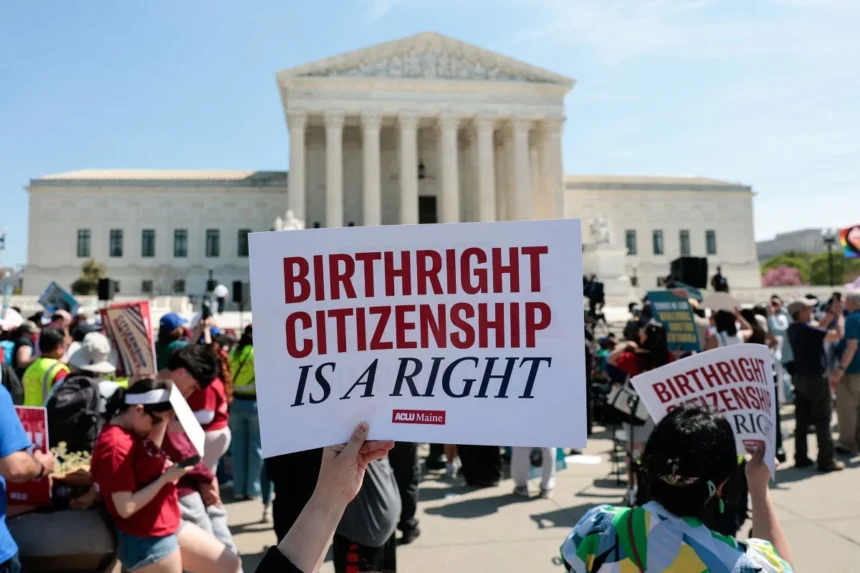

birthright citizenship supreme court is a topic that has received huge public attention in recent years. Many people want to understand what the U.S. Supreme Court has said about birthright citizenship, how the U.S. Constitution applies, and why the issue keeps returning to the headlines.
Here’s the thing: the topic can seem confusing because it involves constitutional law, immigration policy, and court decisions. This guide explains everything in simple language using verified facts without making assumptions or political claims.
Read more: Graham Platner: The Marine Veteran and Oyster Farmer Taking on Susan Collins in Maine
What Is Birthright Citizenship?
Birthright citizenship is the legal principle that a person automatically becomes a citizen because they were born within a country’s territory.
In the United States, this idea mainly comes from the 14th Amendment to the U.S. Constitution, which states that:
“All persons born or naturalized in the United States, and subject to the jurisdiction thereof, are citizens of the United States…”
That single sentence has shaped American citizenship law for more than 150 years.
The Background of Birthright Citizenship
The story begins after the American Civil War.
The 14th Amendment was ratified in 1868 to guarantee citizenship to formerly enslaved people and ensure equal protection under the law.
Before that amendment, citizenship rules were very different, and some groups were denied legal recognition.
What’s interesting is that the amendment eventually became one of the most important constitutional protections in American history.
Why the Supreme Court Became Involved
Questions about the meaning of the 14th Amendment eventually reached the Supreme Court.
People wanted clarification about who exactly was considered “subject to the jurisdiction” of the United States.
The Court was asked to interpret the Constitution, not rewrite it.
That distinction is important because Supreme Court decisions explain how constitutional language should be applied.
The Most Important Supreme Court Case
United States v. Wong Kim Ark (1898)
The landmark case connected with birthright citizenship supreme court discussions is United States v. Wong Kim Ark.
Wong Kim Ark was born in San Francisco, California, to Chinese immigrant parents who were not U.S. citizens.
When he returned from a trip abroad, officials questioned whether he was actually a U.S. citizen.
The case eventually reached the Supreme Court.
What Did the Court Decide?
The Supreme Court ruled that Wong Kim Ark was a U.S. citizen because he was born in the United States.
The Court relied heavily on the wording of the 14th Amendment.
This decision has remained one of the strongest legal foundations for birthright citizenship in America.
Understanding “Subject to the Jurisdiction”
This phrase often causes confusion.
To be honest, many public debates focus on these few words.
Historically, the Supreme Court has interpreted the phrase to include almost everyone born in the United States, with only limited exceptions.
Examples of exceptions generally include:
- Children of foreign diplomats
- Certain enemy forces occupying U.S. territory during wartime
Outside these uncommon situations, birth within the United States has generally been treated as creating citizenship.
Why Is the Topic Still Debated?
Although the Supreme Court decided the Wong Kim Ark case over a century ago, legal and political debates continue.
Some people believe the Constitution already provides a clear answer.
Others argue that Congress or future court cases could revisit certain interpretations.
Because immigration policy remains a major political issue, discussions about birthright citizenship continue to appear during elections and national policy debates.
Executive Orders and Court Challenges
In recent years, several proposals have attempted to change how birthright citizenship is applied.
Some have suggested limiting automatic citizenship for children born to certain non-citizen parents.
These proposals often face immediate legal challenges because opponents argue they conflict with the Constitution and existing Supreme Court precedent.
Courts may temporarily block or review such actions while legal questions are considered.
Can the Supreme Court Change Earlier Decisions?
Yes.
The Supreme Court has the authority to reconsider previous rulings.
However, changing a long-standing constitutional interpretation is not simple.
The Court usually considers:
- Constitutional text
- Historical evidence
- Previous decisions
- Legal arguments
- Practical consequences
Every case depends on its own facts and legal questions.
What Role Does Congress Play?
Congress creates immigration laws.
However, Congress cannot simply pass a law that overrides the Constitution.
If a law appears to conflict with constitutional protections, courts—including the Supreme Court—may review whether it is constitutional.
This balance is part of the U.S. system of checks and balances.
Common Misunderstandings
Birthright Citizenship Is Not the Same as Immigration Status
A child’s citizenship does not automatically change the immigration status of the parents.
These are separate legal issues.
The Supreme Court Does Not Create Laws
The Court interprets existing laws and the Constitution.
Lawmakers create legislation.
Understanding this difference helps explain why Supreme Court cases receive so much attention.
Why This Issue Matters
The birthright citizenship supreme court discussion affects many areas of public life.
These include:
- Immigration policy
- Constitutional law
- Civil rights
- Government authority
- Future legal challenges
Even people with different political opinions generally agree that the constitutional questions involved are significant.
Recent Public Attention
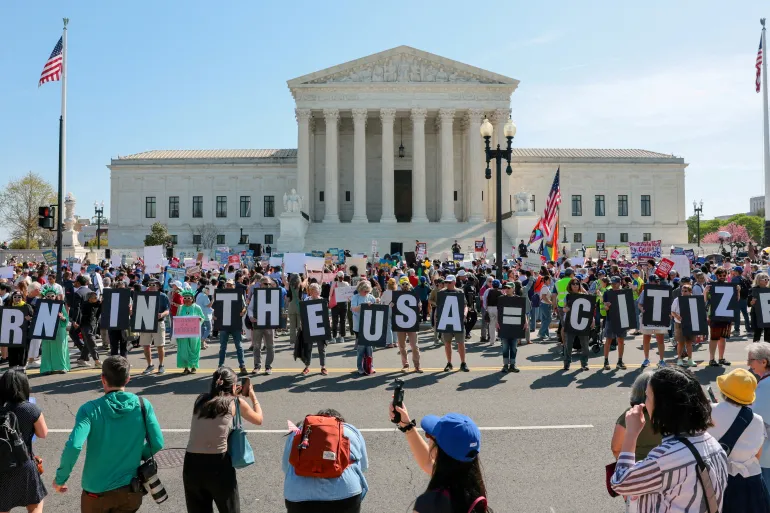
News about birthright citizenship often increases during election years.
Political leaders may propose changes, while legal experts discuss whether those proposals would survive court review.
Until courts issue decisions in specific cases, many questions remain legal arguments rather than settled facts.
That’s why reading headlines carefully is important.
Key Facts at a Glance
| Topic | Details |
|---|---|
| Constitutional Basis | 14th Amendment |
| Ratified | 1868 |
| Major Supreme Court Case | United States v. Wong Kim Ark (1898) |
| Main Principle | Most people born in the U.S. are citizens |
| Common Exceptions | Children of foreign diplomats and limited special cases |
| Main Legal Issue | Meaning of “subject to the jurisdiction” |
Related Legal Terms
If you’re researching this subject, you may also come across these related terms:
Fourteenth Amendment
The constitutional amendment that established birthright citizenship after the Civil War.
Constitutional Interpretation
The process courts use to explain what constitutional language means.
Judicial Review
The authority of courts to determine whether government actions follow the Constitution.
Immigration Law
Federal laws that regulate entry into and residence within the United States.
Understanding these connected topics makes the overall debate much easier to follow.
Why People Search for This Topic
Many readers search for birthright citizenship supreme court because they want straightforward answers instead of complicated legal language.
Most people simply want to know:
- What does the Constitution say?
- What has the Supreme Court ruled?
- Can future cases change current interpretations?
Those are reasonable questions, and the answers depend on constitutional law rather than political opinions.
Frequently Asked Questions
1. What is birthright citizenship?
Birthright citizenship is the automatic acquisition of citizenship by being born within a country’s territory, according to that country’s laws.
2. Which Supreme Court case is most important?
The leading case is United States v. Wong Kim Ark (1898), which recognized citizenship for a person born in the United States under the 14th Amendment.
3. Does the 14th Amendment guarantee birthright citizenship?
The amendment provides the constitutional foundation, and Supreme Court decisions have interpreted its language in important cases.
4. Can birthright citizenship be changed?
Changes involving constitutional interpretation would likely require significant legal action, including possible Supreme Court review or a constitutional amendment, depending on the proposed change.
5. Why is this issue discussed so often?
Immigration policy, constitutional law, and political debates frequently bring the issue back into public discussion.
Final Thoughts
The birthright citizenship supreme court debate combines constitutional history, immigration policy, and legal interpretation. While public discussions may change over time, the 14th Amendment and the Supreme Court’s landmark decisions remain central to understanding the issue. Anyone interested in learning more can also read the Wikipedia articles on the Fourteenth Amendment to the United States Constitution and United States v. Wong Kim Ark, available through https://en.wikipedia.org/wiki/Fourteenth_Amendment_to_the_United_States_Constitution and https://en.wikipedia.org/wiki/United_States_v._Wong_Kim_Ark.



