


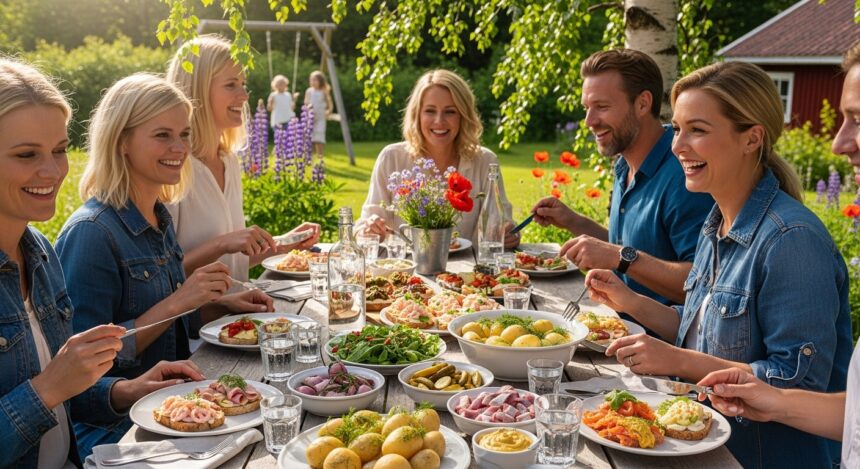

Have you ever heard the term bjudlunch and wondered what it actually means? You are not alone. While lunch is a universal concept, the specific traditions surrounding it vary wildly from country to country. In Sweden, lunch is a serious institution, and within that culture exists a specific concept known as a bjudlunch.
Simply put, a bjudlunch refers to a lunch where you are invited, and the host pays for the meal. It is a treated lunch. This might seem like a simple idea, but in the context of Swedish tax laws, business etiquette, and social norms, it is a fascinating topic. Whether you are doing business with Swedes or just curious about global dining habits, understanding this term is surprisingly useful.
Key Takeaways
- Definition: Bjudlunch is a Swedish term for a lunch where the host pays for the guest, often used in business contexts.
- Cultural Importance: It is a vital tool for networking and relationship building in Scandinavia.
- Tax Implications: In Sweden, strict rules govern tax deductions for these meals.
- Etiquette: There are unwritten rules about who pays, how to order, and how long the lunch should last.
What Exactly is a Bjudlunch?
To understand a bjudlunch, you have to break down the word itself. It comes from the Swedish verb bjuda, which means “to invite” or “to treat,” and lunch. So, literally, it is an “invited lunch” or a “treated lunch.” In the United States, we might just call this “taking a client out to lunch” or “treating a friend.” However, because the Swedish language loves compound words, they have a specific noun for the occasion.
When someone says they are going on a bjudlunch, it implies a few things immediately. First, they are not paying. Second, there is usually a reason for the meal beyond just hunger. It is often transactional in a social or professional way. You are being treated because the host wants to thank you, discuss business, or celebrate a milestone. It elevates the meal from a standard refueling stop to an event.
Furthermore, the atmosphere of a bjudlunch is usually slightly different from a standard workday lunch. If you are just grabbing food with colleagues, you might go to a cafeteria or a quick salad bar. But if it is a bjudlunch, the venue is usually a sit-down restaurant with table service. The quality of food is higher, and the conversation is more focused. It is a gesture of respect and appreciation from the host to the guest.
The Cultural Significance of Lunch in Sweden
You cannot talk about bjudlunch without understanding how important lunch is in Sweden generally. In many parts of the US, lunch is a sad sandwich eaten over a keyboard. In Sweden, that is almost a crime. Lunch is a sacred hour. Between 11:30 AM and 1:30 PM, offices empty out. Everyone goes to a restaurant to eat a hot meal, often the main meal of the day.
This culture of “Dagens Rätt” (Dish of the Day) makes the bjudlunch even more significant. Since everyone eats a hot lunch anyway, taking someone out for a bjudlunch fits seamlessly into the day. It is not an interruption; it is an enhancement of an existing ritual. It allows for relationship building without eating into personal evening time, which Swedes guard jealously for family and hobbies.
Business culture in Scandinavia is quite flat and consensus-based. Decisions are rarely made in a vacuum. A bjudlunch provides the perfect neutral ground to build consensus. It is informal enough to be relaxed but formal enough to talk shop. If you are looking to understand global business trends, seeing how different cultures handle these meetings is crucial. You can find more insights on business trends at Silicon Valley Time.
Why the “Treat” Matters
The act of paying is the central pivot of this concept. In a culture that values equality and “going Dutch” (splitting the bill) in many social settings, the explicit act of covering the bill carries weight.
- Reciprocity: It creates a gentle social debt. If I buy you lunch today, you might help me with a project tomorrow.
- Status: It signals that the host (or their company) is stable and generous.
- Gratitude: It is the standard way to say “thank you” for a favor without giving a physical gift, which can sometimes feel awkward.
Business vs. Private Bjudlunch
There is a distinct difference between a private bjudlunch and a professional one. A private treat happens between friends or family. Maybe it is your birthday, or maybe your friend just got a promotion. In this scenario, the rules are loose. You eat, you laugh, and one person grabs the check at the end. It is warm and personal.
A professional bjudlunch, however, is strategic. This is where the term is most commonly used. If a salesperson takes a potential client out, that is a classic example. If a boss takes a team out to celebrate finishing a project, that is also a bjudlunch. In these cases, the conversation usually steers toward work, but there is an unspoken rule not to be too aggressive. You don’t sign contracts with a fork in your hand; you build the relationship that leads to the contract.
Comparison Table: Private vs. Professional
|
Feature |
Private Bjudlunch |
Professional Bjudlunch |
|---|---|---|
|
Payer |
Friend or Family Member |
Company or Business Associate |
|
Primary Goal |
Socializing / Celebration |
Networking / Deal-making |
|
Topic of Talk |
Personal life, hobbies |
Industry news, projects, collaboration |
|
Duration |
Flexible (1-2 hours) |
Strict (usually 60-90 mins) |
|
Venue Choice |
Anywhere |
Quiet, decent quality, table service |
Decoding the Menu: What to Eat
When you are on a bjudlunch, what you order matters. Since you aren’t paying, you might be tempted to order the most expensive thing on the menu—the lobster or the prime steak. Do not do this. It is considered poor etiquette. The general rule is to follow the host’s lead or order something mid-range.
Swedish lunch menus usually feature a “Dagens Rätt,” which includes a main course, salad buffet, bread, water, and coffee. This is almost always the safest and best choice. It shows you are practical and respects the time limit, as these dishes are prepped for quick service. Ordering à la carte can take longer and cost significantly more, which might make the host uncomfortable if they are on a budget.
Popular Swedish Lunch Dishes
If you find yourself on a bjudlunch in Stockholm or Gothenburg, you might encounter these classics:
- Meatballs (Köttbullar): Served with potatoes, brown sauce, and lingonberries.
- Fish of the Day: Often poached cod or fried herring.
- Wallenbergare: A luxurious veal patty served with mashed potatoes and peas.
- Pea Soup and Pancakes: Traditionally served only on Thursdays.
The Tax Implications of Representation
This is where things get a little technical but very important for business owners. In Sweden (and many other countries), the government has strict rules about what counts as a deductible business expense. A bjudlunch falls under the category of “representation.”
For a long time, companies could deduct a significant portion of these lunches from their taxes. However, laws change. In recent years, the deductibility of the meal itself has been reduced or eliminated in Sweden, though the VAT (Value Added Tax) can often still be deducted. This means that while a bjudlunch is a great social tool, it is not the tax shelter it used to be.
Companies must keep detailed receipts. The receipt needs to list who was there, what company they represented, and the purpose of the meeting. You can’t just write “lunch” and expect the tax agency to be happy. This level of bureaucracy reminds us that even a friendly meal has a paper trail in the corporate world.
Why Companies Still Do It
If the tax breaks are smaller, why do companies still prioritize the bjudlunch?
- ROI on Relationships: Face-to-face time is invaluable.
- Employee Morale: It is a relatively cheap perk that makes staff feel valued.
- Market Standard: If your competitors treat clients to lunch and you don’t, you look cheap.
How to Be the Perfect Guest
Being invited to a bjudlunch is a compliment. To ensure you get invited back, you need to be a good guest. Etiquette in the US is similar, but there are nuances. First, punctuality is non-negotiable. If the lunch is at 12:00, arriving at 12:10 is considered rude in Scandinavia.
Second, put your phone away. The person paying for your meal is paying for your attention. Checking texts or emails destroys the purpose of the meeting. Engage in the conversation. Ask questions. Listen more than you speak.
Tips for Success
- Arrive on time: 5 minutes early is better than 1 minute late.
- Wait to be seated: Unless it’s a very casual place.
- Thank the host twice: Once when the bill is paid, and once later via email or text.
- Mirror the host: If they order wine (rare at lunch now, but it happens), you can too. If they stick to water, you stick to water.
The Decline of Alcohol at Lunch
Decades ago, a bjudlunch might have involved a beer or a glass of wine. That has changed drastically. Today, Swedish business culture—and global business culture generally—is very health-conscious and focused on productivity.
Alcohol at lunch is now the exception, not the rule. Most people drink water (often sparkling) or “lättöl” (low-alcohol beer). Ordering a strong drink might signal that you aren’t serious about going back to work afterward. If you are looking for tips on modern professional lifestyles and health, Silicon Valley Time offers great articles on balancing work and wellness.
Networking Strategies Using Lunch
If you want to advance your career, you should be initiating a bjudlunch occasionally, not just waiting for invitations. It is a powerful networking strategy. Asking someone for “a quick coffee” is low commitment, but asking for lunch shows you value their insight enough to invest an hour and the cost of a meal.
When you invite someone, be clear about the purpose. “I’d love to take you to lunch to pick your brain about the new marketing trends” is a great invitation. It sets the agenda and makes the guest feel like an expert.
Who Should You Invite?
- Mentors: People you can learn from.
- Peers: Colleagues in other departments to break down silos.
- Clients: To strengthen loyalty.
- Competitors: Sometimes it pays to know what the other side is doing (in a friendly way).
Regional Variations of the Treated Lunch
While bjudlunch is Swedish, the concept exists everywhere.
- USA: The “Power Lunch.” Often faster, sometimes more expensive, focused on closing deals.
- France: A longer affair. Wine is more acceptable. Food is discussed passionately.
- Japan: Business lunches can be formal, but the real bonding often happens at drinks after work (Nomikai).
- Spain: Lunch is late (2 PM) and long. It is a time to relax before the late afternoon shift.
Understanding these differences prevents awkward moments. In Sweden, do not expect a two-hour lunch with wine unless it is explicitly stated. Efficiency is still valued.
Digital Alternatives: The Virtual Coffee
The COVID-19 pandemic changed how we meet. For a while, the physical bjudlunch disappeared. It was replaced by the virtual coffee or the Zoom lunch. While better than nothing, most people agree it is not the same.
You cannot pass bread virtually. You cannot read body language as well through a screen. However, the sentiment remains. Sending someone a gift card for a food delivery service and eating “together” on a video call is the modern, remote-work version of the bjudlunch. It keeps the tradition alive in a digital world.
Pros and Cons of Virtual “Treats”
Pros
- No travel time required.
- Can meet people in different countries.
- Lower cost.
Cons
- Less personal connection.
- Technical glitches.
- Awkward eating on camera.
Common Mistakes to Avoid
Even seasoned professionals make mistakes during a bjudlunch. One common error is talking business too soon. In Sweden, you usually spend the first 10-15 minutes on “kallprat” (small talk) about the weather, vacations, or family. Jumping straight into spreadsheets before the salad arrives is seen as aggressive.
Another mistake is fighting over the bill. If it was established as a bjudlunch, the host pays. A weak “Oh, are you sure?” is fine, but don’t make a scene trying to pay. It can embarrass the host. Just say “Thank you very much” and accept the generosity.
How to Suggest a Bjudlunch (Without Being Awkward)
If you want to treat someone, phrase it carefully.
- Direct: “I’d like to invite you to lunch to discuss…”
- Casual: “Let me buy you lunch next week, I owe you for that help with the report.”
- Formal: “Our company would be honored to host you for a lunch meeting.”
Using the word “invite” or “treat” signals that you are paying. “Let’s grab lunch” implies you might be splitting the bill. Clarity is kindness.
The Future of the Business Lunch
Will the bjudlunch survive? Absolutely. As long as humans need to eat and need to trust each other to do business, breaking bread together will be relevant. We might see changes in what we eat (more plant-based options) or where we eat (more outdoor dining), but the core concept remains.
In an increasingly AI-driven world, human connection becomes a premium luxury. A face-to-face meal is one of the few things a robot cannot replicate. Therefore, the value of a bjudlunch is likely to go up, not down.
Conclusion
The bjudlunch is more than just a free meal. It is a social contract, a networking tool, and a cultural ritual wrapped in a delicious package. Whether you are in Stockholm or Seattle, understanding the dynamics of the treated lunch can help you navigate the professional world with grace.
Remember, the goal is connection. The food is just the medium. So next time someone offers to take you out, accept with gratitude, arrive on time, and enjoy the unique opportunity to build a relationship over a hot plate of food. And if you are looking for more ways to stay ahead in the modern world, keep reading Silicon Valley Time.
Frequently Asked Questions (FAQ)
What does “bjudlunch” literally mean?
It translates to “invited lunch” or “treated lunch.” It combines the Swedish word bjuda (to invite/treat) and lunch.
Do I have to pay if I am invited to a bjudlunch?
No. By definition, a bjudlunch means the host pays for the meal.
Is alcohol common during a Swedish business lunch?
No, it is quite rare in modern times. Most people stick to water, sparkling water, or low-alcohol beer to stay productive.
How long does a typical bjudlunch last?
Usually about 60 minutes, sometimes extending to 90 minutes for more important occasions. It fits within the standard workday break.
Can I order the most expensive item on the menu?
It is considered poor etiquette. It is better to order a mid-priced item or the “Dish of the Day” (Dagens Rätt).
Is a bjudlunch tax-deductible?
In Sweden, the rules are strict. The VAT is often deductible, but the cost of the food itself often is not, or has a very low cap for deduction.
What should I talk about?
Start with small talk (weather, summer plans) for the first 10-15 minutes, then transition into business. Avoid controversial topics like politics.