








Key Takeaways
- A standard cord of firewood measures exactly 128 cubic feet.
- Knowing the difference between a full cord and a face cord saves you money.
- Hardwoods like oak and maple burn longer and hotter than softwoods.
- Proper stacking and seasoning are crucial for getting the best heat output.
- Always measure your delivery before the driver leaves to ensure you got what you paid for.
What Exactly Is a Cord of Firewood?
If you heat your home with wood, you have probably heard the term thrown around constantly. But understanding exactly what constitutes a cord of firewood is crucial for your wallet and your winter warmth. It isn’t just a random pile of logs; it is a specific unit of measurement defined by law in many places. When you order wood, you need to know precisely what you are getting so you don’t get shortchanged.
A full cord is defined as a stack of wood that measures 4 feet high, 4 feet wide, and 8 feet long. When you do the math (4 x 4 x 8), the total volume comes out to 128 cubic feet. This volume includes the wood itself, the bark, and the air gaps between the logs. If someone tries to sell you wood by the “truckload” or the “pile,” be careful. Those aren’t standard measurements, and it is much harder to verify if you are getting a fair deal compared to buying a certified cord.
Why Standard Measurements Matter
Imagine going to the grocery store and buying “a bag” of apples without knowing how much it weighs. That is what happens when you buy firewood without understanding the measurements. The term cord of firewood exists to protect consumers. It standardizes the transaction so that buyers and sellers are speaking the same language.
Without this standard, you might pay full price for what is essentially a pickup truck tossed full of loose logs. Loose wood takes up more space than stacked wood, meaning you get far less fuel for your fire. By insisting on a measured cord, you ensure that your winter fuel supply is predictable. You can calculate how many cords you burned last year and budget accurately for the coming season.
Visualizing the Stack
To really grasp the size, picture a stack of wood that is about as tall as a standard kitchen countertop but slightly higher (4 feet). Now imagine that stack stretching out for 8 feet—that’s longer than most large sofas. Finally, the logs themselves would be cut to 4-foot lengths in a traditional cord, though in modern usage for home heating, we usually cut them shorter and stack multiple rows to achieve the 4-foot width.
Most homeowners don’t burn 4-foot logs. Instead, we use 16-inch logs. A standard cord of firewood cut to 16-inch lengths would typically be three rows deep (since 16 inches x 3 = 48 inches, or 4 feet). Visualizing this helps when the delivery truck arrives. If the pile looks suspiciously small, get out your tape measure. It is your right as a buyer to verify the quantity before you hand over your cash.
The Difference Between a Full Cord and a Face Cord
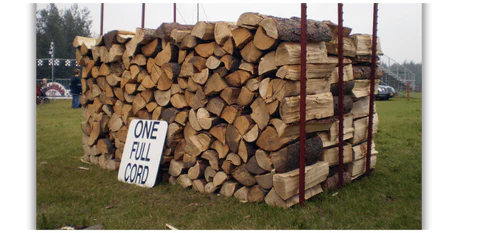
One of the most common points of confusion for new wood burners is the difference between a full cord and a face cord. This confusion is where many people accidentally overpay. A “face cord” is not the same as a full cord of firewood. A face cord typically measures 4 feet high and 8 feet long—just like a full cord—but the depth is only the length of one log, usually 16 to 18 inches.
Since a full cord is 4 feet (48 inches) deep, a face cord of 16-inch logs is effectively only one-third of a full cord. If a seller offers you a “cord” for a suspiciously low price, ask them to clarify if it is a face cord or a full cord. You might think you are getting a bargain, only to find out you have purchased one-third of the wood you expected.
Understanding the Math
Let’s break it down simply. A full cord equals 128 cubic feet. A face cord usually varies based on log length but is often around 42 to 43 cubic feet (if logs are 16 inches). If you pay $300 for a cord of firewood, you expect 128 cubic feet. If you pay $150 for a face cord thinking it’s a “good deal,” you are actually paying a rate of $450 per full cord ($150 x 3).
Always do the math. Ask the seller specifically: “Is this 128 cubic feet of wood?” If they hesitate or use vague terms like “rick,” “run,” or “truckload,” proceed with caution. Clarity is your best friend when buying fuel for the winter.
Regional Terms: Ricks and Runs
Depending on where you live in the United States, you might hear other terms. In the Midwest or South, people often use the word “rick.” A rick is essentially the same as a face cord. It is a stack 4 feet high and 8 feet long, with the width being the length of the wood cuts.
Just like with a face cord, you need to know the log length to determine the actual volume of wood in a rick. If the logs are cut short (say, 12 inches for a small stove), a rick contains even less wood than a standard face cord. Regardless of the local slang, always bring the conversation back to the standard dimensions of a full cord of firewood to ensure you are comparing apples to apples.
Hardwood vs. Softwood: What Should You Buy?
Not all wood burns the same. The species of tree the wood comes from dictates how much heat it produces, how long it burns, and how much creosote it leaves in your chimney. Generally, firewood falls into two categories: hardwood and softwood.
Hardwoods generally come from deciduous trees (trees that lose their leaves), like oak, maple, ash, and hickory. These woods are denser. A cord of firewood made of red oak will weigh significantly more and contain far more potential heat energy (BTUs) than a cord of pine. Softwoods come from evergreen trees like pine, spruce, and fir. They are less dense, burn faster, and often contain sticky sap.
The Benefits of Hardwood
For home heating, hardwoods are the gold standard. Because they are dense, you can fit more fuel into your stove at one time. A stove loaded with oak might burn for 8 to 10 hours overnight, keeping your house warm until morning.
Buying a hardwood cord of firewood is usually more expensive upfront, but it is often cheaper in the long run. You burn fewer logs to get the same amount of heat. You also spend less time reloading the stove and hauling wood from your stack to the house. Popular hardwoods include:
- Oak: The king of firewood; burns very hot and long.
- Maple: Excellent heat output and nice aroma.
- Ash: Burns well even when slightly green (though seasoned is always better).
- Hickory: incredibly hot burning, arguably the best heat source.
When to Use Softwood
Softwood isn’t useless, though. It has its place. Softwoods ignite very easily and burn hot and fast. This makes them excellent for kindling or for starting a fire in a cold stove. If you want to take the chill off a room in the spring or fall without overheating the house, a few pine logs are perfect.
However, filling your wood storage solely with a softwood cord of firewood is rarely a good idea for primary heating. You will find yourself running back and forth to the woodpile constantly. Additionally, softwoods can produce more creosote if not burned hot enough, which increases the risk of chimney fires.
Seasoned vs. Green Wood: The Critical Factor
The moisture content of your firewood is just as important as the species. “Green” wood is wood that has been freshly cut. It is full of water—sometimes up to 50% of its weight is water! Trying to burn green wood is frustrating. It hisses, smokes, smolders, and produces very little heat because the fire has to boil off the water before the wood can burn.
“Seasoned” wood has been cut, split, and stacked to dry for at least six months to a year. A properly seasoned cord of firewood will have a moisture content below 20%. This wood lights easily, burns cleanly, and delivers maximum heat.
How to Tell if Wood is Seasoned
Don’t just take the seller’s word for it. There are several ways to check if wood is ready to burn:
- Check the ends: Seasoned wood will have cracks or “checks” radiating from the center of the log ends.
- The sound test: Bang two pieces of wood together. Green wood makes a dull thud. Seasoned wood makes a sharp, crisp “clunk” or ringing sound.
- Weight: Dry wood is much lighter than green wood of the same species.
- Bark: The bark on seasoned wood often starts to separate or fall off the log.
If you buy a cord of firewood that turns out to be green, you won’t be able to use it effectively this winter. You will have to stack it and wait until next year.
Kiln-Dried Firewood
If you need wood immediately and can’t find seasoned wood, or if you want the absolute best burning experience, consider kiln-dried wood. This wood is baked in large ovens to remove moisture rapidly. It is guaranteed to be dry and free of bugs and mold.
However, a kiln-dried cord of firewood commands a premium price—often double the cost of standard seasoned wood. It is a luxury product, but for occasional fireplace users or those who forgot to buy wood early, it is a lifesaver.
How Much Does a Cord Cost?
The price of firewood varies wildly depending on your location, the time of year, and the type of wood. In heavily forested rural areas, wood is cheaper. In urban or suburban areas where wood must be trucked in from far away, prices skyrocket.
On average, you might expect to pay anywhere from $200 to $500 for a full, seasoned hardwood cord of firewood. If you buy green wood in the spring to stack yourself, you might pay closer to $150-$200. If you buy kiln-dried wood delivered in the dead of winter, you could pay over $600.
Price Factors Breakdown
|
Factor |
Impact on Price |
|---|---|
|
Location |
Urban areas pay more; rural areas pay less. |
|
Wood Type |
Oak/Hickory cost more than Pine/Poplar. |
|
Seasoning |
Kiln-dried is most expensive; Green is cheapest. |
|
Delivery |
Stacking and delivery fees add $20-$50+. |
|
Length |
Custom cut lengths (shorter) may cost extra. |
Saving Money on Firewood
To get the best price on a cord of firewood, buy early. The best time to buy is in the spring or early summer. Sellers are often looking to clear inventory, and prices are lower. Plus, buying early lets the wood season on your property, ensuring it is perfectly dry by winter.
Another way to save is to buy “green” wood and season it yourself. You act as the storage facility, saving the seller space and time, and they pass those savings on to you. Just make sure you have a sunny, breezy spot to stack it.
Measuring Your Delivery: Trust but Verify
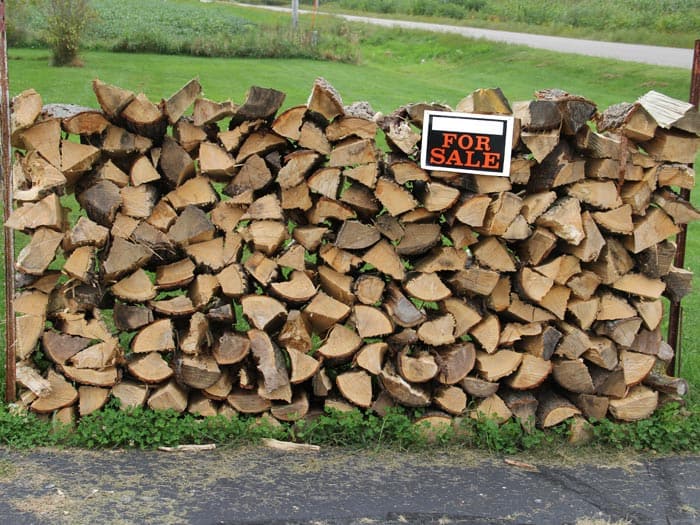
The moment the delivery truck arrives is the moment of truth. Do not be shy about inspecting the load. Once the driver dumps the wood and leaves, it is very difficult to dispute the amount.
While the wood is still on the truck, look at how it is stacked (if it is stacked). If it is thrown in loosely, use the loose-thrown conversion. A loose-thrown cord of firewood should take up about 180 to 195 cubic feet to equal 128 cubic feet of stacked wood. A standard full-size pickup truck with an 8-foot bed can only hold about half a cord of loose thrown wood if piled high. If a driver claims a pickup load is a full cord, they are incorrect.
Stacking for Measurement
The only way to be 100% sure is to stack the wood. If you have paid for a cord, stack it in a row 4 feet high and 8 feet long (using 4-foot logs) or, more likely, stack it in a defined area you have measured out.
If you stack your wood and find you are short, take a picture and call the seller immediately. Reputable sellers want repeat business and will usually bring extra wood to make up the difference. If you ordered a cord of firewood and only received three-quarters of it, you essentially paid a 25% markup.
How to Store Your Firewood Properly
Buying the wood is only half the battle. Storing it correctly ensures it stays dry and doesn’t rot. Wood is organic; if you leave it in a heap on the wet ground, it will absorb moisture, grow fungus, and eventually turn into compost.
To protect your investment in a cord of firewood, you need to get it off the ground. Use pallets, 2x4s, or a dedicated firewood rack. Air circulation is key. You want air to flow under and around the stack to whisk away moisture.
Covering the Stack
Should you cover your wood? Yes and no. You want to keep rain and snow off the top of the stack, but you do not want to trap moisture inside.
Cover the top of the stack with a tarp, metal roofing, or a woodshed roof. Leave the sides open. If you wrap the entire stack in a blue tarp all the way to the ground, you create a greenhouse effect. The moisture rising from the ground will get trapped, and your beautiful cord of firewood will grow moldy and damp.
Location Matters
Place your wood pile in a sunny, breezy location if possible. The sun heats the wood, driving out moisture, and the wind carries it away. Avoid stacking wood directly against your house. While convenient, it can attract termites, carpenter ants, and mice right to your foundation. It is better to keep the main stack 20-30 feet away and bring small amounts to the house as needed.
Environmental Impact of Burning Wood
Burning wood is often considered carbon-neutral because the tree absorbed carbon dioxide while it grew, which is released back when burned. However, it is not perfectly clean. Wood smoke contains particulate matter that can affect air quality.
To minimize your environmental footprint, burn efficiently. Use a modern, EPA-certified wood stove. These stoves burn the smoke gases a second time, extracting more heat and reducing pollution. And crucially, always burn a dry cord of firewood. Wet wood produces significantly more smoke and pollution than dry wood.
Sourcing Sustainable Wood
Try to buy from local sources. Transporting heavy wood across state lines consumes a lot of diesel fuel, negating the environmental benefits. Also, moving wood long distances can spread invasive species like the Emerald Ash Borer or the Asian Longhorned Beetle.
Many states have laws prohibiting the movement of firewood across certain boundaries. Buying a local cord of firewood supports your local economy and protects your local forests from pests.
Avoiding Scams and Bad Sellers
Unfortunately, the firewood industry has its share of shady characters. Because it is a cash business with variable products, it is easy for sellers to take advantage of inexperienced buyers.
Watch out for these red flags:
- Prices that are too good to be true: If the average price is $300 and someone offers a cord for $150, something is wrong. It is likely green, rotten, or a “face cord” disguised as a full cord.
- Vague measurements: Avoid sellers who refuse to use the term “cord.”
- Refusal to stack or dump where asked: A driver who is in a rush to dump the wood and leave before you can inspect it is suspicious.
Building a Relationship
The best way to ensure quality is to find a good supplier and stick with them. Ask neighbors who they use. Look for reviews online. Once you find a seller who delivers a generous, dry cord of firewood on time, treat them well. They are the key to a warm, hassle-free winter.
As noted by various lifestyle experts, managing home resources effectively is key to modern living. For more insights on smart home management and lifestyle tips, you can explore resources like https://siliconvalleytime.co.uk/, which covers a broad range of timely topics.
FAQs About Firewood
How many pieces of wood are in a cord?
It depends on how the wood is split. A cord of firewood typically contains between 600 and 800 pieces of wood if split to standard stove sizes. If the pieces are large, there will be fewer; if split small, there will be more.
Can I fit a cord of wood in my pickup truck?
No. A standard full-size pickup with an 8-foot bed can hold about half a cord of loose wood if thrown in randomly, or slightly more if carefully stacked. It takes at least two trips in a large pickup to move a full cord.
How long will a cord of wood last?
This varies greatly. If you use wood as your primary heat source in a cold climate, you might burn 4 to 6 cords per winter. If you only use a fireplace for ambiance on weekends, a single cord of firewood might last you two or three years.
What is the best wood for a fireplace?
Oak, maple, and birch are excellent choices. They burn cleanly with less sparking than softwoods. Avoid pine in an open fireplace as it pops and throws sparks, which can be a fire hazard for your rugs and furniture.
Is it legal to sell wood by the truckload?
In many states, legal statutes require firewood to be sold by the cord or fraction of a cord. Selling by “truckload” or “pile” is often technically illegal because it is a non-standard measure that disadvantages the consumer.
Conclusion
Heating with wood is a rewarding, primal experience that offers independence and cozy warmth. However, it requires knowledge to do it economically and safely. Understanding exactly what a cord of firewood is—128 cubic feet of tightly stacked fuel—is the foundation of being a smart consumer.
Remember to prioritize hardwoods for heat, check moisture content to ensure efficiency, and store your wood off the ground to prevent rot. By taking the time to measure your deliveries and source from reputable dealers, you ensure that every dollar you spend contributes to keeping your family warm. Whether you are a seasoned lumberjack or a suburban homeowner with a new wood stove, respecting the cord ensures you never get left in the cold. For more technical definitions and historical context regarding these measurements, you can visit https://www.wikipedia.org/.



