
Fascisterne is a Danish term meaning “the fascists.” Many people look it up to learn what it means, how it relates to fascism, and what part it played in European history, particularly during the Second World War. The word also turns up in present-day political arguments, which can blur its meaning.
This guide covers the meaning of Fascisterne, the origin of the word, how fascist ideology took shape, and its defining features. It also explains why the term still matters, and looks at Denmark’s own history with fascism and what that movement left behind in Europe.
What Is the Meaning of Fascisterne?
Grammatically, Fascisterne is the definite plural of the Danish noun fascist. Translated into English, it becomes “the fascists.” Where a plain plural would speak of fascists in general, Fascisterne normally points to a particular, identifiable group of people who backed fascist ideas or organizations.
The root is the Danish word fascisme, or fascism. Fascism is a political ideology that ranks the nation and the state above the rights and interests of individuals. It favors powerful, centralized leadership and gives the state wide control over public and social life.
Historians use Fascisterne for the fascist movements and regimes that emerged across Europe in the first half of the twentieth century. In Denmark the word carries a narrower, more personal meaning, because it became tied to the German occupation of the Second World War and to the Danes who sided with it.
The term also features in modern media and political debate. At times it is applied accurately to groups that truly share the traits of historical fascism. At other times it is thrown around as a simple insult. For that reason, its meaning depends heavily on who is using it and in what setting.
How Fascism Began in Europe
Fascism first took hold in Italy in the years after the First World War. Across the continent, economies were struggling, governments were unstable, jobs were scarce, and society was restless. Many people no longer trusted their leaders and longed for firmer rule.
Benito Mussolini seized on that mood. In 1919 he established the Fasci di Combattimento, which drew in returning soldiers, nationalists, and others convinced that Italy needed a stronger state. By 1922 he was Prime Minister, and Italy became the first country ruled by an openly fascist government.
The idea spread fast. Through the 1920s and 1930s, comparable groups sprang up throughout Europe. Each one was shaped by its own national circumstances, but many held common convictions: intense nationalism, hostility toward liberal democracy, opposition to communism, and loyalty to authoritarian leaders.
Germany became the best-known case once Adolf Hitler and the National Socialist Party won power. Smaller fascist movements also arose in Spain, Hungary, Romania, and Denmark.
Fascism gained ground because several forces coincided: economic crisis, political uncertainty, national pride, and anxiety about social change. Together they gave extremist movements room to grow in many European countries before the Second World War began.
The Main Features of Fascist Ideology
Fascist movements were not identical from one country to the next, yet they tended to share a set of basic beliefs and aims. Knowing these features helps explain why historians place certain regimes and parties in the fascist category.
Extreme nationalism. Fascist regimes taught that the nation outranks the individual. National unity was the supreme goal, and citizens were expected to put their country ahead of their personal needs.
Authoritarian rule. Power was gathered into the hands of one leader or a single governing party. Where elections took place, they gave voters little real choice, and those in charge faced almost no checks on their authority.
Totalitarian control. Many fascist states tried to govern far more than politics. They reached into schooling, culture, the press, and even daily routines, and personal freedoms were curtailed in the name of defending the nation.
Propaganda. Maintaining public backing depended heavily on messaging. Newspapers, radio, speeches, posters, mass rallies, and national symbols were all used to steer opinion and build loyalty to the state.
Crushing of opposition. Rivals, reporters, activists, and critics were commonly met with censorship, arrest, intimidation, or violence. Independent groups and rival parties were often outlawed.
Racial or ethnic supremacy. Numerous fascist movements preached that certain peoples were superior. Minorities were blamed for national troubles and became targets of discrimination and persecution. This practice, known as scapegoating, gave governments a pretext for harsh measures against groups they treated as outsiders.
Militarism. Military power, discipline, and territorial expansion were held up as proof of national greatness. In several fascist states, the armed forces and martial values became central to public life.
Key Figures in the Development of Fascism
A handful of leaders and thinkers did the most to build fascist ideology and carry it across Europe.
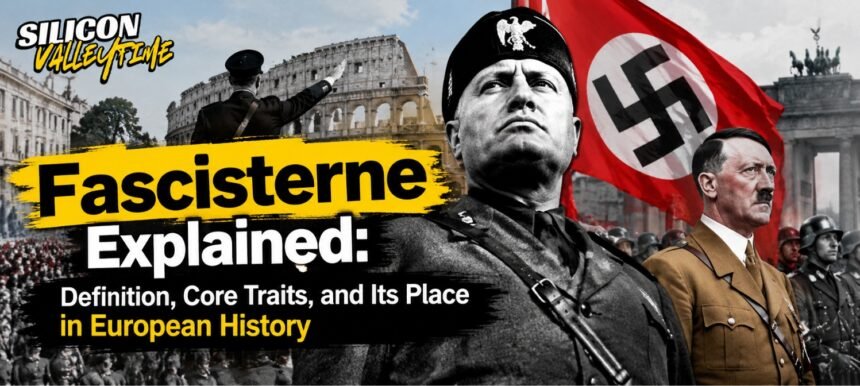
Benito Mussolini is widely seen as the founder of modern fascism. His rule in Italy set out many of the political ideas and methods of government that later movements copied. He championed nationalism, concentrated authority, and the notion that a powerful state should direct every area of society.
Adolf Hitler took up many of these ideas once he held power in Germany. His Nazi regime fused fascist principles with racial ideology and antisemitism. Nazism is usually regarded as a distinct variety of fascism rather than an identical one, but Hitler’s government became among the most influential and devastating examples of fascist rule.
Giovanni Gentile, an Italian philosopher, also shaped fascist thinking. He argued that the state stands above individual interests, and he supplied much of the intellectual groundwork for Mussolini’s system.
Together, these men turned fascism into one of the most powerful political ideologies of the twentieth century. Their influence reached beyond Italy and Germany and inspired smaller fascist movements elsewhere in Europe.
Fascisterne in Denmark
The word Fascisterne carries special weight in Denmark because of what the country lived through in the Second World War. Denmark never had a fascist government of the Italian or German kind, but it did produce a fascist movement of its own.
The most prominent Danish fascist party was Danmarks Nationalsocialistiske Arbejderparti (DNSAP). Led by Frits Clausen, it took its inspiration from Hitler’s National Socialists in Germany. It won some followers, but never enough voter support to gain power through elections.
Germany invaded Denmark on 9 April 1940, and the occupation lasted until 5 May 1945. Over those years, Fascisterne became a much more personal word for many Danes. It was commonly applied to the German occupiers, to Danes who collaborated, and to others who backed the occupation.
Meanwhile, many Danes joined the resistance. They carried out sabotage, collected intelligence, printed underground newspapers, and helped people flee German control. One of the most celebrated episodes came in October 1943, when resistance members and ordinary citizens helped rescue most of Denmark’s Jewish population by moving them to neutral Sweden. It remains one of the great humanitarian achievements of the war.
After Germany’s defeat in 1945, Denmark put many collaborators on trial, and fascist groups quickly lost their influence. Even today, Fascisterne is closely linked in Danish memory with this chapter of the nation’s past.
How Fascism Differs From Other Authoritarian Systems
Fascism has things in common with other authoritarian systems, but it also differs from them in important ways.
Communism and fascism both give the state substantial power, yet they rest on opposing foundations. Communism centers on economic equality and shared ownership of property, whereas fascism centers on national unity, strong leadership, and allegiance to the nation over individual rights.
Fascism is also distinct from many religious authoritarian systems. Religious regimes typically derive their authority from faith and religious law, while fascist regimes put the state and national identity at the heart of political life.
Another frequent source of confusion is the link between fascism and Nazism. The two are closely related but not the same. Nazism refers specifically to the ideology of Adolf Hitler and the National Socialist Party in Germany. It contained many fascist principles but placed heavier stress on racial ideology and antisemitism. Put simply, Nazism is generally viewed as one form of fascism, not a wholly separate system.
The Legacy of Fascist Regimes
Fascist governments left a deep and lasting mark on Europe and the wider world, changing politics, society, and international relations for decades.
In politics, fascist regimes weakened or destroyed democratic institutions. Opposition was restricted, independent newspapers were censored, and power was gathered into the hands of one leader or ruling party.
Many of these governments also expanded state control over key industries and public bodies. Their economic policies varied by country, but they generally put national goals ahead of individual interests.
The human toll went far beyond political and economic change. Millions suffered through war, persecution, forced displacement, imprisonment, and violence inflicted by fascist and Nazi regimes during the Second World War.
After 1945, the defeat of the Axis powers brought sweeping changes across Europe. Fascist governments fell, many collaborators were prosecuted, and fascist organizations were broken up.
The consequences are still felt. Schools, museums, memorials, and historical research keep the memory of these events alive. Many countries also reinforced their democratic institutions and human rights protections in response to what fascist rule had taught them.
Why the Word Still Matters
Although the historical fascist regimes ended long ago, Fascisterne remains in use.
Historians rely on it when writing about fascist movements, parties, governments, and events of the early twentieth century. In Denmark, it is especially tied to the German occupation and to those who embraced fascist ideas during those years.
The word also appears in current political debate. Some people use it for groups or leaders they see as showing authoritarian or extremist tendencies, while others treat it as a general-purpose insult.
Because usage varies so much, context matters. Most historians and political analysts advise using the term with care, and only for a person, movement, or government that truly shares the defining features of historical fascism. Applying it too loosely dilutes its historical meaning and creates confusion.
Understanding Fascisterne also helps people see how political extremism took root in the past. Studying that history builds critical thinking and reminds societies why democratic values, human rights, and open debate remain worth defending.
Final Thoughts
Fascisterne is the Danish word for “the fascists.” The word is simple, but it stands for a significant part of European history. It is tied to fascism, to the rise of authoritarian governments, and to the events that shaped Europe in the first half of the twentieth century.
Grasping its meaning takes more than a literal translation. It means learning how fascism began, what it believed, how far it spread across Europe, and how Denmark experienced the German occupation.
Today the word continues to appear in both historical research and political discussion. Knowing its background helps readers appreciate its historical weight and the need to use it accurately.
FAQs
What does Fascisterne mean?
Fascisterne is a Danish word meaning “the fascists.” It is the definite plural of fascist and normally points to a specific group of fascists rather than fascists in general.
Is Fascisterne the same as Nazisterne?
No. Fascisterne is the broader term and covers fascists in general. Nazisterne refers specifically to the Nazis, or National Socialists, who governed Germany under Adolf Hitler. Nazism is generally seen as one form of fascism.
Did Denmark ever have a fascist government?
No. Denmark never had a fascist government like Italy’s or Germany’s. It did have a fascist party, Danmarks Nationalsocialistiske Arbejderparti (DNSAP), led by Frits Clausen, but the party never won enough support to govern.
Who founded fascism?
Modern fascism was founded by Benito Mussolini in Italy. He set up the Fasci di Combattimento in 1919 and became Prime Minister in 1922, heading the first fascist government.
What was DNSAP’s role in Denmark?
DNSAP was Denmark’s leading fascist party in the 1930s and during the Second World War. It backed ideas similar to those of Nazi Germany but never gained enough votes to form a Danish government.
Why does it matter to understand the history of Fascisterne?
It shows how fascist movements grew, why they won support in some countries, and what came of them. It also helps preserve historical knowledge and supports the defense of democracy, human rights, and political freedom.