





The world of supercars is filled with legends, but few names command as much respect and awe as the Ferrari F40. It was more than just a car; it was a statement. Built to celebrate Ferrari’s 40th anniversary, the F40 was the last car personally approved by Enzo Ferrari himself. It was a raw, uncompromising machine designed to deliver the purest driving experience possible. With no driver aids, a minimalist interior, and a focus on lightweight construction, this iconic vehicle represents the pinnacle of analog performance. It stands as a testament to an era when the connection between driver, car, and road was paramount. This article explores the history, engineering, and enduring legacy of one of the most celebrated automobiles ever created.
Key Takeaways
- The Ferrari F40 was created to celebrate the 40th anniversary of Ferrari and was the final car signed off by founder Enzo Ferrari.
- It was designed as a “race car for the road,” prioritizing lightweight construction and raw power over comfort and luxury.
- Powered by a twin-turbocharged 2.9-liter V8 engine, it was the first production car to officially break the 200 mph barrier.
- The F40’s design, featuring a carbon fiber body and a massive rear wing, is one of the most iconic and recognizable in automotive history.
- Its value has skyrocketed over the years, making it a highly sought-after collector’s item and a blue-chip investment.
The Birth of a Legend: Celebrating 40 Years of Ferrari
The story of the Ferrari F40 begins in the mid-1980s, a time of intense competition in the supercar world. Rivals like Porsche, with its technologically advanced 959, were pushing the boundaries of what a road car could be. Ferrari needed to respond with a car that not only competed on performance but also embodied the company’s core racing spirit. The project was initiated to celebrate a significant milestone: the 40th anniversary of the first Ferrari car, the 125 S, which debuted in 1947. Enzo Ferrari, then in his late 80s, wanted this celebratory model to be a definitive statement—a return to the company’s roots of building cars that were essentially racers for the street. He envisioned a machine that was raw, powerful, and utterly engaging, a direct counterpoint to the electronic-laden supercars emerging at the time. The F40 was his final masterpiece, a powerful legacy left to the automotive world.
The Vision of Enzo Ferrari
Enzo Ferrari’s vision for the Ferrari F40 was clear and uncompromising. He famously told his engineers, “I want a car to be the best in the world.” But his idea of “best” was not about luxury, comfort, or advanced electronics. For him, the best car was the one that provided the most thrilling and direct driving experience. He wanted to create a vehicle that made the driver feel like a part of the machine, a car that demanded skill and respect. This philosophy meant stripping away anything that didn’t contribute to performance. There would be no power steering, no anti-lock brakes (ABS), no traction control, no sound system, and no leather-lined interior. The focus was singular: speed, handling, and a pure connection to the road. This purist approach ensured the Ferrari F40 would be a visceral and unforgettable car to drive, securing its place in history as Enzo’s ultimate expression of performance.
From 288 GTO Evoluzione to F40
The developmental path to the Ferrari F40 was paved by another legendary, albeit lesser-known, car: the Ferrari 288 GTO Evoluzione. Originally, the 288 GTO was built to compete in the FIA’s Group B rally series. However, after a series of tragic accidents, Group B was canceled in 1986, leaving Ferrari with five development chassis of the radical Evoluzione model and no series to race them in. Instead of scrapping the project, Ferrari’s engineers, led by Nicola Materazzi, used the Evoluzione as the foundation for the upcoming anniversary car. The Evoluzione was an extreme machine, with aggressive aerodynamics and a powertrain tuned for immense power. Much of its DNA, including the steel tube-frame chassis and the twin-turbo V8 engine concept, was carried over and refined for the Ferrari F40, making it a true evolution of a canceled race car.
Design and Aerodynamics: A Form Dictated by Function
The visual impact of the Ferrari F40 is immediate and unforgettable. Its aggressive, low-slung silhouette was not penned for beauty contests but was shaped entirely by the demands of speed and stability. Penned by the famed design house Pininfarina, under the guidance of Leonardo Fioravanti, every line, scoop, and vent on the car serves a purpose. The primary goal was to manage airflow for cooling the potent engine and brakes while generating downforce to keep the car planted at high speeds. The body was constructed from a composite blend of Kevlar, carbon fiber, and aluminum, a revolutionary approach for a production road car at the time. This choice of materials made the car incredibly lightweight and strong, contributing directly to its astonishing performance. The iconic transparent engine cover and the massive, integrated rear wing became defining features that screamed performance.
The Genius of Pininfarina
Pininfarina, Ferrari’s long-standing design partner, was tasked with sculpting the body of the Ferrari F40. The team, led by designer Leonardo Fioravanti, faced the challenge of creating a shape that was both aerodynamically efficient and visually stunning. The final design was a masterclass in functional beauty. The wedge shape, sharp creases, and wide stance were all dictated by wind tunnel testing. The large NACA ducts on the hood and sides were not just stylistic flourishes; they were essential for channeling cool air to the brakes and engine radiators. The rear of the car is perhaps its most dramatic angle, with a massive wing that provides essential downforce at speed, preventing the rear end from becoming light and unstable. The result was a design that looked fast even when standing still, a perfect visual representation of the car’s raw performance capabilities.
An Iconic Rear Wing
No discussion of the Ferrari F40 design is complete without mentioning its monumental rear wing. It is arguably the car’s most defining visual feature and a critical aerodynamic component. Unlike wings that are simply bolted on as an afterthought, the F40’s wing was an integral part of the rear bodywork, flowing seamlessly from the rear fenders. Its purpose was twofold: to generate significant downforce and to aid in extracting hot air from the engine bay. At its top speed of over 200 mph, the wing pushes the rear of the car onto the tarmac, providing immense stability and grip. This functional necessity became an iconic piece of automotive design, symbolizing the car’s racing pedigree and its uncompromising focus on performance. The wing told the world that this was not a car for cruising; it was a car built for speed.
Under the Hood: The Heart of the Beast
At the core of the Ferrari F40 lies its magnificent engine, a true engineering marvel of its time. The powerplant is a 2.9-liter (2936 cc) V8, designated Tipo F120A. What made it truly special was the addition of two IHI turbochargers, one for each bank of cylinders. This twin-turbo setup was relatively new for road cars and helped the engine produce a staggering 478 horsepower and 426 lb-ft of torque. These numbers were monumental for a car in the late 1980s, especially one that weighed so little. The engine was mounted longitudinally behind the driver, creating a mid-engine layout that provided excellent weight distribution and handling balance. The sound it produced was equally impressive—a raw, mechanical symphony that transitioned into a ferocious roar as the turbos spooled up, delivering a thrilling and addictive soundtrack for the driver.
|
Engine Specifications |
|
|---|---|
|
Engine Type |
90° V8, Twin-Turbocharged |
|
Displacement |
2936 cc (2.9 L) |
|
Bore x Stroke |
82 mm x 69.5 mm |
|
Power Output |
478 hp @ 7000 rpm |
|
Torque Output |
426 lb-ft @ 4000 rpm |
|
Induction |
Twin IHI Turbochargers with Behr Intercoolers |
|
Fuel System |
Weber-Marelli Electronic Fuel Injection |
|
Dry Weight |
1,100 kg (2,425 lbs) |
The Power of Twin Turbochargers
The decision to use twin turbochargers was key to the performance of the Ferrari F40. In the 1980s, turbocharging was notorious for “turbo lag”—a delay between pressing the throttle and feeling the boost of power. To mitigate this, Ferrari’s engineers used two smaller turbos instead of one large one. This allowed them to spin up faster, providing a more immediate and responsive power delivery. The turbos were paired with large intercoolers, visible through the rear bodywork, which cooled the compressed air before it entered the engine. Cooler air is denser, allowing for a more powerful combustion, which further enhanced performance. This sophisticated setup gave the Ferrari F40 its explosive acceleration, launching it from 0 to 60 mph in around 4 seconds and pushing it to a top speed that would set a new world record.
Performance Figures That Shattered Records
When the Ferrari F40 was released, its performance figures were simply mind-bending. It wasn’t just fast; it was in a league of its own. Ferrari claimed a top speed of 201 mph (324 km/h), a figure that was met with some skepticism at the time. However, independent tests soon confirmed it, making the Ferrari F40 the very first production road car to officially break the 200 mph barrier. This was a monumental achievement that cemented the car’s legendary status. Its acceleration was equally brutal. The sprint from 0-60 mph took just over four seconds, and it could cover a quarter-mile in the low 12-second range. These numbers were faster than almost any other car on the planet and put the F40 firmly at the top of the supercar hierarchy, a position it held for years.
The Driving Experience: Raw and Unfiltered
Driving a Ferrari F40 is an experience unlike any other. It is the antithesis of the modern, computer-controlled supercar. There are no electronic safety nets—no traction control, no stability management, and no anti-lock brakes. The steering is unassisted, meaning the driver feels every nuance of the road surface through the steering wheel. The five-speed manual transmission has a classic gated shifter that requires deliberate and precise shifts. The cockpit is sparse and functional, with carbon fiber visible on the doors, floor, and dashboard. Even the door handles are simple pull cords to save weight. This minimalist approach means the driver is completely immersed in the act of driving. The car communicates everything—the grip of the tires, the balance of the chassis, the surge of the turbos—directly to the person behind the wheel, demanding their full attention and rewarding them with an unparalleled sense of connection.
A Cockpit Built for Business
Stepping inside a Ferrari F40 is like entering the cockpit of a race car. There are no creature comforts to distract from the mission of driving. The seats are lightweight carbon fiber racing buckets covered in a thin layer of red cloth. There is no glovebox, no stereo system, and no luxurious leather trim. The floors are bare, and the simple dashboard contains only the essential gauges for monitoring speed, engine revs, and temperatures. Even the windows were initially sliding Perspex panels, although later models were fitted with traditional wind-up windows to satisfy legal requirements in some countries. This spartan environment was a deliberate choice. By eliminating every non-essential component, Ferrari’s engineers saved precious weight and reinforced the car’s purpose-built nature. It was a clear message: this is a machine for serious driving, not for comfortable cruising.
Legacy and Collectibility: An Automotive Icon
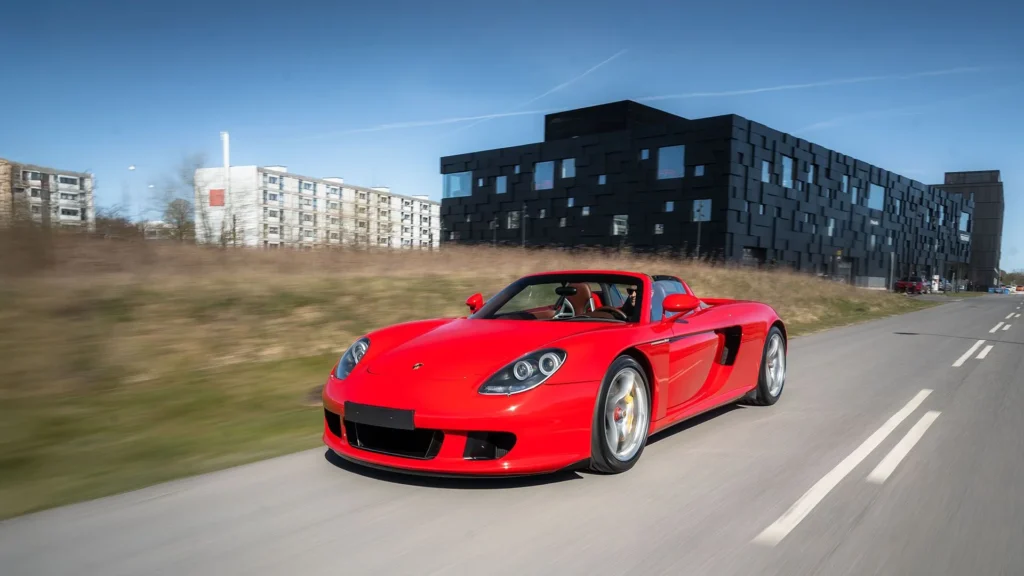
The legacy of the Ferrari F40 is immense. It is often hailed as the greatest supercar ever made, a perfect blend of extreme performance, stunning design, and pure driving pleasure. As the last car Enzo Ferrari personally oversaw, it holds a special place in the hearts of enthusiasts and collectors. Its production run was originally planned for just 400 units, but demand was so overwhelming that Ferrari eventually built 1,315 cars between 1987 and 1992. Despite the larger production number, its status as a cultural and automotive icon has only grown over time. Today, the Ferrari F40 is one of the most desirable and valuable collector cars in the world. Prices have soared, with pristine examples fetching millions of dollars at auction, a testament to its timeless appeal and enduring significance in the history of the automobile. Many trends and reports on classic car markets, such as those you might find on a site like https://siliconvalleytime.co.uk/, often highlight the F40 as a benchmark for blue-chip automotive investments.
The F40 in Racing: LM and Competizione
While the Ferrari F40 was conceived as a road car, its racing DNA was undeniable. It wasn’t long before privateer teams began modifying the F40 for competition. In response, Ferrari, through its performance partner Michelotto, developed racing versions known as the F40 LM (for Le Mans) and F40 Competizione. These cars were even more extreme than their road-going counterparts. They featured heavily revised aerodynamics with a more aggressive front spoiler and an adjustable rear wing, a stripped-out interior, and a significantly more powerful engine, with some versions producing well over 700 horsepower. These racing variants competed with considerable success in various GT series throughout the early 1990s, proving that the F40’s performance was just as potent on the track as it was on the street. The F40 LM’s success further burnished the legend of the Ferrari F40.
Market Value and Investment Potential
The value of the Ferrari F40 has seen a dramatic increase over the decades. When new, it had a sticker price of around $400,000, though rampant speculation and demand meant many sold for much more. For many years, its value fluctuated, but in the 21st century, it has become a true blue-chip collector’s item. Its significance as Enzo’s last car, its record-breaking performance, and its raw analog character make it incredibly appealing in an age of digital supercars. Today, a well-maintained Ferrari F40 can easily command a price tag of over $2 million, with exceptional, low-mileage examples selling for even more. It is considered a stable and high-growth asset in the classic car world, a moving piece of art and engineering that continues to appreciate in both financial and historical value.
Conclusion
The Ferrari F40 is more than just a car; it is a monument to a purist’s vision of performance. It represents a pivotal moment in automotive history, a bridge between the classic sports cars of the past and the technological marvels of the present. As Enzo Ferrari’s final gift to the world, it perfectly encapsulates his lifelong passion for racing and speed. Its combination of a lightweight chassis, a powerful twin-turbo V8, and a complete lack of driver aids creates an experience that is raw, challenging, and profoundly rewarding. Decades after its debut, the F40 continues to captivate and inspire. Its legendary status is not just about its record-breaking top speed or its jaw-dropping design; it is about the unfiltered connection it offers between the driver and the machine. The Ferrari F40 will forever be remembered as the ultimate analog supercar, a timeless icon of automotive excellence.
Frequently Asked Questions (FAQ)
Q1: How many Ferrari F40s were made?
A: Ferrari officially produced 1,315 units of the Ferrari F40 for global distribution between 1987 and 1992. The initial plan was to build only 400, but immense demand led the company to increase production.
Q2: Why is the Ferrari F40 so special?
A: The Ferrari F40 is special for several reasons. It was the last car personally approved by Enzo Ferrari, it was built to celebrate the company’s 40th anniversary, and it was the first production car to exceed 200 mph. Its raw, analog driving experience with no electronic aids also makes it a unique and highly coveted supercar.
Q3: How much is a Ferrari F40 worth today?
A: The value of a Ferrari F40 has appreciated significantly. As of the mid-2020s, prices for a standard F40 typically range from $2 million to over $3 million, depending on the car’s condition, mileage, and history.
Q4: Did the Ferrari F40 have air conditioning?
A: Yes, most Ferrari F40 models were equipped with air conditioning. While the car was incredibly spartan and focused on saving weight, air conditioning was considered a necessary feature, particularly for cars sold in warmer climates like the United States.
Q5: What is the top speed of a Ferrari F40?
A: The officially claimed and verified top speed of the Ferrari F40 is 201 mph (324 km/h). This made it the fastest production car in the world at the time of its release.