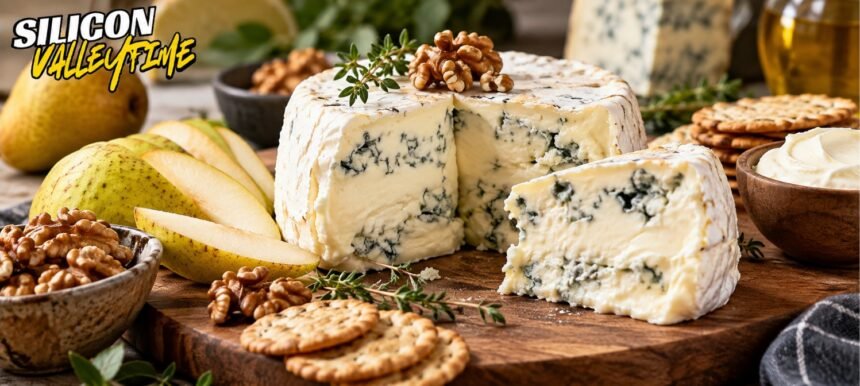

Masgonzola is a rich and creamy cheese product made by combining two Italian favorites: Gorgonzola and mascarpone. The unusual name can make it sound like a completely separate cheese variety, but it is generally better described as a combination or specialty preparation using these two cheeses.
The mixture produces a softer, smoother, and often milder result than traditional Gorgonzola. Mascarpone adds richness and creaminess, while Gorgonzola contributes its familiar blue-cheese character.
This guide explains what Masgonzola contains, how it can be prepared, what it tastes like, how its nutrition compares with Gorgonzola, how to use it in cooking, and what to know before buying or storing it.
| Quick Information | Details |
| What it is | A combination of Gorgonzola and mascarpone |
| Cheese style | Creamy blue-cheese specialty |
| Common ratio | Some products contain 50% Gorgonzola and 50% mascarpone |
| Texture | Soft, rich, creamy, and usually spreadable |
| Flavor | Buttery, tangy, mildly salty, and gently blue |
| Separate PDO status | No separate Masgonzola PDO has been established |
| Popular uses | Pasta, risotto, pizza, crostini, sauces, and appetizers |
| Main allergen | Milk |
What Is Masgonzola?
Masgonzola generally describes a combination of Gorgonzola and mascarpone. The name appears to blend the names of the two ingredients, creating “Masgonzola” from mascarpone and Gorgonzola.
It is commonly used as a convenient name for this type of cheese preparation rather than the official name of a separately protected cheese. Swiss recipe publisher Betty Bossi, for example, has used Masgonzola to describe a combination of mascarpone and Gorgonzola.
Commercial products also reflect this meaning. Some products sold by retailers contain equal quantities of Gorgonzola and mascarpone, although manufacturers may use different names on their packaging.
Masgonzola can also have different appearances. In some products, the two cheeses are blended together into a relatively even mixture. Other versions are made with visible layers of pale mascarpone between portions of blue-veined Gorgonzola.
Because mascarpone is naturally soft, creamy, and rich, adding it changes the character of Gorgonzola. The finished product is generally easier to spread and less intense than plain blue cheese.
Is Masgonzola an Official Cheese Variety?
Masgonzola is a genuine food product, but it should not automatically be considered a separately protected cheese variety.
This distinction matters because some internet descriptions may give Masgonzola its own traditional history, production rules, aging periods, or milk classifications. Those claims should be treated carefully when they are not supported by reliable primary sources.
Gorgonzola itself has a well-established legal identity. It is recognized as a Protected Designation of Origin (PDO) cheese within the European Union and is produced under specific rules in approved parts of Piedmont and Lombardy, Italy.
There is no comparable separate PDO designation for Masgonzola. There is also no single production formula that every manufacturer has to follow.
For background on the protected Italian cheese used in Masgonzola, see the Gorgonzola Wikipedia page.
Therefore, the most straightforward way to describe Masgonzola is as a culinary or commercial specialty that combines Gorgonzola and mascarpone.
This also explains why products sold under similar descriptions can differ. One may contain equal quantities of both cheeses, while another may have more Gorgonzola or use a layered construction.
What Is Masgonzola Made Of?
The two primary components of Masgonzola are Gorgonzola and mascarpone. Each ingredient plays a different role in the finished cheese.
Gorgonzola is an Italian blue cheese traditionally made from cow’s milk. Its recognizable blue or blue-green veins develop through the use of selected molds during cheesemaking and maturation. It provides the salty, tangy, earthy, and distinctly blue-cheese flavor.
Mascarpone has a very different character. It is a soft Italian dairy product with a smooth consistency, mild flavor, and rich mouthfeel. Its creaminess helps balance the stronger characteristics of Gorgonzola.
When the two are brought together, mascarpone reduces some of the intensity associated with blue cheese. It also makes the mixture softer and richer.
Some commercial products use a 50/50 ratio. For example, a Gorgonzola-mascarpone product sold by Coop Switzerland lists equal amounts of the two cheeses.
However, there is no universal Masgonzola recipe. A manufacturer may increase the Gorgonzola content for a stronger flavor or add more mascarpone to create a softer and milder product.
Other ingredients can also vary because the individual cheeses may contain different levels of salt, cultures, cream, or other permitted ingredients. For this reason, the packaging remains the most reliable source when checking the exact ingredients or allergen information.
How Is Masgonzola Made?
There is no single legally required method for making Masgonzola. The basic concept is simply to combine Gorgonzola with mascarpone, but producers can achieve this in several ways.
One approach is to mix the two cheeses until they form a fairly consistent creamy preparation. When approximately equal amounts are used, the result can resemble a thick, soft cheese spread.
Small pieces or streaks of blue cheese may remain visible depending on how thoroughly the mixture is blended.
Another approach involves layering the cheeses instead of fully combining them. Italian cheese producer CasArrigoni, for example, produces a Gorgonzola and mascarpone specialty featuring alternating portions of the two cheeses.
Layering creates a different eating experience because each bite can contain varying amounts of Gorgonzola and mascarpone. A Gorgonzola-heavy section will taste stronger, while a mascarpone-rich section will be softer and milder.
The proportions also affect consistency. Increasing the mascarpone generally makes the product creamier and richer, while a greater amount of Gorgonzola produces a stronger blue-cheese character.
Since Masgonzola does not have an independent standardized production specification, both blended and layered products can fall under the general description.
What Does Masgonzola Taste Like?
Masgonzola generally tastes like a milder, creamier form of blue cheese.
Most of the stronger flavor comes from the Gorgonzola. Depending on the particular Gorgonzola used, it can provide salty, tangy, earthy, and sharp notes.
Mascarpone helps soften those flavors. Its mild, buttery, slightly sweet character makes the finished product taste more rounded and less aggressive.
A product containing roughly equal amounts of Gorgonzola and mascarpone will usually be noticeably gentler than eating Gorgonzola by itself. This can make it appealing to people who enjoy some blue-cheese flavor but prefer a less intense experience.
Texture also plays an important role. Masgonzola is generally very soft and creamy, making it suitable for spreading over bread or crackers. It also melts easily into warm recipes.
The final flavor still depends on the ingredients and proportions. A preparation made with mild Gorgonzola may taste quite gentle, while one containing stronger Gorgonzola or a higher cheese ratio can retain a more pronounced blue-cheese bite.
Masgonzola vs. Gorgonzola: What Is the Difference?
Although their names and ingredients are closely connected, Masgonzola and Gorgonzola are not identical.
Gorgonzola is a protected Italian blue cheese made according to established production requirements. Masgonzola, on the other hand, generally combines Gorgonzola with mascarpone.
Plain Gorgonzola normally has a more obvious blue-cheese profile. Depending on its type and maturation, it can be salty, tangy, earthy, creamy, firm, or relatively sharp.
Gorgonzola Dolce is generally softer and milder, while Gorgonzola Piccante has a firmer texture and stronger flavor. The official Gorgonzola consortium states that Dolce generally matures for around 50 to 150 days, while Piccante can mature for approximately 80 to 270 days.
Masgonzola tends to be softer and richer because of the mascarpone. The additional dairy component also balances some of Gorgonzola’s saltiness and sharpness.
For recipes where the bold flavor of blue cheese is the main focus, regular Gorgonzola can provide a more pronounced result. Masgonzola is particularly useful when a recipe needs both blue-cheese flavor and a smooth, creamy texture.
It can work especially well in sauces, pasta, risotto, spreads, and other dishes where the cheese needs to melt easily.
Masgonzola Nutrition
Masgonzola does not have one fixed nutritional profile because its ingredients and proportions can differ from product to product.
A useful example is a commercial preparation containing 50% Gorgonzola and 50% mascarpone. Per 100 grams, this type of product provides approximately 369 calories, 35 grams of fat, 23 grams of saturated fat, 1.5 grams of carbohydrates, 12 grams of protein, and 0.7 grams of salt.
For comparison, published nutrition information for Gorgonzola PDO gives approximately 314 calories, 27 grams of fat, 19 grams of saturated fat, 18 grams of protein, and 1.6 grams of salt per 100 grams.
| Nutrition per 100 g | Gorgonzola-Mascarpone Blend | Gorgonzola PDO |
| Calories | 369 kcal | 314 kcal |
| Total fat | 35 g | 27 g |
| Saturated fat | 23 g | 19 g |
| Carbohydrates | 1.5 g | 0 g |
| Protein | 12 g | 18 g |
| Salt | 0.7 g | 1.6 g |
These figures demonstrate how adding mascarpone can change the nutritional balance. Since mascarpone is rich in fat, a blend can contain more total and saturated fat while providing less protein per 100 grams than Gorgonzola alone.
Some blends may also contain less salt than pure Gorgonzola, depending on the specific recipe.
Serving size is important as well. A 30-gram portion of the example 50/50 product would provide roughly 111 calories, 10.5 grams of fat, 3.6 grams of protein, and approximately 0.21 grams of salt.
These numbers are only an example and should not be treated as the nutritional profile of every Masgonzola product. Always check the manufacturer’s nutrition panel for the product you purchase.
Is Masgonzola Healthy?
Masgonzola can fit into a balanced diet, but it is a rich dairy product and can be relatively high in calories, fat, and saturated fat.
The Gorgonzola component supplies protein and minerals such as calcium and phosphorus. These nutrients contribute to normal functions including the maintenance of bones and teeth.
At the same time, mascarpone increases the richness and calorie density of the mixture. In the 50/50 example above, the blend contains more total and saturated fat per 100 grams than the referenced Gorgonzola.
Rather than describing the cheese simply as healthy or unhealthy, portion size and the rest of the diet are important considerations. A modest amount can add substantial flavor and creaminess to pasta, risotto, bread, or vegetables.
Salt can also vary between products. Some blends may contain less salt than Gorgonzola because mascarpone has a milder composition, but this should not be assumed for every product.
People who have been advised to limit saturated fat, sodium, calories, or dairy should check the specific product and follow advice from their healthcare professional.
Does Masgonzola Contain Lactose?
Masgonzola should not automatically be considered lactose-free.
The official Gorgonzola consortium states that authentic Gorgonzola PDO is naturally lactose-free, with lactose below 0.1 grams per 100 grams. However, Masgonzola contains mascarpone as well, and the final lactose content depends on the specific preparation.
Because there is no single standardized Masgonzola recipe, products can differ considerably. A blend containing a larger amount of mascarpone may have a different lactose profile from one containing more Gorgonzola.
People with lactose intolerance should check the label of the exact product before consuming it. Some manufacturers may provide specific information about lactose.
It is also important to remember that Masgonzola is a dairy product and contains milk proteins. Low lactose does not mean that it is safe for someone with a milk allergy.
Best Ways to Use Masgonzola
Masgonzola is particularly useful in recipes that benefit from both creaminess and blue-cheese flavor. It can be eaten cold, spread over bread, or melted into hot dishes.
Its soft consistency also means that it often requires little preparation.
Pasta and Creamy Sauces
Masgonzola can melt into hot pasta and create a creamy sauce without requiring complicated preparation.
It can be used with pappardelle, gnocchi, ravioli, penne, and many other pasta shapes. Adding a little pasta water can help create a smooth sauce that coats the noodles evenly.
Since mascarpone is already part of the mixture, you may not need to add a large amount of separate cream.
Mushrooms, spinach, walnuts, pears, and black pepper can all complement the cheese.
Risotto
Masgonzola can be stirred into risotto toward the end of cooking.
The mascarpone contributes richness, while Gorgonzola adds savory depth and a mild blue-cheese bite. Betty Bossi has also used Masgonzola as an alternative to adding Gorgonzola and mascarpone separately to risotto.
Adding the cheese near the end allows it to melt into the rice while maintaining a smooth consistency.
Crostini, Bread, and Crackers
Because Masgonzola is naturally soft, it works particularly well as a spread.
Try it on toasted bread, crostini, crackers, or fresh bread. Sweet ingredients can help balance the richness.
Pears, figs, apples, honey, and walnuts are particularly natural choices.
Pizza and Flatbread
Small pieces of Masgonzola can be added to pizza or flatbread before baking.
It pairs nicely with mushrooms, onions, pumpkin, walnuts, pears, and other ingredients commonly used alongside blue cheese.
Because it melts readily, a relatively small quantity can provide plenty of flavor. Using too much may make the finished dish overly rich.
Appetizers
Masgonzola can also be used in quick appetizers.
For example, softened cheese can be placed inside dates and combined with walnuts or peppery greens such as arugula.
The natural sweetness of dates provides a useful contrast to the salty and tangy qualities of Gorgonzola.
Cheese Boards
Masgonzola can be served on a cheese board when you want something softer and less intense than a traditional strong blue cheese.
Fresh or dried fruit, nuts, honey, crackers, and bread are all suitable accompaniments.
What Pairs Well With Masgonzola?
Because Masgonzola is rich, creamy, salty, and slightly tangy, it works well with ingredients that add sweetness, acidity, earthiness, or bitterness.
Pears are among the easiest pairings. Their gentle sweetness balances the salty character of Gorgonzola while matching the soft texture of mascarpone.
Apples and figs can provide a similar contrast. Fresh figs are soft and sweet, while dried figs deliver a more concentrated flavor.
Dates are particularly useful in appetizers because their sweetness balances stronger blue-cheese notes.
For texture, walnuts and hazelnuts work well. They can be added to pasta, salads, risotto, crostini, or cheese boards.
A small drizzle of honey can add sweetness without completely hiding the cheese’s flavor.
For savory recipes, mushrooms are a natural match because their earthy flavor complements blue cheese. Pumpkin and caramelized onions can also work well with the creamy consistency.
Peppery greens such as arugula provide a slightly bitter contrast that can help balance richer dishes.
How to Store Masgonzola
Masgonzola should be kept refrigerated because it is a perishable dairy product.
Always follow the storage instructions printed on the package. One commercial Gorgonzola-mascarpone product sold by Coop recommends refrigeration at no more than 5°C.
Once opened, keep the cheese tightly wrapped or place it in an airtight container. Proper covering can help prevent the cheese from drying out and reduce the chance of its strong aroma affecting other foods.
Avoid leaving Masgonzola at room temperature longer than necessary, particularly in hot conditions.
There is no universal shelf life for all Masgonzola products. Packaging, ingredients, production methods, and storage conditions can all affect how long a particular product remains suitable to eat.
The manufacturer’s use-by date and storage instructions should therefore take priority over general recommendations.
If the cheese develops an unexpected smell, texture, or appearance that differs significantly from the product when purchased, it is safer not to consume it.
Keep in mind that blue-green veining is normal in the Gorgonzola portion. The presence of the expected blue mold should not automatically be mistaken for spoilage.
How to Buy Masgonzola
Finding Masgonzola can sometimes be difficult because the word itself may not appear on the packaging.
When shopping, look for descriptions such as:
- Gorgonzola and Mascarpone
- Gorgonzola e Mascarpone
- Gorgonzola-Mascarpone
- Gorgonzola with Mascarpone
These products may be available in refrigerated cheese sections, Italian food stores, specialty cheese shops, and larger supermarkets.
Check whether the product is blended or layered. A layered cheese may show white mascarpone sections next to blue-veined Gorgonzola, while a blended version will usually have a more consistent appearance.
The ingredient ratio can also give you an idea of the final flavor. A 50/50 mixture will generally have a rich and creamy character, while a product containing more Gorgonzola may taste stronger and saltier.
Before purchasing, check the ingredient list, allergen information, nutrition panel, storage requirements, use-by date, and lactose information when relevant.
Final Thoughts
Masgonzola is most accurately understood as a combination of Gorgonzola and mascarpone, rather than a separate protected cheese variety with its own universal production standard.
Gorgonzola contributes the salty, tangy, earthy, and blue-cheese character, while mascarpone brings softness, richness, and a mild buttery quality.
The result is generally smoother, creamier, and less intense than plain Gorgonzola. This makes it useful in pasta, risotto, crostini, pizza, sauces, appetizers, and cheese boards.
Because there is no single standardized Masgonzola formula, products can differ in taste, texture, nutrition, lactose content, and storage requirements. For that reason, checking the individual product label is the best way to know exactly what you are buying.
FAQs About Masgonzola
What is Masgonzola made of?
Masgonzola is generally made by combining Gorgonzola and mascarpone. Some commercial products use equal quantities of both cheeses, while others may use different proportions. There is no universal recipe, so the exact ingredients depend on the manufacturer.
Is Masgonzola the same as Gorgonzola?
No. Gorgonzola is a protected Italian blue cheese produced according to defined requirements. Masgonzola generally refers to a preparation that combines Gorgonzola with mascarpone. The added mascarpone makes the result softer, richer, and usually milder.
Is Masgonzola a real Italian cheese?
Masgonzola is a real cheese preparation or commercial product, but it does not appear to have a separate PDO designation like Gorgonzola. It is more accurately described as a Gorgonzola-and-mascarpone specialty.
What does Masgonzola taste like?
Masgonzola is usually creamy, buttery, tangy, mildly salty, and slightly earthy. It retains the recognizable character of blue cheese from the Gorgonzola, but mascarpone softens its stronger flavors and gives it a smoother mouthfeel.
Is Masgonzola stronger than Gorgonzola?
Generally, Masgonzola is milder because mascarpone balances some of Gorgonzola’s sharpness and saltiness. However, the exact flavor depends on the type of Gorgonzola used and the proportion of Gorgonzola to mascarpone.
Where can you buy Masgonzola?
Masgonzola-style products may be available in refrigerated cheese sections, Italian specialty stores, cheese shops, and larger supermarkets. If “Masgonzola” is not listed, look for labels such as Gorgonzola with Mascarpone, Gorgonzola e Mascarpone, or Gorgonzola-Mascarpone