



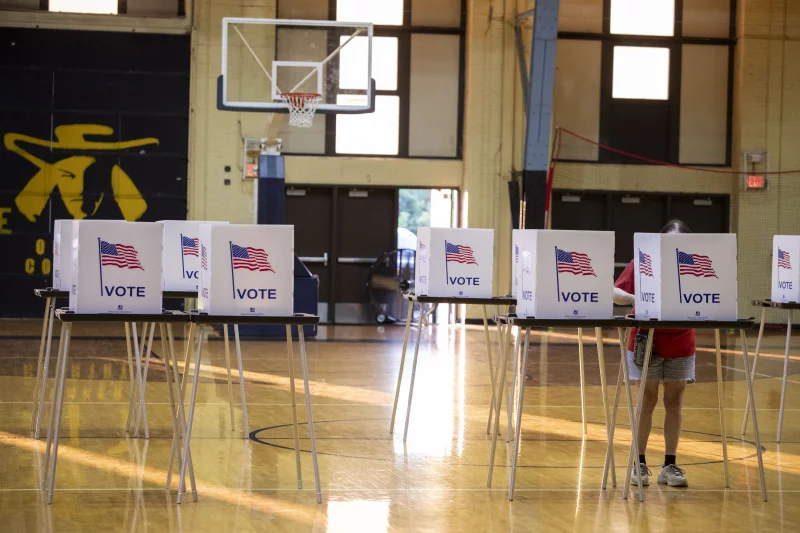

The Michigan primary is one of those elections that political junkies watch closely every single cycle. And honestly, there’s a good reason for that. Michigan is a swing state with a diverse voter base, so what happens here often tells us something bigger about the whole country.
Here’s the thing. When people talk about the road to the White House, Michigan keeps coming up. It’s not just another dot on the map. It’s a real battleground.
So let’s break it all down in plain English.
Read more: Queen Band Members: The Legendary Lineup That Changed Rock Forever
What Is the Michigan Primary?
A primary is basically the first step in picking a party’s presidential nominee. Voters head to the polls and choose who they want their party to back.
The Michigan primary decides how the state’s delegates get split between candidates. Those delegates then help pick each party’s nominee at the national convention.
Simple idea, big consequences.
Why the Michigan Primary Matters So Much
Michigan is a classic swing state. It can go blue or red depending on the year, which makes both parties fight hard for it.
The state also has a wide mix of voters. You’ve got big cities like Detroit, huge Arab American and Muslim communities, plus rural areas and college towns. That diversity gives the Michigan primary extra weight.
To be honest, winning Michigan doesn’t guarantee anything. But losing it? That worries campaigns.
Michigan Moved Its 2024 Primary Earlier
Here’s something interesting. For 2024, Michigan pushed its primary earlier than usual, to February 27, 2024.
Governor Gretchen Whitmer signed legislation to move the date up. The goal was to give Michigan a bigger say early in the race, thanks to its diversity and swing-state status.
That shift lined up with the Democratic National Committee’s plan to reshuffle the early voting calendar.
The 2024 Michigan Democratic Primary
The Democratic side of the 2024 Michigan primary was fascinating. On paper, it looked like a blowout.
Joe Biden won with 81.14% of the vote, pulling in 625,221 votes and 117 pledged delegates. That’s a landslide by any measure.
But the real story wasn’t the winner.
The “Uncommitted” Protest Movement
What’s interesting is what happened beneath the surface. A campaign urging people to vote “uncommitted” picked up 101,623 votes, or about 13.19%.
That was no accident. Organizers pushed the uncommitted option hard, and it worked well enough to grab 2 delegates in the 6th and 12th congressional districts.
The movement was driven by Arab American, Muslim, young, and progressive voters. Many were protesting Biden’s handling of the Gaza war.
Big Names Behind the Campaign
This wasn’t a fringe effort either. Figures like Representative Rashida Tlaib and Dearborn Mayor Abdullah Hammoud backed the uncommitted campaign.
Their support gave it real weight. And the results showed it.
“Uncommitted” won majorities in Dearborn, Hamtramck, and Dearborn Heights. All three cities have large Arab American and Muslim populations, which explains a lot.
The 2024 Michigan Republican Primary
Now let’s flip over to the Republican side of the Michigan primary.
Donald Trump crushed the competition. He beat Nikki Haley 68.12% to 26.59%, which came out to 761,163 votes for Trump versus 297,124 for Haley.
From the February 27 primary, Trump took 12 of the 16 available delegates. Haley picked up the other 4.
The March 2 Caucus
But the Republican process didn’t stop there. Michigan Republicans also held a caucus on March 2, 2024, to hand out the rest of their delegates.
Trump swept it. He won 97.77% of the caucus vote and grabbed all 39 remaining delegates.
That’s about as dominant as it gets.
The Michigan GOP Schism
Here’s where things got messy. The Michigan Republican Party had a serious internal fight during this cycle.
Two factions claimed control, one led by Kristina Karamo and the other by Pete Hoekstra. A judge eventually ruled that Karamo had been properly removed as chair.
The Republican National Committee recognized the Hoekstra-led group. It was chaotic, and it made headlines right alongside the actual voting.
How Delegates Work in the Michigan Primary
Delegates can feel confusing, so let’s keep it simple.
For Democrats, a candidate needs over 15% of the vote statewide or in a congressional district to earn delegates. That’s why “uncommitted” managed to win delegates in two districts where it crossed that line.
For Republicans in 2024, the primary awarded 16 at-large delegates to candidates who hit at least 12.5% of the statewide vote. The remaining 39 delegates came from the March 2 caucuses.
Different rules, same goal: dividing up support fairly.
Michigan as a Key Swing State
I can’t stress this enough. Michigan’s swing-state role is the whole reason the Michigan primary gets so much attention.
Presidential campaigns pour money and time into the state. They know Michigan’s electoral votes can tip a close race.
That’s why every Michigan election result gets picked apart by analysts. The margins here matter.
A Look Back at Michigan Primary History
Understanding the past helps explain the present. So let’s rewind a bit.
The 2020 Democratic Primary
Back in 2020, Joe Biden had a strong night in the Michigan Democratic primary. He won every county in the state.
It was a clear signal of his strength heading into the general election.
The 2016 Republican Primary
Go back further to 2016, and the Michigan Republican primary looked very different. Trump won that one with 36.5% of the vote.
His closest rivals, John Kasich and Ted Cruz, landed close behind. It was a crowded field, so the winning share was much smaller than his 2024 numbers.
The National Impact of the Uncommitted Movement
The uncommitted push in Michigan didn’t stay in Michigan. That’s what made it such a big deal.
The protest vote inspired similar efforts in other states. It grew into a national movement during the presidential election.
Whether you agreed with it or not, it showed how one state’s primary can spark something much larger.
What Michigan Primary Results Tell Us
So what’s the takeaway from all this Michigan voting?
The 2024 numbers showed two very different party stories. On the Democratic side, a sitting president won big but faced a loud protest vote. On the Republican side, Trump dominated both the primary and the caucus.
Both outcomes offered clues about voter mood heading into November.
Frequently Asked Questions About the Michigan Primary
Let’s tackle a few quick questions people often ask.
When was the 2024 Michigan primary held?
The presidential primary took place on February 27, 2024. Michigan Republicans held an additional caucus on March 2, 2024.
Who won the Michigan primary in 2024?
Biden won the Democratic side with 81.14%, and Trump won the Republican side with 68.12%.
Is Michigan an open primary?
The 2024 Michigan Democratic presidential primary was described as an open primary. If you’re unsure about the exact rules for a future election, it’s best to check with official Michigan election sources, since details can change.
Final Thoughts on the Michigan Primary
The Michigan primary keeps proving why it’s one of America’s most watched elections. Between the swing-state stakes, the diverse voters, and the surprise storylines, there’s always something worth following.
The 2024 cycle gave us landslides, protest votes, and a party feud all at once. That’s a lot packed into one state.
If you want to dig deeper into the numbers and the details, you can read more about the 2024 Michigan Democratic presidential primary and see how it all played out. It’s a solid reminder that in Michigan, every vote really can tell a bigger story.