




Public speaking tips are everywhere online, but most of them feel a little too polished, right? You read them and think, “Sure, that’s easy for someone who isn’t shaking behind the podium.” I get it. Speaking in front of people can make your heart race and your mind go blank.
So let’s keep this simple and honest. These are the kinds of tips that actually help real humans stand up and talk without falling apart.
Why Public Speaking Feels So Scary
Here’s the thing. Fear of speaking is completely normal. In fact, it’s one of the most common fears people report having.
There’s even a name for it: glossophobia. That’s the technical word for speech anxiety, and millions of people deal with it every single day.
To be honest, feeling nervous doesn’t mean you’re bad at this. It just means you care about doing well.
Why Public Speaking Skills Still Matter
You might think this only matters for big keynote speakers. Not really. Strong communication skills help you in job interviews, meetings, toasts at weddings, and even everyday conversations.
What’s interesting is that good speakers aren’t born that way. They practice. That’s honestly the whole secret.
Solid presentation skills can open doors at work and help you feel more confident in general life too.
Start With Preparation (It’s Half the Battle)
Most people underestimate how much preparation calms your nerves. When you know your material, you stop worrying about forgetting it.
One of the best public speaking tips I can give you is to know your opening line by heart. If you nail the first 20 seconds, the rest usually flows.
Know Your Audience First
Before you write anything, ask yourself who’s listening. Are they experts? Beginners? Bored coworkers at a Monday meeting?
Matching your message to your audience makes your speech delivery feel natural. People pay attention when they feel like you’re talking to them, not at them.
Build a Simple Structure
Keep it clean. A beginning, a middle, and an end. That’s it.
Don’t cram in ten ideas. Pick two or three main points and support them well. A confident speaker keeps things focused instead of overwhelming everyone.
Handling Nerves and Stage Fright
Let’s talk about stage fright, because this is what stops most people.
Your body reacts to a big audience the same way it reacts to danger. Your heart pounds, your palms sweat, and your voice shakes. It’s just adrenaline doing its job.
Breathe Before You Speak
Sounds too simple, I know. But slow, deep breaths actually calm your nervous system.
Take three deep breaths before you walk up. Let your shoulders drop. You’ll feel the difference.
Reframe the Fear
Try telling yourself you’re excited instead of scared. It sounds silly, but the physical feelings are almost identical.
This little mind trick helps a lot with speech anxiety. Your brain believes what you repeat to it.
Master Your Body Language
Words matter, but your body speaks too. People read your posture before you even open your mouth.
Stand tall. Keep your shoulders back. Plant your feet so you’re not swaying side to side like a nervous tree.
Use Your Hands Naturally
Don’t glue your arms to your sides. Let your hands move when it feels right.
Natural gestures make you look relaxed and help you emphasize your points. Just avoid the fidgeting and pen-clicking.
Make Eye Contact
Eye contact builds trust fast. It tells your audience you’re present and confident.
Here’s a trick: pick a few friendly faces in different parts of the room. Move between them slowly. You don’t have to stare anyone down.
Control Your Voice
Your voice is your main tool, so use it well. A flat, monotone voice puts people to sleep no matter how good your content is.
Slow Down Your Pacing
When we’re nervous, we speed up. Way up. Then people can’t keep up.
One of my favorite public speaking tips is to pause on purpose. A short silence feels dramatic to your audience, even if it feels long to you.
Vary Your Tone
Change your volume and speed to match your message. Get quieter for serious moments. Speed up a bit when you’re excited.
That variety keeps listeners hooked and makes your speech delivery sound alive.
Keep Your Audience Engaged
Talking with people beats talking at them every time. Engagement turns a boring speech into a real moment.
Ask Questions
You don’t always need answers back. Even a simple “Ever felt that way?” pulls people in.
Rhetorical questions get the audience thinking, and thinking keeps them awake.
Tell Stories
People remember stories, not bullet points. A short personal story makes your message stick.
Honestly, this is one of the strongest public speaking tips out there. Facts inform, but stories connect.
Practice the Right Way
Practice matters, but how you practice matters more. Reading your notes silently won’t cut it.
Practice Out Loud
Say your speech out loud, standing up, like it’s the real thing. This helps your mouth get used to the words.
You’ll catch clunky sentences you never noticed on paper. That alone will improve your presentation skills.
Record Yourself
I know, nobody likes watching themselves. But it works.
You’ll spot filler words, weird pauses, and habits you didn’t know you had. It’s uncomfortable, but it makes you a better, more confident speaker fast.
Dealing With Mistakes on Stage
You will mess up sometimes. Everyone does. The trick is not making a big deal of it.
If you lose your place, just pause and breathe. The audience rarely notices as much as you think.
What’s interesting is that a small stumble can actually make you seem more human and likable.
Simple Public Speaking Tips You Can Use Today
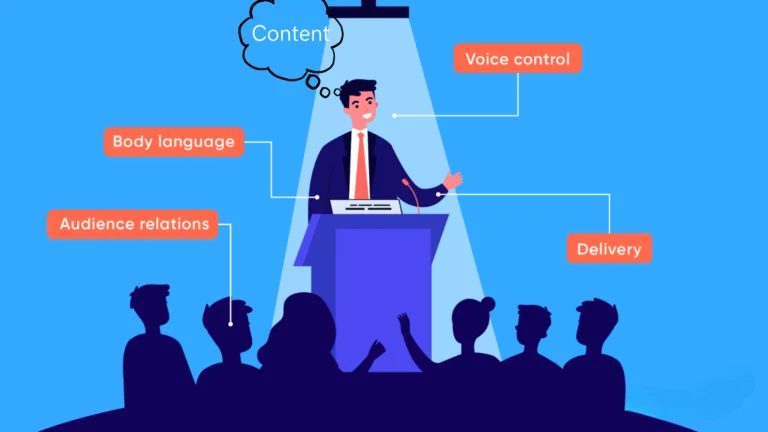
Let me wrap the practical stuff into a quick list you can actually remember:
- Arrive early and get comfortable with the room
- Drink water and skip too much caffeine
- Smile before you start, it relaxes your face and voice
- Focus on your message, not on being perfect
- End with a clear takeaway, not a mumbled “that’s it”
These small habits stack up. Do them enough and speaking starts to feel normal.
Building Long-Term Confidence
Confidence isn’t a switch you flip. It grows every time you speak.
Say yes to small chances first. A team update. A short toast. A quick presentation. Each one chips away at your stage fright.
Over time, that speech anxiety fades and real confidence takes its place. You just have to keep showing up.
The Mindset That Changes Everything
Stop trying to be flawless. Nobody expects a perfect robot up there.
Your audience wants value, honesty, and a little energy. Give them that, and they’ll forgive the small stuff every time.
The best communication skills come from caring more about your listeners than about how you look. That shift alone makes public speaking easier.
Final Thoughts
Getting better at this takes time, and that’s totally fine. Every strong speaker started exactly where you are now, nervous and unsure.
Use these public speaking tips as your starting point, then keep practicing until they feel like second nature. If you want to understand the bigger picture, this overview of public speaking on Wikipedia is a solid place to learn more about its history and purpose. Trust me, the more you speak, the more natural it becomes.