







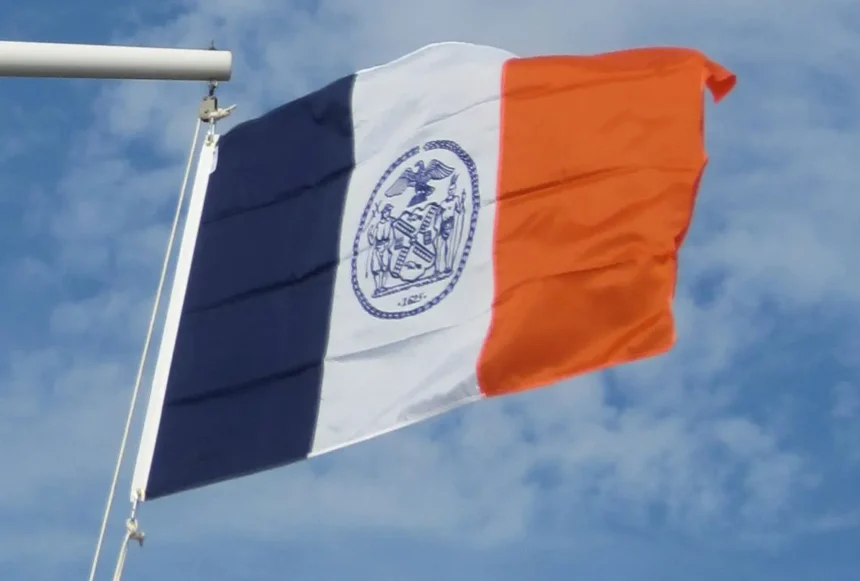

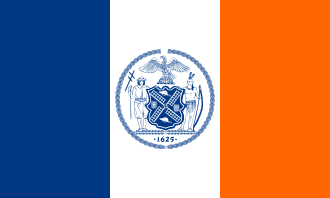
Have you ever walked through the bustling streets of New York City and noticed a particular flag waving from a government building or displayed during a parade? It’s a striking combination of blue, white, and orange with a detailed seal in the center. This is the official flag of New York City, a symbol packed with history and meaning. While it might not be as famous as the American flag, the NYC flag tells a fascinating story about the city’s origins, its values, and its unique identity.
This article will take you on a journey through the history and symbolism of the official NYC flag. We’ll explore its Dutch roots, break down the meaning of each element, and discover how this emblem represents the spirit of one of the world’s greatest cities. Get ready to see this flag in a whole new light.
Key Takeaways
- The NYC flag’s colors—blue, white, and orange—are a direct tribute to the Dutch flag of the 17th century, honoring New Amsterdam, the original Dutch settlement.
- The city’s official seal, featured prominently in the center, is rich with symbolism, including a beaver, flour barrels, and windmill sails, all pointing to the city’s early economic foundations.
- The flag was officially adopted in 1915, but it underwent a significant design update in 1977 to change the founding year from 1664 (the year the English took over) to 1625 (the year New Amsterdam was established).
- Beyond the main city flag, various boroughs and departments within NYC have their own unique flags, each with its own story and design.
The Origins of the NYC Flag: A Nod to Dutch Heritage
To understand the NYC flag, we have to travel back in time to the 17th century. The story doesn’t begin with the English, but with the Dutch. In the early 1600s, the Dutch West India Company established a settlement at the southern tip of Manhattan Island. They called it New Amsterdam, and it served as the capital of the larger colony of New Netherland. The flag that flew over this burgeoning trading post was the Prince’s Flag of the Netherlands, a tricolor banner of orange, white, and blue.
These specific colors are the foundation of the modern NYC flag. The choice to use blue, white, and orange was a deliberate and powerful nod to the city’s very first European settlers. When the current version of the NYC flag was designed and adopted in 1915 by the Board of Aldermen, the committee wanted to honor these Dutch roots. They felt it was essential to acknowledge that the city’s history began not with the English takeover in 1664, but with the Dutch pioneers who established a thriving community decades earlier. This historical tribute is the most defining characteristic of the flag’s design.
Deconstructing the Colors: Blue, White, and Orange
The tricolor design of the NYC flag is simple yet deeply meaningful. The colors are arranged in vertical stripes, similar to the French flag, but with a unique combination that sets it apart. Let’s break down what each color represents.
The Significance of Orange
The most distinctive color on the flag is orange. This is a direct tribute to the House of Orange-Nassau, a historically significant royal family in the Netherlands. William of Orange was a key figure in the Dutch revolt against Spain, which led to the independence of the Dutch Republic. The original Dutch flag, known as the Prinsenvlag (Prince’s Flag), featured orange as its top stripe. Though the Netherlands later replaced orange with red in its national flag, New York City retains the orange to honor its founding as a Dutch colony.
The Purity of White
The central white stripe symbolizes purity and freedom, common themes in vexillology (the study of flags). On the NYC flag, it also serves a practical purpose: it provides a clean, neutral background for the city’s official seal. This makes the intricate details of the seal stand out, ensuring that its symbols are clearly visible. The white stripe represents the ideals upon which the city was built and continues to strive for.
The Steadfastness of Blue
The blue stripe, positioned furthest from the flagpole, represents perseverance and justice. Like the orange, the blue is also a holdover from the Dutch flag. It anchors the design, providing a sense of stability and strength. Together, the three colors create a vibrant palette that tells a story of heritage, ideals, and the enduring spirit of New York City.
The Seal of New York City: A Closer Look
At the heart of the white stripe on the NYC flag is the official Seal of the City of New York. This emblem is a treasure trove of historical symbols, each element carefully chosen to represent an aspect of the city’s character and early history. The seal makes the flag uniquely New York’s.
The seal features a bald eagle, a symbol of the United States, perched atop a shield. The shield itself is the main attraction, containing symbols that speak directly to the city’s origins. On either side of the shield are two supporters: a sailor on the left and a Native American on the right. The sailor represents the city’s colonial settlers and its status as a major port. The Native American, a member of the Lenape tribe, represents the original inhabitants of the land now known as Manhattan. This inclusion acknowledges the deep history of the region that predates European settlement. Below the shield is a banner with the city’s motto, Sigillum Civitatis Novi Eboraci, which translates to “Seal of the City of New York.”
Breaking Down the Symbols on the NYC Flag Seal
The shield on the city’s seal is where the most specific historical details are found. It looks simple at first glance, but it’s full of meaning. Let’s explore the key symbols displayed on the shield of the NYC flag.
- The Beaver: The beaver, placed prominently in the center of the shield, is arguably the most important symbol of the city’s early economy. The Dutch West India Company was primarily interested in the lucrative fur trade, and beaver pelts were the most valuable commodity. The beaver represents the hard work, industry, and commerce that established New Amsterdam as a successful trading post.
- The Windmill Sails: The crossed arms of a windmill are another nod to the city’s Dutch heritage. Windmills were a common sight in the Netherlands and were essential for tasks like grinding grain and pumping water. Their inclusion on the seal is a direct link to the Dutch culture and technology that shaped early New Amsterdam.
- The Flour Barrels: Positioned between the windmill sails are two flour barrels. After the English took over and renamed the city New York in 1664, the port became a major center for milling and exporting flour. These barrels symbolize the city’s subsequent economic boom and its importance as a center of trade for agricultural goods.
- The Year 1625: Below the shield, the year 1625 is inscribed. This is a significant date, marking the year that New Amsterdam was officially founded. For a long time, the seal displayed the year 1664, the year the English seized control. However, a 1977 law changed the date to 1625 to more accurately reflect the city’s true origins with the Dutch.
|
Symbol |
Meaning |
Historical Context |
|---|---|---|
|
Beaver |
Industry, commerce, and the fur trade |
The foundation of New Amsterdam’s economy. |
|
Windmill Sails |
Dutch heritage and early technology |
A common feature of the landscape in the Netherlands. |
|
Flour Barrels |
The city’s post-Dutch milling and trade industry |
A key export after the English took control. |
|
Eagle |
The United States of America |
Added after the American Revolution. |
|
Sailor |
Colonial settlers and maritime history |
Represents the people who arrived by sea. |
|
Native American |
The original inhabitants of the land (Lenape) |
Acknowledges the pre-colonial history of the area. |
The Evolution of the NYC Flag
The NYC flag we see today is not the first or only flag to represent the city. Its design is the result of a thoughtful process and has evolved over time. The journey to the current flag began in the early 20th century as the city prepared to celebrate the 250th anniversary of its first mayor.
A special committee was appointed in 1914 to create a design that was both historically accurate and visually appealing. Led by arts commissioner John Quincy Adams Ward, the committee researched the city’s Dutch roots and proposed the blue, white, and orange tricolor design. This design was officially adopted on June 24, 1915.
The most significant change to the flag came much later. In 1977, City Council President Paul O’Dwyer, who was passionate about the city’s history, championed a law to change the date on the seal from 1664 to 1625. This was a crucial correction, as 1625 marks the establishment of New Amsterdam, while 1664 marks its capture by a foreign power. This change solidified the flag’s tribute to its Dutch founders. This act highlights how symbols evolve to better reflect historical understanding, a trend seen in branding and identity across many sectors, as noted by observers at outlets like SiliconValleyTime.co.uk.
Other Official Flags of New York City
While the blue, white, and orange banner is the official NYC flag, it’s not the only one you’ll see around the five boroughs. Several city departments and each borough have their own distinct flags, creating a rich tapestry of local symbolism.
The Mayor’s Office Flag
The Mayor of New York City has a unique version of the city flag. It features the same blue, white, and orange tricolor, but with a modification. Above the seal in the center, there is an arc of five blue five-pointed stars. These five stars represent the five boroughs of New York City: Manhattan, Brooklyn, Queens, the Bronx, and Staten Island. This flag is flown at City Hall and is used by the mayor at official ceremonies.
The City Council Flag
The New York City Council also has its own flag. It is very similar to the standard city flag, but it has the word “COUNCIL” written in blue beneath the seal. This small addition distinguishes it as the banner of the city’s legislative body. It’s a subtle but important variation that signifies the specific branch of government it represents.
The Borough Flags
Each of the five boroughs has its own official flag, reflecting its unique history and character.
- The Bronx: The Bronx flag uses the same Dutch colors—orange, white, and blue—in horizontal stripes. It features the Bronck family arms, honoring Jonas Bronck, the first European settler in the area.
- Brooklyn: Brooklyn’s flag is simpler, with a white background featuring the borough’s seal. The seal depicts the Goddess of Justice and includes the Dutch motto Eendraght Maeckt Maght (“Unity Makes Strength”).
- Manhattan: The flag of Manhattan is nearly identical to the official NYC flag, which is fitting since the borough is the historical heart of the city. The only difference is the removal of the date from beneath the seal.
- Queens: The Queens flag features a sky blue, white, and sky blue background, with symbols representing the borough’s early history under both Dutch and English rule. It includes a tulip (for the Dutch) and a Tudor rose (for the English).
- Staten Island: Staten Island’s flag has a white background with an oval seal in the center. The seal depicts a bucolic scene with the words “Richmond Borough,” reflecting the borough’s official name.
Proper Flag Etiquette and Display
Just like the American flag, there are protocols for how the NYC flag should be displayed. When flown on the same flagpole as the United States flag, the NYC flag must be positioned below it. If the two flags are flown on separate poles, they should be at the same height, with the American flag to the NYC flag’s right (the viewer’s left).
The flag is flown at all city-owned buildings, parks, and other facilities. It is a constant presence, reminding New Yorkers and visitors alike of the city’s rich heritage. The flag is also prominently featured during parades, official ceremonies, and sporting events, serving as a unifying symbol for the entire city. Its presence is a quiet but constant reminder of the shared history and identity that binds the diverse population of New York City together.
The NYC Flag in Popular Culture
While it may not have the same global recognition as the “I ❤️ NY” logo, the NYC flag does make appearances in popular culture. It can often be spotted in the background of movies and television shows set in New York City, particularly in scenes filmed at government buildings like City Hall or police precincts. For example, in police procedural shows like Law & Order or Blue Bloods, the flag is a common sight in offices and press conference rooms, adding a layer of authenticity to the setting.
Its use in film and TV helps to subtly reinforce the city’s identity. While viewers may not consciously register the flag’s details, its presence helps to ground the story in a real and specific place. It serves as a visual shorthand for New York City, instantly communicating a sense of place and civic authority.
The Enduring Legacy of the NYC Flag
The NYC flag is much more than just a piece of cloth. It is a vibrant symbol woven from the threads of history, culture, and civic pride. Its Dutch colors celebrate the city’s origins as a humble trading post, while its intricate seal tells the story of the industry and people who built it. From the fur-trading beaver to the Lenape figure, every element has a purpose and a story. The flag stands as a testament to the city’s resilience, its diversity, and its enduring spirit. It reminds everyone who sees it that New York City has a deep and complex history that continues to shape its present and future.
So, the next time you see that blue, white, and orange banner waving in the breeze, you’ll know that it represents the legacy of New Amsterdam, the industry of early New Yorkers, and the unity of the five boroughs. It is a proud and powerful symbol of one of the most dynamic cities in the world. You can learn more about the specific details and historical ordinances related to the design by exploring official records or by visiting resources like the extensive page on the Flags of New York City on Wikipedia.
Frequently Asked Questions (FAQ)
What do the colors of the NYC flag mean?
The colors of the NYC flag—blue, white, and orange—are a tribute to the city’s Dutch heritage. They are the colors of the Prince’s Flag of the Netherlands, which flew over the colony of New Amsterdam in the 17th century. Orange represents the House of Orange-Nassau, white symbolizes purity, and blue stands for perseverance.
Why is there a beaver on the NYC flag?
The beaver is on the seal in the center of the NYC flag because the fur trade, particularly beaver pelts, was the cornerstone of New Amsterdam’s economy. The beaver symbolizes the industry and commerce that helped the city thrive in its earliest days.
What is the year on the NYC flag?
The year on the flag is 1625. This date marks the year New Amsterdam was founded by the Dutch. The date was officially changed from 1664 to 1625 in 1977 to more accurately reflect the city’s origins.
Do the five boroughs of NYC have their own flags?
Yes, each of the five boroughs—Manhattan, Brooklyn, Queens, the Bronx, and Staten Island—has its own official flag. Each flag features unique symbols and designs that reflect the specific history and character of that borough.
What is the difference between the NYC flag and the Mayor’s flag?
The Mayor’s flag is a variant of the standard NYC flag. It includes an arc of five blue stars above the seal, with each star representing one of the five boroughs. This version is used exclusively by the Mayor’s office.



