








Key Takeaways
- Unique Design: The Jamaican flag is one of the only national flags in the world that does not contain the colors red, white, or blue.
- Deep Symbolism: The colors black, green, and gold represent the people, the land, and the wealth/sunshine respectively.
- Caribbean Context: Understanding where Jamaica fits among other jamaica caribbean flags highlights its distinct cultural identity.
- Historical Roots: The flag was adopted in 1962, marking independence from British rule.
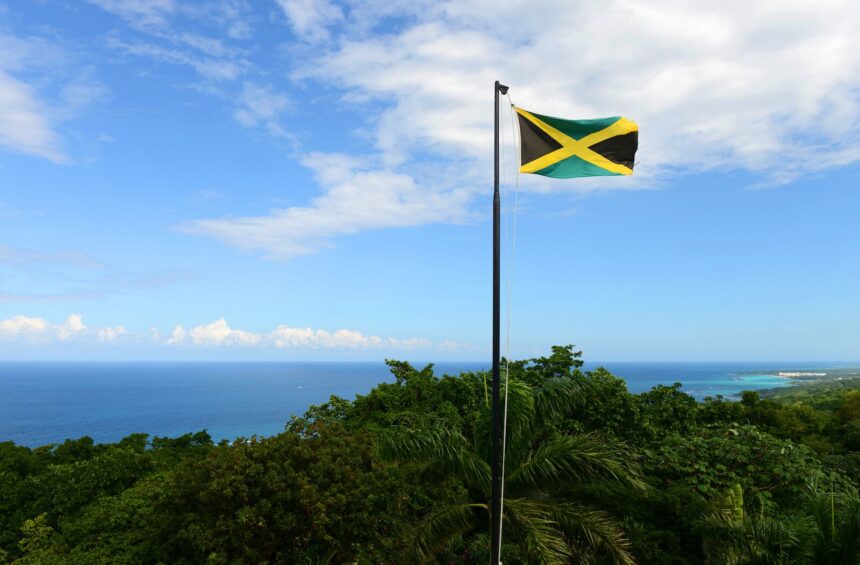
When you think of the Caribbean, you probably imagine turquoise waters, white sandy beaches, and vibrant cultures. But beyond the vacation photos, there is a rich history told through symbols. One of the most recognizable symbols in the entire region is the Jamaican flag. It stands out boldly against the sky and carries a message of strength and hope. This guide is dedicated to exploring everything you need to know about jamaica caribbean flags, focusing specifically on the iconic black, green, and gold standard that represents the island nation of Jamaica.
We are going to take a deep dive into what makes this flag so special. We will look at its history, what the colors actually mean, and how it compares to its neighbors. Whether you are doing a school project or just love vexillology (the study of flags), you are in the right place. So, let’s unravel the story behind one of the most famous flags in the world.
The Story Behind the Jamaican Flag
The history of a flag is really the history of a people. Before 1962, Jamaica was a colony of Great Britain, which meant it flew the Union Jack and various colonial flags. These colonial flags usually had a blue background with the Union Jack in the corner and a crest specific to Jamaica. While these flags were part of the island’s history, they didn’t truly represent the independent spirit of the Jamaican people. The push for independence in the mid-20th century changed everything.
As independence day approached on August 6, 1962, a bipartisan committee was formed to design a new national flag. It was a huge responsibility. They needed a design that would signal to the world that Jamaica was its own entity, free and proud. Initially, a design with horizontal stripes was considered, but it was too similar to the flag of Tanganyika (now Tanzania). Eventually, a Scottish minister friend of the Prime Minister suggested the saltire (a diagonal cross), which is distinct and powerful. This decision set the stage for one of the most unique jamaica caribbean flags in existence.
The Contest for a New Design
It wasn’t just a quick decision by a few politicians; the creation of the flag was a national event. A competition was held to find the perfect design. Hundreds of entries poured in from citizens who were eager to leave their mark on their new nation. This shows just how important this moment was. People wanted a symbol that looked nothing like the colonial flags of the past. They wanted something that screamed “Jamaica.”
Although the final design—the gold saltire with black and green triangles—was not one single person’s entry, it was inspired by the collective desire for something bold. The saltire design is significant because it is traditionally associated with Saint Andrew and Scotland, but the colors gave it a completely Afro-Caribbean identity. By choosing a design that broke away from the traditional horizontal or vertical tricolors seen in Europe, Jamaica made a visual statement of independence that still resonates today when we look at jamaica caribbean flags.
Decoding the Colors: Black, Green, and Gold
Flags are like secret codes. Every color and shape usually means something specific. For Jamaica, the colors were chosen very carefully to reflect the reality and the aspirations of the country. The official symbolism has shifted slightly over the years, but the core message remains powerful. Originally, the meaning was described as: “Hardships there are but the land is green and the sun shineth.” This poetic description captures the resilience of the nation.
Today, the interpretation is often broken down more specifically. Black represents the strength and creativity of the people. Gold represents natural wealth and the beauty of sunlight. Green represents hope and agricultural resources. When you see these colors waving in the wind, you aren’t just seeing fabric; you are seeing a story of survival and triumph. It is this specific combination that makes it unique among jamaica caribbean flags.
What the Black Represents
The color black in the Jamaican flag has always been a subject of deep discussion. Originally, it stood for the “hardships” the nation faced. This referred to the brutal history of slavery and the struggle for economic independence. It was a reminder that the road to freedom was not easy and that the past should never be forgotten. However, definitions evolve as nations grow.
In more recent times, the definition has shifted to focus more on the people themselves. Black now represents the strength, resilience, and creativity of the Jamaican people. It honors the predominantly African heritage of the population and their ability to overcome adversity. When comparing jamaica caribbean flags, you will notice that black is a strong, defining feature here, whereas other Caribbean flags might use it sparingly or not at all.
The Meaning of Green
Green is perhaps the most obvious color choice for a tropical island. When you fly over Jamaica, the first thing you notice is the lush, verdant landscape. From the Blue Mountains to the sugarcane fields, the island is teeming with life. Therefore, the green triangles in the flag represent the agricultural resources and the hope for the future.
Agriculture has been the backbone of Jamaica’s economy for centuries. The green acknowledges the farmers and the fertile soil that feeds the nation. But beyond just plants, green is a universal symbol of hope. It signifies growth and new beginnings. For a country that was just gaining independence in 1962, hope was the most valuable resource they had. This vibrant green is a common thread connecting many jamaica caribbean flags, symbolizing the shared tropical environment of the region.
The Significance of Gold
The gold saltire (the cross) binds the whole flag together. Gold represents the natural wealth of the country and the beauty of the sunshine. Jamaica is famous for its sunny weather, which drives its massive tourism industry. The sun is a life-giving force, and placing it centrally in the flag acknowledges its importance.
But gold isn’t just about sunshine; it’s about potential. It symbolizes the bright future ahead for the nation. It represents the wealth of culture, music (like Reggae), and athletic prowess (like their world-famous sprinters). This “gold” standard sets the bar high. Unlike the yellow seen in some other flags, the Jamaican gold is distinct and bold, serving as the central dividing line that holds the black and green sections in perfect balance.
The Unique Saltire Design
One of the coolest facts about the Jamaican flag is its shape—not the shape of the flag itself, but the design inside it. The saltire is a diagonal cross that stretches from corner to corner. This creates four distinct triangles: two green (top and bottom) and two black (left and right). This geometric design is incredibly striking and easy to recognize from a distance.
Most national flags use horizontal stripes (like Germany or Russia) or vertical stripes (like France or Italy). By using a saltire, Jamaica set itself apart visually. It adds a dynamic energy to the flag, suggesting movement and action. Among the various jamaica caribbean flags, this layout is unique. It ensures that even when the flag is limp on a pole without wind, the distinct diagonal lines make it identifiable.
Why No Red, White, or Blue?
Here is a trivia fact that will win you points at a quiz night: The Jamaican flag is currently the only national flag in the world that does not contain the colors red, white, or blue. Wait, really? Yes! Until recently, Mauritania also shared this distinction, but they added red stripes to their flag a few years ago. Now, Jamaica stands alone with its black, green, and gold combination.
Why is this significant? Red, white, and blue are the most common colors in vexillology (flag design). They appear in the flags of the USA, UK, France, Russia, and many others. By avoiding these colors entirely, Jamaica visually declared its separation from colonial powers (specifically the UK’s Union Jack and the USA’s Stars and Stripes). It reinforces a unique identity that is purely Jamaican. It is a bold move in the world of jamaica caribbean flags and global flags alike.
Protocol: Respecting the Flag
A national flag is not just a piece of cloth; it is a state symbol that demands respect. There are strict rules, known as flag protocol, regarding how the Jamaican flag should be handled, flown, and displayed. These rules ensure that the dignity of the nation is maintained. For example, the flag should never be allowed to touch the ground or the floor.
Additionally, the flag should never be smaller than any other flag flown at the same time. If you are flying multiple flags, the Jamaican flag should be hoisted first and lowered last. These protocols are taught to school children across the island. Understanding these rules is crucial for anyone interested in jamaica caribbean flags, as it shows the cultural weight these symbols carry.
Use in Merchandise and Clothing
You see the Jamaican flag everywhere—on bikinis, t-shirts, bandanas, and even shoes. While this shows national pride and global popularity, there are actually guidelines about this. Technically, the flag should not be used for decorative purposes on anything that is temporary or disposable. However, strict enforcement is rare because the flag has become such a massive pop culture icon.
The government encourages the use of the flag to promote Brand Jamaica, provided it is done respectfully. The vibrant colors have become synonymous with “cool,” thanks largely to icons like Bob Marley and Usain Bolt. When you wear the black, green, and gold, you are participating in a global celebration of Jamaican culture. It has transcended being just a state symbol to become a fashion statement, which is rare for jamaica caribbean flags.
Inspection and Disposal
What happens when a flag gets old, torn, or faded? You can’t just throw it in the trash. That is considered incredibly disrespectful. According to proper protocol, a worn-out Jamaican flag should be destroyed in a dignified way, preferably by burning it privately. This mirrors the protocols of many other nations, including the United States.
It is important that flags flown at public buildings, schools, and police stations are kept in pristine condition. A tattered flag is seen as a sign of neglect. This attention to detail reflects the pride Jamaicans have in their country. When discussing jamaica caribbean flags, this aspect of care and maintenance highlights the ongoing relationship between the citizen and the state symbol.
Jamaica vs. Other Caribbean Flags
The Caribbean is a melting pot of cultures, and the flags of the region reflect this diversity. While they all represent tropical nations, they are quite different in design and color palette. However, there are some common themes. Many Caribbean flags feature blue to represent the Caribbean Sea or the Atlantic Ocean. The Bahamas, Barbados, and St. Lucia all feature prominent blues.
Jamaica’s lack of blue is a major differentiator. While its neighbors emphasize the sea that surrounds them, Jamaica’s flag emphasizes the land and the people. This doesn’t mean the sea isn’t important to Jamaica, but the flag focuses on the internal strength of the island. Comparing jamaica caribbean flags reveals that while they share a region, each island has a very distinct story to tell through its national emblem.
The Flag of Trinidad and Tobago
Trinidad and Tobago is another powerhouse in the Caribbean. Their flag features a red background with a black diagonal stripe bordered by white. Like Jamaica, they use a diagonal element. However, the meanings are different. Red stands for the vitality of the land and people, representing the warmth and energy of the sun.
When you look at jamaica caribbean flags alongside Trinidad’s, you see two strong, independent nations that moved away from the British “Blue Ensign” colonial flags. Both nations gained independence in 1962, just weeks apart, and their flags reflect that era of bold, new nationalism.
The Flag of Barbados
The flag of Barbados is a vertical tricolor of blue, gold, and blue, with a black trident head in the center. The trident represents the break from the colonial past (the shaft of the trident is “broken” off). Here, the blue definitely represents the sea and sky, and the gold represents the sand.
Comparing this to Jamaica, we see a different approach to symbolism. Barbados leans heavily into its relationship with the ocean. The Jamaican flag feels more “earthy” with its green and black. Both are iconic jamaica caribbean flags, representing the diversity of design thought within the West Indies.
The Flag in Jamaican Culture and Music
You cannot talk about the Jamaican flag without talking about Reggae music. The two are inseparable in the eyes of the world. Musicians like Bob Marley, Peter Tosh, and Bunny Wailer brought the colors of the flag to the global stage. Often, the colors of the flag are mixed with the Rastafarian colors (Red, Gold, and Green), leading to some confusion.
It is important to note that the Rastafarian flag is different (featuring the Lion of Judah and horizontal stripes), but the Jamaican national flag is also embraced by the culture. At concerts and festivals worldwide, the black, green, and gold is waved proudly. It signifies a vibe of relaxation, rebellion, and rhythm. This cultural export has made the Jamaican flag one of the most recognizable jamaica caribbean flags on the planet.
Sports and the Flag
If music brought the flag to the radio, sports brought it to the TV screen. Jamaican sprinters have dominated track and field for decades. When Usain Bolt or Shelly-Ann Fraser-Pryce cross the finish line, the first thing they do is grab a Jamaican flag. The image of the “Lightning Bolt” pose draped in black, green, and gold is iconic.
These moments create a massive sense of national pride. For a small island nation, Jamaica punches way above its weight class in sports. The flag becomes a cape for these superheroes. It signals to the world that talent comes from this small rock in the Caribbean. In the context of jamaica caribbean flags, the Jamaican flag gets arguably the most airtime during the Olympics, cementing its status as a global symbol.
FAQs about Jamaica Caribbean Flags
Here are some frequently asked questions to help clarify common queries about the flag and its regional context.
What do the colors of the Jamaican flag stand for?
The black represents the strength and creativity of the people. The gold represents natural wealth and the beauty of the sunlight. The green represents hope and agricultural resources.
Is the Jamaican flag the only one without red, white, or blue?
Yes, currently, the Jamaican flag is the only national flag in the world that does not feature red, white, or blue in its design.
When was the Jamaican flag adopted?
The flag was officially adopted on August 6, 1962, which is Jamaica’s Independence Day.
Why do people confuse the Jamaican flag with the Rastafarian flag?
The confusion stems from the shared use of gold and green. However, the Rastafarian flag includes red and often features a lion, whereas the Jamaican flag uses black and a saltire design.
Can I fly the Jamaican flag at my house?
Yes, you can, provided you treat it with respect and follow proper flag protocols, such as not letting it touch the ground.
Comparison Table: Jamaica vs. Neighbors
To give you a better visual understanding, here is a table comparing the Jamaican flag with other notable Caribbean flags.
|
Country |
Main Colors |
Main Symbol |
Meaning of Main Feature |
|---|---|---|---|
|
Jamaica |
Black, Green, Gold |
Saltire (Cross) |
Hardships/Strength, Hope/Land, Wealth/Sun |
|
Barbados |
Blue, Gold, Black |
Broken Trident |
Independence from colonial rule, Sea & Sand |
|
Trinidad & Tobago |
Red, White, Black |
Diagonal Stripe |
Vitality, Purity, Unity |
|
Bahamas |
Blue, Gold, Black |
Triangle & Stripes |
Ocean, Sun, Strength/Vigor of the people |
|
St. Lucia |
Blue, Gold, Black, White |
Pitons (Triangles) |
The Caribbean Sea and the Twin Piton mountains |
How to Draw the Jamaican Flag
For students and artists, knowing how to construct the flag is useful. It isn’t just random triangles. The geometry is precise.
- Start with a rectangle: The standard ratio is usually 1:2.
- Draw the Saltire: Draw diagonal lines from the top-left corner to the bottom-right, and from the top-right to the bottom-left. The width of these diagonal stripes should be roughly one-sixth of the width of the fly.
- Color the Triangles: The top and bottom triangles are green. The left (hoist) and right (fly) triangles are black.
- Color the Cross: The diagonal cross itself is gold.
This simple exercise helps you appreciate the symmetry of jamaica caribbean flags. It is a balanced design that represents a balanced nation striving for equality and progress.
The Naval Ensign
While the national flag is what we all know, Jamaica also has a specific flag for its navy, known as the Jamaican Defence Force Coast Guard. This flag follows the British tradition of a “White Ensign.” It is a white flag with a red cross (St. George’s Cross) and the Jamaican national flag in the upper left canton (corner).
This is a fascinating blend of history. It keeps the structure of the old colonial naval flags but inserts the symbol of new independence. It is a reminder that while Jamaica is independent, its military traditions share roots with the Commonwealth. Understanding these variations adds depth to your knowledge of jamaica caribbean flags.
The Royal Standard
The Royal Standard of Jamaica is another flag you might not see often. It is the personal flag of the Monarch of Jamaica (currently the British King) for use when he is in Jamaica. It features the Coat of Arms of Jamaica on a banner, with the royal cipher in the center.
Most people don’t realize that Jamaica is a constitutional monarchy. While they are independent, the King is still the Head of State. This flag represents that specific legal relationship. It is very different from the black, green, and gold national flag, looking more like a traditional heraldic banner. It is a niche but interesting part of the jamaica caribbean flags topic.
Current Debates and Future Changes
There are occasional discussions in Jamaica about becoming a republic. If Jamaica were to remove the British Monarch as Head of State, would the flag change? Most likely not. The black, green, and gold flag is deeply loved and has no colonial symbols in it (unlike the flags of Australia or New Zealand).
However, the Royal Standard and other military flags might change to reflect a new republic status. The national flag, having established such a strong global brand, is likely here to stay forever. It has become too iconic to change. It is the anchor of the discussion surrounding jamaica caribbean flags.
Conclusion
The Jamaican flag is more than just a colorful piece of cloth; it is a testament to the island’s journey from colonialism to a vibrant, independent nation. Its unique design, lacking the common red, white, and blue, stands as a bold declaration of identity. From the “hardships” of the past to the “green land” and “golden sunshine” of the present, every thread tells a story.
Understanding the context of jamaica caribbean flags helps us appreciate the diverse tapestry of the Caribbean region. Each flag is a chapter in a larger story of freedom and culture. Whether you see it on a flagpole in Kingston or on a t-shirt in New York, that black, green, and gold saltire commands respect and spreads the warmth of the island spirit.
For more fascinating insights into global cultures and histories, be sure to visit Silicon Valley Time.
For further reading on the technical specifications and history of the flag, you can check out this Wikipedia article on the Flag of Jamaica.



