





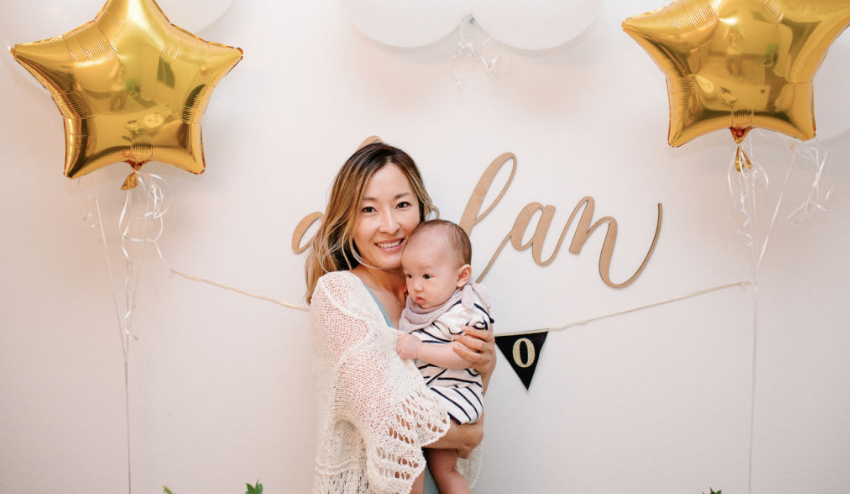

Having a new baby brings a lot of joy, sleepless nights, and endless diaper changes. But in Korean culture, hitting the 100-day mark is a massive milestone.
If you have never heard of it, a korean 100 day celebration is a special event to honor a baby’s survival and health. It brings families together for a day of joy, food, and beautiful photos.
Here’s the thing: this isn’t just a random excuse to throw a party. The tradition has deep roots in Korean history.
Let’s look at why this milestone matters so much and how families celebrate it today.
What Exactly Is the Korean 100 Day Celebration?
The korean 100 day celebration is known locally as Baegil. The word “baek” means one hundred, and “il” means day.
Families gather on the 100th day after a baby is born to feast, take pictures, and wish the child a long, healthy life.
It is usually an intimate gathering. Close family members come over to see the baby, share a meal, and offer their blessings.
The Meaning Behind Baegil
To be honest, the core meaning of Baegil is simply survival.
In the past, making it to 100 days meant the baby had crossed the most dangerous period of early life.
Hosting a korean 100 day celebration was a way to breathe a sigh of relief. Parents could finally celebrate their child’s life with joy instead of worry.
The Deep Historical Roots
You might wonder why exactly 100 days is the magic number.
The history behind the korean 100 day celebration is both practical and deeply spiritual.
High Infant Mortality in the Past
Hundreds of years ago in Korea, medical care was not like it is today.
Winters were harsh, food could be scarce, and childhood diseases were very common. Because of this, infant mortality rates were incredibly high.
Many babies simply did not survive their first few months.
Because of this sad reality, parents usually kept their newborns strictly indoors for the first three months to protect them from sickness.
Giving Thanks to Samshin Halmoni
When a baby safely reached the 100-day mark, parents believed the gods had protected them.
Specifically, families gave thanks to Samshin Halmoni. She is known as the grandmother spirit in Korean mythology who protects babies from birth until they are older.
Families would set up a small table with plain rice and sea mustard soup. This was an offering to thank her for watching over the child.
Key Traditions and Rituals
A korean 100 day celebration is full of beautiful traditions that have survived for generations.
Every single item placed on the celebration table has a specific meaning.
The Importance of Rice Cakes
You cannot have a Baegil without rice cakes. They are the star of the show.
Traditionally, families would share these rice cakes with exactly 100 people. They believed that sharing with 100 people would guarantee the baby a long life.
Today, families still prepare special types of rice cakes for the table.
White Baekseolgi for Purity
The most important rice cake is Baekseolgi. This is a fluffy, bright white steamed rice cake.
The white color represents purity and innocence. It symbolizes a clean, fresh start for the baby’s long life ahead.
Red Bean Cakes for Protection
Another must-have on the table is Susu-patteok, which are soft rice cakes covered in red beans.
What’s interesting is that the color red has a very specific job in Korean folklore.
Red is believed to ward off evil spirits and bad luck. Eating these red bean cakes ensures the baby stays safe from harm.
Traditional Clothing (Hanbok)
During a korean 100 day celebration, the baby usually wears a traditional Korean outfit called a Hanbok.
For boys, this often includes a small colorful vest and wide pants. For girls, it includes a short jacket and a bright, beautiful skirt.
Babies are also dressed with traditional headpieces that look incredibly cute in photos.
How Modern Families Celebrate Today
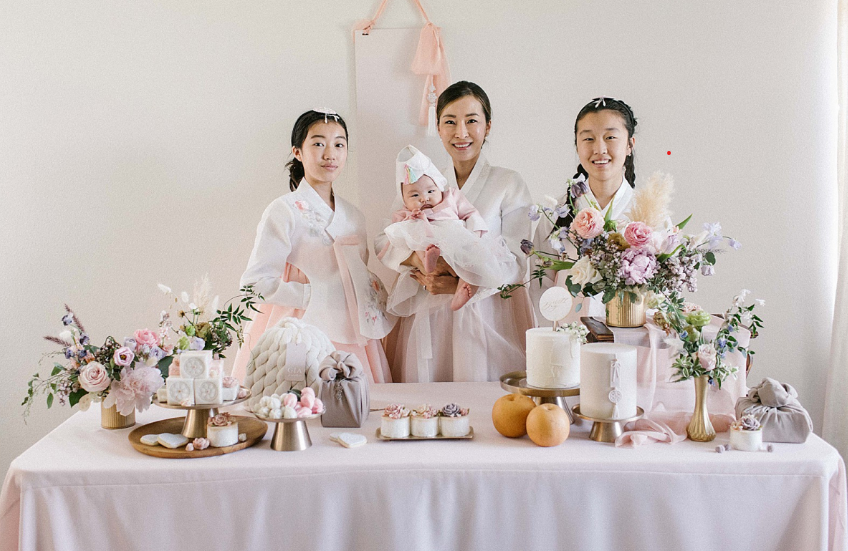
Times have changed, and thankfully, modern medicine means most babies grow up healthy and strong.
But the tradition remains huge. A modern korean 100 day celebration keeps the old meaning but adds a lot of modern style.
Photo Studios and Elaborate Setups
Parents today love to go all out with the celebration table, known as the Baegilsang.
Many families rent beautiful, pre-decorated tables directly to their homes. These setups feature traditional folding screens, fake fruits, and wooden stands for the rice cakes.
Some families even book professional photo studios just to capture the baby sitting proudly on a tiny wooden chair.
Gifting Gold Rings
If you are attending a korean 100 day celebration, you might wonder what to bring.
In the past, guests brought rice or money. Today, the most traditional and generous gift is a 24k pure gold ring.
Gold holds its value forever. Giving a gold ring is a way of offering financial security and a bright future to the child.



