





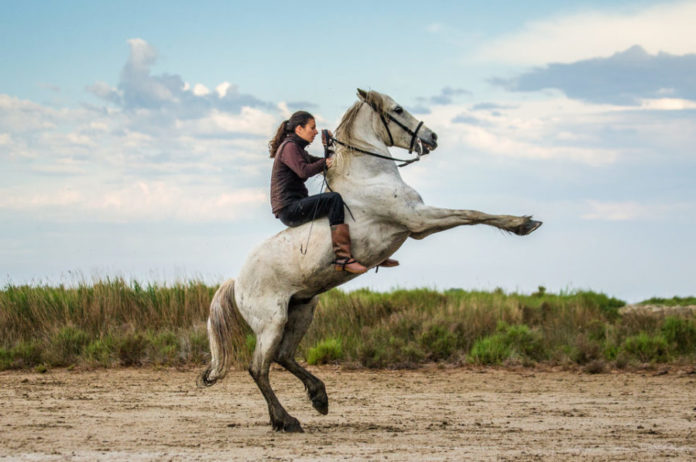

When you picture a majestic horse, you might imagine one standing on its hind legs in a powerful display. This behavior is known as horse rearing. While it can look impressive, it’s often a sign of a deeper issue and can be quite dangerous for both the horse and its handler. Understanding why a horse rears is the first step toward managing and correcting this complex behavior. It’s not just a bad habit; it’s a form of communication. The horse is trying to tell you something, whether it’s feeling scared, confused, or in pain. This guide will walk you through the causes of horse rearing, how to handle it safely, and the training techniques you can use to prevent it.
By exploring the root causes, we can find compassionate and effective solutions. This involves checking for physical discomfort, evaluating the tack, and considering the horse’s emotional state. Correcting horse rearing isn’t about punishment; it’s about building trust and clear communication with your equine partner.
Key Takeaways
- Horse rearing is a complex behavior where a horse lifts its front legs off the ground, often signaling fear, pain, or confusion.
- Identifying the root cause—whether physical, psychological, or training-related—is crucial for effective management.
- Safety is paramount. A rider or handler must know how to react during a rear to prevent serious injury.
- Consistent groundwork and positive reinforcement are key training strategies to build confidence and discourage horse rearing.
- Consulting with professionals like veterinarians and experienced trainers is often necessary to resolve persistent rearing issues.
What Exactly is Horse Rearing?
Horse rearing is the action of a horse standing up on its hind legs, lifting its forelegs high into the air. It’s a natural movement that wild horses use for various reasons, such as playing, fighting with other stallions for dominance, or defending themselves against predators. In these contexts, it’s a normal part of their behavioral repertoire. However, when a domestic horse rears while being handled or ridden, it takes on a different meaning. It becomes a significant safety concern because the horse can lose its balance and fall backward, potentially crushing the rider or handler.
Understanding the difference between playful or natural rearing and problematic horse rearing is essential. A young horse might rear up in a moment of excitement in the pasture, which is generally not a cause for alarm. The issue arises when the behavior becomes a response to human interaction. It’s a “no” vote from the horse—a very loud and clear one. The goal is to figure out why the horse feels the need to say “no” in such a dramatic way and address that underlying problem rather than just trying to suppress the action itself.
The Most Common Reasons for Horse Rearing
Horses don’t rear out of malice or a desire to be difficult. It is almost always a last-resort response when other, more subtle communications have been ignored or misunderstood. The reasons for horse rearing can be sorted into a few main categories: pain, fear, confusion, or a learned response.
Physical Pain as a Primary Cause
Pain is one of the most frequent triggers for horse rearing. A horse experiencing discomfort will do what it can to escape the source of that pain. If moving forward or accepting contact from the bit or saddle is painful, rearing might feel like the only way out.
Dental Problems
Issues in a horse’s mouth can cause significant pain, especially when a bit is introduced. Sharp points on the teeth, wolf teeth, or gum inflammation can make accepting the bit an agonizing experience. When a rider applies pressure on the reins, it can intensify this discomfort, leading a horse to throw its head up and potentially rear to relieve the pressure. Regular dental check-ups by a qualified equine dentist are vital to rule out this cause of horse rearing.
Musculoskeletal Issues
Back pain is another major culprit. An ill-fitting saddle that pinches, rubs, or creates uneven pressure points can cause a horse to resist moving forward. Over time, this can lead to chronic soreness in the back, shoulders, or withers. When asked to work, the horse may rear to protest the anticipated pain. Other musculoskeletal problems, like hock arthritis, hoof pain (such as laminitis or navicular syndrome), or sore muscles anywhere in the body, can also contribute to this behavior. A thorough veterinary examination is a critical step in diagnosing and treating any underlying physical issues causing horse rearing.
Psychological Triggers: Fear and Anxiety
Horses are prey animals, and their instincts are wired for flight. When a horse feels trapped or terrified, its fight-or-flight response kicks in. If it cannot flee, it may resort to fighting, and rearing is a powerful “fight” response.
Genuine Fear of an Obstacle
A horse might rear when confronted with something it finds genuinely terrifying, like a flapping tarp, a noisy vehicle, or a water crossing. If the rider insists on moving forward, the horse’s anxiety can escalate to the point of horse rearing. It’s not being disobedient; it’s panicking. In these situations, forcing the horse forward will only reinforce the fear. The better approach is to retreat, allow the horse to calm down, and then re-approach the scary object with patience, allowing the horse to investigate and build confidence.
Rider-Induced Anxiety
Sometimes, the source of fear is the rider. An unbalanced, tense, or nervous rider can communicate anxiety to the horse through their seat, hands, and legs. If a rider has rough hands that pull on the horse’s sensitive mouth or a seat that bounces on its back, the horse may become tense and anxious. This can lead to horse rearing as a way to escape the uncomfortable and confusing signals from the rider. Building a secure and independent seat is crucial for any rider to ensure they are a confident and calming partner for their horse.
Training Issues and Learned Behavior
Sometimes, horse rearing begins as a response to pain or fear but then develops into a learned habit. This can happen if the behavior is accidentally reinforced.
Confusion from Unclear Aids
A horse can become frustrated and confused if the rider gives conflicting signals. For example, a rider might be kicking the horse forward with their legs while simultaneously pulling back on the reins. This “stop-go” signal is incredibly confusing. The horse is being told to move forward, but its path is blocked. With nowhere else to go, the energy can go upward in the form of a rear. It’s the equine equivalent of throwing your hands up in frustration. Ensuring that aids are clear, consistent, and well-timed is fundamental to good horsemanship and preventing behaviors like horse rearing.
Accidental Reinforcement
A horse learns that horse rearing gets it what it wants. For example, if a horse rears because it doesn’t want to leave its friends in the pasture, and the rider gets nervous and immediately turns the horse back toward the barn, the horse learns a simple lesson: rearing makes the scary or unpleasant thing go away. The rider has unintentionally rewarded the behavior. Once this connection is made, the horse is more likely to use rearing as its go-to response whenever it is asked to do something it finds difficult or undesirable. Correcting this learned behavior requires consistent training and ensuring the rear is never rewarded.
Safety First: What to Do During a Rear
A rearing horse is a dangerous horse. The number one priority is to protect yourself from harm. A horse can easily lose its balance and fall over backward, which can be fatal for the rider.
If You Are Riding
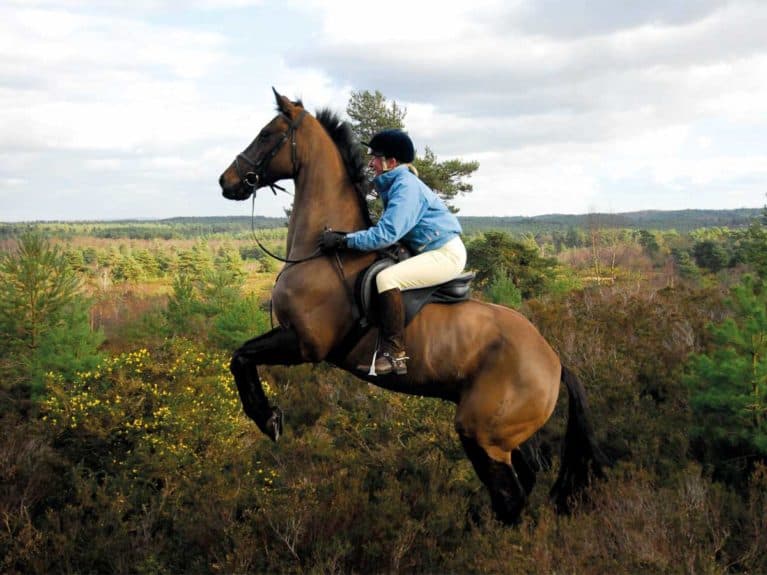
If a horse starts to go up, lean forward and grab the mane or put your hands forward on its neck. This does two important things. First, it shifts your weight forward, which makes it harder for the horse to come all the way up and over. Second, it ensures you are not pulling back on the reins. Pulling on the reins can pull the horse off balance and cause it to fall backward. Try to keep one rein looser than the other to encourage the horse to turn as it comes down, which also disrupts the straight-up motion of a rear. Once the horse’s front feet are back on the ground, immediately send it forward with strong leg aids. Do not punish the horse, but make it clear that its feet need to keep moving forward.
If You Are on the Ground
If a horse rears while you are leading it, your first instinct should be to get out of the way. The biggest danger is the horse striking out with its front feet or falling on you. Try to move to the side of the horse, away from the “strike zone.” Maintain contact with the lead rope if it is safe to do so, but be prepared to let go if you are in danger of being pulled under the horse. Once the horse has settled, the goal is again to get its feet moving—forward, backward, or sideways. A horse that is moving its feet cannot rear. This redirects its energy into a more productive and safer movement.
|
Situation |
Immediate Action |
Follow-Up Action |
|---|---|---|
|
Riding a Rearing Horse |
Lean forward, grab mane. Keep weight forward. |
Urge the horse forward immediately upon landing. |
|
Handling from the Ground |
Step to the horse’s side to avoid being struck or fallen on. |
Make the horse move its feet (forward, back, circles). |
|
Common Mistake |
Pulling back on the reins. |
Punishing the horse after the rear. |
|
Correct Response |
Loosen the reins and shift weight. |
Redirect the horse’s energy into forward motion. |
Effective Training Techniques to Prevent Rearing
The best way to deal with horse rearing is to prevent it from ever happening. This is achieved through good horsemanship, consistent training, and building a strong, trusting relationship with your horse.
Groundwork is the Foundation
Excellent groundwork is the key to solving most behavioral problems, including horse rearing. It establishes respect and communication between you and your horse before you ever get in the saddle. Teaching your horse to yield to pressure, move its shoulders and hindquarters independently, and back up willingly on command are essential skills. These exercises establish your role as the leader and give you tools to control the horse’s feet. A horse that is focused on you and responsive to your cues on the ground is far less likely to resort to dangerous behaviors like rearing. For more insights on building foundational skills, you might find valuable information at resources like https://siliconvalleytime.co.uk/.
Building Confidence and Trust
For horses that rear out of fear, training should focus on desensitization and building confidence. This involves gradually exposing the horse to scary objects or situations in a controlled way, always allowing it to retreat if it becomes overwhelmed. Reward the slightest sign of curiosity or bravery, such as sniffing the object or taking a step toward it. This process, known as approach and retreat, teaches the horse that it can trust you to keep it safe and that new things aren’t necessarily terrifying. Over time, the horse learns to look to you for guidance when it is scared, rather than panicking.
Riding Strategies to Discourage Rearing
In the saddle, the focus should be on forward motion. A horse that is actively and willingly moving forward cannot rear. Use plenty of transitions (walk to trot, trot to halt, etc.) and figures like circles and serpentines to keep your horse’s mind engaged and its body balanced. If you feel a horse starting to get tense or “stuck,” immediately ask for a lateral movement like a leg yield or turn on the forehand. This disengages the hindquarters and makes it physically difficult for the horse to go up. It redirects the resistant energy into a productive movement and re-establishes your control.
When to Seek Professional Help
Horse rearing is a serious issue that can be difficult for an average owner to resolve alone. It’s important to know when to call in the experts.
Veterinarian
Your first call should always be to a veterinarian to conduct a thorough physical examination. This includes a dental check, a lameness exam, and potentially chiropractic or other bodywork evaluations. You cannot train a horse out of a behavior that is caused by pain. Resolving any physical discomfort is a non-negotiable first step. If the vet finds an issue, it must be treated and fully resolved before you can expect the horse rearing to stop.
Professional Trainer
If pain has been ruled out and the horse rearing continues, it’s time to consult an experienced trainer who has a proven track record of correcting this specific behavior. A good trainer can help you identify the root cause, whether it’s fear, confusion, or a learned habit. They can develop a safe and effective training plan for both you and your horse. They will teach you how to read your horse’s subtle signals before a rear happens and give you the tools and confidence to handle the situation correctly. Trying to fix a serious rearing problem without expert guidance can be dangerous and may make the problem worse.
Conclusion
Horse rearing is a dramatic and dangerous behavior, but it is also a form of communication. By taking the time to listen to what our horses are telling us, we can address the root cause of the problem. Whether the issue stems from physical pain, deep-seated fear, or confusion in training, the solution lies in a patient, compassionate, and knowledgeable approach. The process begins with a thorough veterinary check to rule out pain, followed by a focus on building trust through consistent groundwork and clear communication. Safety must always be the top priority, and knowing how to react during a rear is vital. For persistent issues, the guidance of a professional trainer is invaluable. Ultimately, overcoming horse rearing strengthens the bond between horse and handler, transforming a relationship of fear or resistance into one of partnership and mutual understanding. For further reading, the subject of horse behavior is extensively covered on platforms like Wikipedia, which offers a broad overview of their natural instincts and actions.
Frequently Asked Questions (FAQ)
Q1: Is horse rearing always a sign of aggression?
No, not always. While horse rearing can be part of an aggressive display (especially between stallions), in a riding or handling context, it’s more often a response to fear, pain, or confusion. It’s a “last resort” communication when the horse feels it has no other option.
Q2: Can a rearing horse be “cured”?
Yes, in most cases, the behavior can be managed and corrected. The key is to accurately identify and address the underlying cause. If the rearing is due to pain, treating the medical issue will often resolve the behavior. If it’s a learned response or due to fear, a consistent and correct training program can rebuild the horse’s confidence and teach it better ways to handle pressure.
Q3: What is the most dangerous thing about horse rearing?
The greatest danger is the horse losing its balance and falling over backward. This can cause severe or fatal injuries to the rider or handler. A rearing horse can also strike out with its front hooves with incredible force.
Q4: My young horse rears when playing in the field. Should I be worried?
Rearing during play, especially with other horses, is a natural behavior and usually not a cause for concern. It becomes a problem when the horse starts to rear while being handled, led, or ridden. However, it’s always wise to instill good ground manners from a young age to ensure the horse understands boundaries with humans.
Q5: What should I do if I’m not confident enough to handle my rearing horse?
If you are scared or lack the experience to deal with horse rearing, the safest and most responsible thing to do is to seek professional help immediately. Do not put yourself in a dangerous situation. A qualified trainer can work with the horse to address the issue and then teach you how to handle it safely going forward. Your safety and your horse’s well-being are what matter most.



