



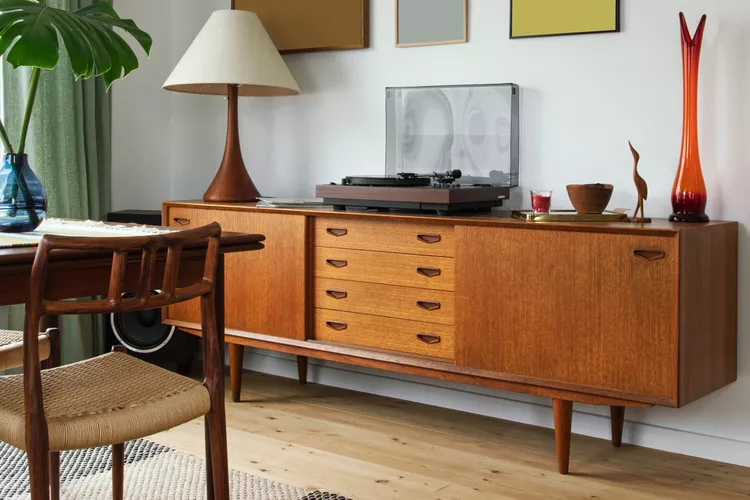

Have you ever looked at a stylish room in a magazine or online and wondered about that long, low cabinet against the wall? Chances are, you were looking at a credenza. This versatile piece of furniture has been a staple in homes and offices for centuries, but it often gets confused with sideboards, buffets, or consoles. This guide will explore everything you need to know about the credenza, from its rich history to how you can choose the perfect one for your space. We’ll uncover its many uses, explore different styles, and give you tips on how to decorate it like a pro. Prepare to become an expert on this functional and fashionable piece.
Key Takeaways
- A credenza is a long, low cabinet with short legs or no legs at all, often featuring sliding doors or cabinets.
- Originally used in the 14th century for food tasting to prevent poisoning, its function has evolved significantly.
- A credenza is highly versatile and can be used in dining rooms, living rooms, home offices, and entryways.
- Key differences exist between a credenza, sideboard, and buffet, primarily related to leg height and original purpose.
- Choosing the right credenza involves considering size, material, style, and storage needs.
The Rich History of the Credenza
The story of the credenza begins not in a living room, but in the grand dining halls of 14th-century Europe. The word “credenza” comes from the Italian word for “belief” or “trust.” During this time, the fear of being poisoned was a real concern for aristocrats and high-ranking officials. To ensure their safety, a special table was designated for servants to taste food and drinks before they were served to their masters. This act of tasting, known as the credenza, demonstrated that the meal was safe. The piece of furniture where this ritual took place eventually took on the name.
Initially, these pieces were simple tables without any ornate details. As time went on, the credenza evolved from a purely functional item into a statement piece. During the Renaissance, skilled artisans began adding intricate carvings, cabinets, and drawers. It became a place to display expensive dinnerware, adding to the grandeur of the dining room. Over the centuries, its design continued to change, adapting to the popular styles of each era, from the ornate flourishes of the Baroque period to the clean lines of mid-century modern design that we see today.
What Exactly Defines a Credenza?
While the term is sometimes used interchangeably with other furniture, a true credenza has specific characteristics that set it apart. Think of it as a long, low-profile cabinet. One of its most defining features is its height; a credenza is typically shorter than a standard dining table, usually falling somewhere between 24 and 36 inches tall. This low height makes the surface perfect for serving food, displaying decor, or placing a television at a comfortable viewing level.
Another key feature is its legs. A traditional credenza often has very short, slender legs or, in many cases, no legs at all, with the cabinet resting directly on the floor. This gives it a solid, grounded appearance. Modern versions may feature taller, more delicate legs, borrowing from other furniture styles, but the classic design remains low to the ground. Finally, storage is a crucial element. Most designs include cabinets, often with sliding doors, rather than just drawers. This enclosed storage is perfect for hiding away everything from office supplies to dining linens.
Credenza vs. Sideboard vs. Buffet: What’s the Difference?
It’s easy to get these three pieces of furniture confused, as they share many similarities. However, there are subtle but important distinctions that separate a credenza from a sideboard or a buffet. Understanding these differences can help you choose the right piece for your home.
|
Feature |
Credenza |
Sideboard |
Buffet |
|---|---|---|---|
|
Legs |
Very short legs or no legs |
Short-to-medium height legs |
Taller, longer legs |
|
Height |
Low profile, shorter than a table |
Cabinet height, often taller |
Counter-height, taller piece |
|
Storage |
Often has sliding doors/cabinets |
Mix of cabinets and drawers |
Primarily cabinets and drawers |
|
Original Use |
Dining room, office |
Dining room |
Dining room |
|
Modern Use |
Living room, office, dining |
Any room |
Dining room, entryway |
The Sideboard Explained
A sideboard, as its name suggests, was traditionally placed to the side of a dining room. It typically has shorter legs than a buffet, and its cabinets usually reach all the way to the floor. While it serves a similar function to a buffet—storing dinnerware—its lower profile makes it slightly different.
The Buffet Breakdown
The term “buffet” is often used to describe a piece of furniture used for serving food buffet-style. Because of this, buffets tend to have longer legs, raising the surface to a more convenient height for people to serve themselves from. You will almost exclusively find a buffet in a dining room. While a credenza can be used for serving, its lower height makes it less ideal for this specific task compared to a buffet.
The Many Roles of a Modern Credenza
One of the best things about a credenza is its incredible versatility. While it started in the dining room, this stylish piece has found its way into nearly every room of the house. Its combination of a functional surface and hidden storage makes it a practical solution for many needs.
In the Living Room
In a living room or family room, a credenza works perfectly as a media console. Its long, low shape is ideal for holding a wide-screen television, while the cabinets can neatly store gaming consoles, streaming devices, cables, and remote controls. This keeps your entertainment area looking clean and organized. You can also use it as a stylish anchor piece behind a sofa or against a wall, providing a surface for lamps, books, and decorative objects.
In the Home Office
The credenza is a natural fit for a home office. Placed against a wall, it offers ample storage for printers, paper, ink cartridges, and other office supplies you’d rather keep out of sight. The top surface provides extra workspace or a place to display professional awards and photos. Its sophisticated look can elevate the feel of your office, making it a more inspiring place to work. Some people even use a long credenza as the base for a large desk surface.
In the Dining Room
Returning to its roots, the credenza is still a fantastic addition to any dining room. It provides essential storage for your best china, glassware, and linens. During dinner parties, it can serve as a secondary serving station for drinks, appetizers, or desserts. Its elegant presence adds a touch of formality and style to the space, tying the entire room together.
In the Entryway or Hallway
A slim credenza can be a game-changer in an entryway or a long hallway. It creates a functional “drop zone” where you can place your keys, mail, and wallet when you walk in the door. The cabinets can store shoes, umbrellas, and other items you need to grab on your way out. To complete the look, hang a mirror or a piece of art above it to create a welcoming and organized first impression.
How to Choose the Perfect Credenza for Your Space
With so many styles, sizes, and materials available, picking the right credenza can feel overwhelming. By focusing on a few key factors, you can narrow down your options and find the perfect piece that meets both your functional needs and your aesthetic preferences.
1. Measure Your Space
Before you start shopping, measure the area where you plan to place the credenza. Note the maximum width, depth, and height the space can accommodate. Remember to leave enough room around it for comfortable movement and to open any cabinet doors or drawers without obstruction. A common mistake is buying a piece that is too large or too small for the wall it sits against, which can make the entire room feel unbalanced. As a general rule, the credenza should not be wider than the piece of furniture it’s near (like a sofa) or the artwork hanging above it.
2. Consider Your Storage Needs
Think carefully about what you plan to store. Do you need a place for large, bulky items like a printer or serving platters? If so, look for a credenza with large, open cabinets. Do you need to organize smaller items like silverware, office supplies, or remote controls? In that case, a model with a combination of drawers and cabinets might be more suitable. Some designs even feature open shelving, which is great for displaying books or decorative items.
3. Match Your Existing Decor Style
Your new credenza should complement the existing style of your room.
- Mid-Century Modern: This is one of the most popular styles for a credenza. Look for pieces made from warm woods like teak or walnut, featuring clean lines, tapered legs, and simple, unadorned hardware.
- Farmhouse: A farmhouse-style credenza might be made from distressed or reclaimed wood, often painted in neutral colors like white or cream. It may feature details like barn-style sliding doors or classic metal hardware.
- Industrial: An industrial credenza often combines wood and metal elements. Think dark-stained wood paired with a black steel frame, mesh cabinet doors, or rustic hardware.
- Contemporary: For a modern look, choose a credenza with a sleek, minimalist design. This could mean a glossy lacquer finish, handle-less push-to-open doors, and a simple, geometric shape.
4. Select the Right Material
The material of your credenza impacts its look, durability, and price. Solid wood is a classic choice known for its longevity and timeless appeal, but it can be expensive. Wood veneers, which consist of a thin layer of real wood over a core of composite material, offer a similar look at a more affordable price. Other materials like metal, glass, or high-gloss lacquer can create a more modern or industrial vibe. Choose a material that not only looks good but will also stand up to its intended use. For more insights on home decor and trends, you might find valuable information at a resource like siliconvalleytime.co.uk.
Styling Your Credenza Like a Professional
Once you have your credenza, the fun part begins: styling it. A well-styled credenza can be a stunning focal point in any room. The key is to create a balanced and visually interesting display without making it look cluttered.
Create a Focal Point
Start by anchoring your arrangement with a large statement piece. This is typically hung on the wall directly above the center of the credenza. A large piece of art, a decorative mirror, or a wall-mounted television are all excellent choices. This anchor piece will draw the eye and provide a backdrop for the rest of your decor.
Play with Height and Scale
To create a dynamic and visually appealing display, use objects of varying heights and sizes. A classic technique is to create visual triangles. For example, on one side of the credenza, you could place a tall table lamp. On the other side, you could stack a few art books and top them with a small decorative object. In the middle, you might place a medium-height vase with fresh flowers. This variation in height guides the eye across the surface and prevents the arrangement from looking flat.
The Rule of Three
Decorating in odd numbers, especially threes, is a classic design trick that creates balance and visual interest. Try grouping three related items together, such as three candlesticks of different heights or three small ceramic vases. This simple rule helps make your arrangements look intentional and thoughtfully curated rather than random.
Add a Touch of Greenery
Bringing in a natural element is always a good idea. A potted plant or a vase of fresh-cut flowers can add life, color, and texture to your credenza display. A low-maintenance snake plant or a trailing pothos can add a touch of green without requiring much care. The organic shapes of plants soften the hard lines of the furniture and make the space feel more inviting.
Personalize It
Finally, don’t forget to add personal touches that reflect your personality. Display framed photos of loved ones, souvenirs from your travels, or a collection of items you love. Your credenza is a perfect opportunity to tell a story and make your house feel like a home. Just be careful not to overdo it—select a few meaningful pieces rather than trying to display everything at once.
Conclusion
The credenza is far more than just a simple cabinet; it is a stylish, hardworking piece of furniture with a fascinating history. From its origins as a table for verifying trust to its modern-day role as a versatile storage solution, it has proven its timeless appeal. Whether you need an elegant media console for your living room, a functional storage unit for your home office, or a sophisticated serving station for your dining room, there is a credenza to fit the bill. By understanding its defining features and considering your personal needs and style, you can choose a piece that will not only solve your storage problems but also elevate your home’s decor for years to come.
Frequently Asked Questions (FAQ)
Q1: Can I use a credenza as a TV stand?
A: Absolutely! A credenza is an excellent choice for a TV stand or media console. Its long, low profile is perfect for modern televisions, and its cabinets provide ample storage for media devices, games, and cables, keeping your living room organized.
Q2: What is the main difference between a credenza and a buffet?
A: The main difference lies in their legs and height. A buffet typically has longer legs, making its surface higher and more suitable for serving food. A credenza has very short legs or no legs at all, giving it a lower profile.
Q3: Are credenzas only for dining rooms?
A: Not at all. While the credenza originated in the dining room, it is now one of the most versatile pieces of furniture you can own. It works well in living rooms, home offices, entryways, and even bedrooms as a stylish storage solution.
Q4: What style is most associated with the credenza?
A: The mid-century modern style is most famously associated with the credenza. The clean lines, organic wood tones, and minimalist hardware of mid-century design perfectly suit the long, low form of the credenza, and this style remains incredibly popular today.
Q5: How do I decorate the top of my credenza without it looking cluttered?
A: To avoid a cluttered look, use the “less is more” approach. Start with a large anchor piece on the wall above it, like a mirror or art. On the surface, create visual interest by varying the height of your objects. Group smaller items in threes and be sure to leave some empty space to allow the arrangement to breathe.