









Getting straight answers can sometimes feel tricky. Whether you’re a student working on a project, a business trying to understand your customers, or a researcher gathering data, you need a reliable way to collect specific information. This is where a well-designed questionnaire comes in handy. Specifically, using a closed ended questionnaire sample can be a game-changer. These questionnaires use questions that give respondents a fixed set of answers to choose from, making the data you collect clean, consistent, and easy to analyze.
In this guide, we will explore everything you need to know about closed-ended questions. We’ll break down what they are, why they are so effective, and provide plenty of examples to help you create your own powerful surveys. By the end, you’ll have the confidence to build a questionnaire that gets you the clear, actionable insights you’re looking for.
Key Takeaways
- What They Are: Closed-ended questions provide respondents with predefined answer choices like “Yes/No,” multiple-choice options, or a rating scale.
- Why They’re Useful: They produce quantitative data that is easy to analyze, compare, and visualize. This makes them highly efficient for large-scale surveys.
- Types of Questions: There are several formats, including dichotomous (Yes/No), multiple-choice, rating scales (like Likert scales), and ranking questions.
- When to Use Them: They are ideal for validating facts, gathering demographic information, measuring opinions, and when you need data that is easy to tally and report.
- Best Practices: Keep questions clear, simple, and unbiased. Ensure your answer options are comprehensive and mutually exclusive.
What Exactly is a Closed Ended Questionnaire?
Let’s start with the basics. A closed-ended questionnaire is a survey tool composed of questions that limit respondents to a specific set of answers. Instead of allowing for open-ended, free-form responses, these questions guide the user to select from predefined options. Think about any time you’ve taken a survey that asked you to choose “Yes” or “No,” pick from a list of options, or rate something on a scale of 1 to 5. Those were all examples of closed-ended questions.
The primary goal of this format is to gather quantitative data—information that can be easily counted, measured, and turned into statistics, charts, and graphs. Because everyone is answering from the same set of choices, it becomes simple to see patterns and trends. For instance, if you ask 500 people “Do you own a smartphone?” and 450 say “Yes,” you immediately have a clear, quantifiable result: 90% of your respondents own a smartphone. This structured approach is what makes a closed ended questionnaire sample so powerful for research and feedback.
Closed-Ended vs. Open-Ended Questions
To fully appreciate the benefits of closed-ended questions, it helps to compare them to their counterpart: open-ended questions.
|
Feature |
Closed-Ended Questions |
Open-Ended Questions |
|---|---|---|
|
Response Format |
Predefined choices (Yes/No, multiple choice, scale) |
Free-form text box for detailed answers |
|
Data Type |
Quantitative (numerical, easy to count) |
Qualitative (descriptive, requires interpretation) |
|
Analysis |
Fast and straightforward; statistical analysis |
Time-consuming; requires reading and categorizing |
|
Respondent Effort |
Low; quick to answer |
High; requires more thought and typing |
|
Best For |
Validating hypotheses, gathering statistics, large groups |
Exploring new ideas, getting detailed feedback |
While open-ended questions are great for gathering rich, detailed insights and understanding the “why” behind an answer, they can be difficult to analyze, especially with a large number of responses. A closed ended questionnaire sample shines when you need speed, scale, and statistical certainty.
The Major Advantages of Using Closed-Ended Questions
Why do so many researchers, marketers, and businesses rely on closed-ended questions? The benefits are significant and can directly impact the quality and efficiency of your data collection. They streamline the entire process, from creation to analysis, making your life much easier.
One of the biggest advantages is the ease of analysis. Since the answers are standardized, you can quickly tally responses, calculate percentages, and create charts to visualize the data. There’s no need to spend hours reading through hundreds of unique text answers and trying to group them into themes. This speed allows for faster decision-making. Imagine a company trying to decide on a new product feature. By sending out a closed-ended survey, they can get concrete data on which feature is most popular within a day or two.
Another key benefit is the higher response rate. People are generally more willing to complete a survey that is quick and easy. Clicking buttons or checking boxes requires much less effort than typing out long, thoughtful paragraphs. When respondents see a clear path to completion, they are less likely to abandon the survey midway. This is crucial for getting a large enough sample size to ensure your results are statistically significant and representative of your target audience.
Finally, a well-structured closed ended questionnaire sample ensures consistency and comparability. Every respondent is answering the exact same question with the exact same set of choices. This uniformity eliminates ambiguity and makes it easy to compare responses across different groups. For example, you can easily compare how men versus women answered a question, or how different age groups responded. This level of comparability is essential for identifying trends and segmenting your audience effectively.
Types of Closed-Ended Questions with Examples
Closed-ended questions are not a one-size-fits-all tool. There are several different types, each suited for a specific purpose. Choosing the right format is key to getting the data you need. Here’s a breakdown of the most common types.
1. Dichotomous Questions
These are the simplest form of closed-ended questions, offering only two possible answers. They are perfect for collecting clear, unambiguous data.
- Common formats: Yes/No, True/False, Agree/Disagree.
- When to use them: For straightforward questions where there is no middle ground. They are great for screening questions or simple verifications.
- Closed Ended Questionnaire Sample (Dichotomous):
-
- Have you visited our website in the last 30 days? (Yes/No)
- Are you satisfied with your recent purchase? (Yes/No)
- Do you agree that our customer service was helpful? (Agree/Disagree)
2. Multiple-Choice Questions
Multiple-choice questions offer a list of answers and ask the respondent to choose one (or sometimes more). This is one of the most versatile and widely used question types.
- When to use them: When there are a limited number of likely answers. It’s crucial to include an “Other (please specify)” option if you suspect you might not have covered all possibilities.
- Closed Ended Questionnaire Sample (Multiple-Choice):
-
- Which of the following social media platforms do you use most often?
-
- TikTok
- X (formerly Twitter)
- Other (please specify)
- What is your primary reason for visiting our store today?
-
- To make a new purchase
- To return or exchange an item
- To browse for future purchases
- To pick up an online order
3. Rating Scale Questions (Likert Scale, etc.)
Rating scale questions ask respondents to rate something along a continuum of values. The most famous type is the Likert scale, which measures attitudes or opinions.
- Common formats: Scales of 1-5 or 1-10; labels like “Very Dissatisfied” to “Very Satisfied” or “Strongly Disagree” to “Strongly Agree.”
- When to use them: To measure the intensity of feelings, opinions, satisfaction, or likelihood.
- Closed Ended Questionnaire Sample (Rating Scale):
-
- On a scale of 1 to 10, how likely are you to recommend our product to a friend or colleague? (1 = Not at all likely, 10 = Extremely likely)
- Please rate your level of agreement with the following statement: “The checkout process was simple and easy.”
-
- Strongly Disagree
- Disagree
- Neutral
- Agree
- Strongly Agree
4. Ranking Questions
Ranking questions ask respondents to order a list of items based on preference, importance, or some other criterion.
- When to use them: To understand the relative importance of different items to a respondent. This helps in prioritizing features, services, or even marketing messages.
- Closed Ended Questionnaire Sample (Ranking):
-
- Please rank the following features in order of importance to you (1 = most important, 5 = least important):
-
- Price
- Product Quality
- Customer Service
- Shipping Speed
- Brand Reputation
How to Craft an Effective Closed Ended Questionnaire Sample
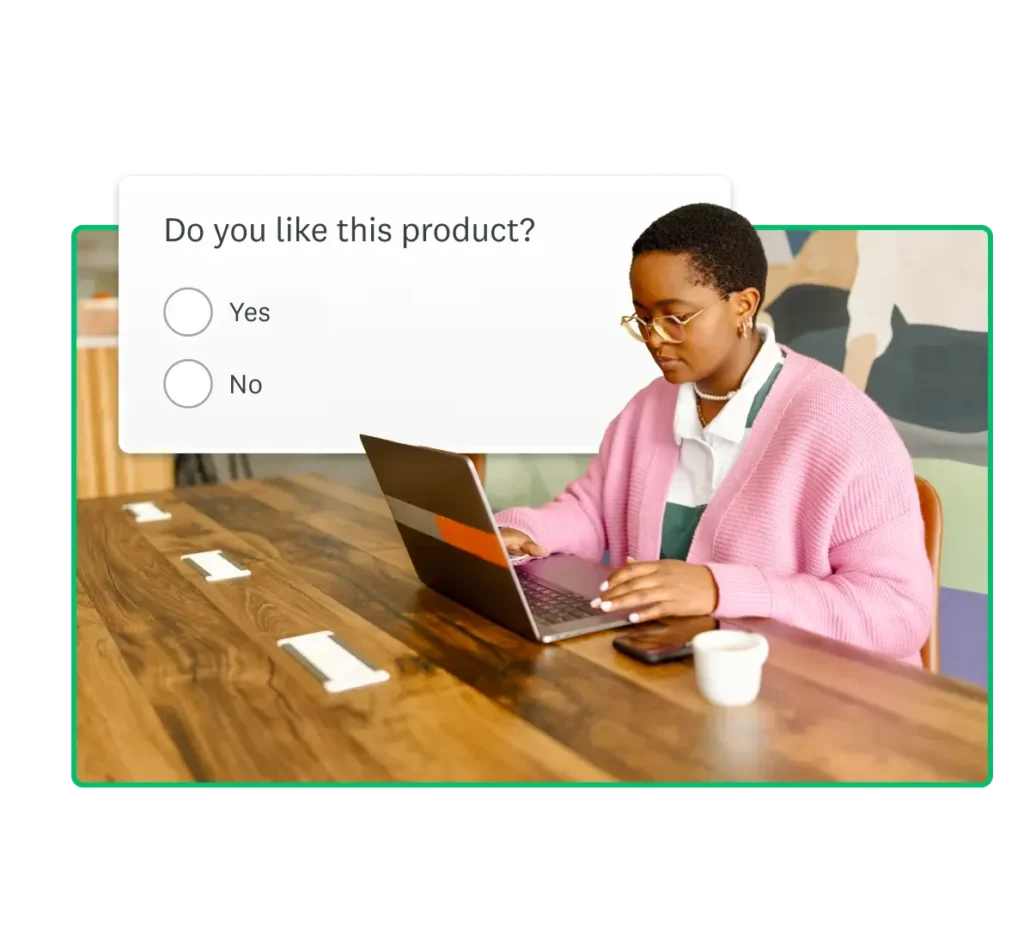
Creating a great questionnaire is both an art and a science. Just because the questions are closed-ended doesn’t mean they are easy to write. A poorly worded question can confuse respondents and lead to inaccurate data. Here are some best practices to follow.
Keep Your Questions Simple and Clear
The golden rule of questionnaire design is clarity. Your questions should be easy to understand for everyone, regardless of their background. Avoid using jargon, technical terms, or complex sentence structures. A good test is to ask yourself: could a middle school student understand this question without any confusion? If the answer is no, simplify it.
- Poor Question: “What are your perceptions regarding the ergonomic design and user interface of our proprietary software?”
- Better Question: “How easy was it to use our software?” (Followed by a rating scale)
Ensure Answer Options are Comprehensive
When creating multiple-choice or scale questions, make sure your answer options cover all reasonable possibilities. If a respondent doesn’t see their situation reflected in the choices, they might either skip the question or pick an inaccurate answer, both of which compromise your data. This is where an “Other (please specify)” or “Not Applicable” option becomes your best friend. These options act as a safety net, ensuring every respondent can provide an accurate answer.
Avoid Leading or Biased Questions
A leading question subtly pushes the respondent toward a specific answer. This can skew your results and make them unreliable. Your goal is to collect honest, unbiased feedback, so your questions must be neutral.
- Leading Question: “Don’t you agree that our award-winning customer service is excellent?”
- Neutral Question: “How would you rate your experience with our customer service?”
This neutrality helps build trust with your respondents and ensures the data you collect reflects their true opinions, not the opinions you hoped they would have. For more insights on building user trust, you can find helpful articles on platforms like https://siliconvalleytime.co.uk/ that discuss market trends and business strategies.
Make Sure Options are Mutually Exclusive
In a standard multiple-choice question, the answer options should be mutually exclusive. This means a respondent should not be able to logically choose more than one option unless it’s a “select all that apply” question. Overlapping categories can cause confusion and frustration.
- Poor Options (Overlapping): “What is your age? 18-25, 25-35, 35-45” (If someone is 25 or 35, which box do they check?)
- Good Options (Mutually Exclusive): “What is your age? 18-24, 25-34, 35-44”
Taking the time to check for these small details will significantly improve the quality of your data and the experience for your survey takers.
When to Use a Closed Ended Questionnaire Sample
Knowing when to use this type of questionnaire is just as important as knowing how to create one. They are incredibly useful in certain scenarios but may not be the right fit for others. Let’s look at the ideal situations for deploying a closed ended questionnaire sample.
For Gathering Demographic Data
Closed-ended questions are perfect for collecting demographic information like age, gender, income level, education, and location. These are factual data points with a finite number of categories, making them ideal for a multiple-choice or dropdown format. This data is invaluable for segmenting your audience and understanding who your respondents are.
To Measure and Track Opinions Over Time
Because the data is quantitative, it’s easy to track changes over time. For example, a company can use a satisfaction survey with a Likert scale every quarter. By comparing the results from Q1 to Q2, they can measure if customer satisfaction is improving, declining, or staying the same. This longitudinal tracking is essential for measuring the impact of business changes.
When You Need a High Volume of Responses
If you need to survey a large group of people—hundreds or even thousands—closed-ended questions are the only practical way to go. The ease and speed of answering mean you’ll get more completed surveys. Furthermore, the automated analysis of quantitative data saves an immense amount of time and resources compared to manually reading thousands of open-ended responses.
For Validating Hypotheses
When you have a specific theory you want to test, a closed ended questionnaire sample is the perfect tool. For example, if your hypothesis is “Customers prefer free shipping over a 10% discount,” you can ask a direct question: “Which offer would you prefer? A) Free Shipping, B) 10% Off Your Order.” The results will give you a clear, data-backed answer to either confirm or deny your hypothesis.
Conclusion
Mastering the art of the closed-ended questionnaire is a valuable skill for anyone involved in gathering information. By providing a structured, straightforward way for people to respond, you can collect high-quality quantitative data that is clean, consistent, and easy to analyze. From simple Yes/No questions to nuanced rating scales, the right format can help you uncover powerful insights about your audience, measure satisfaction, and make data-driven decisions with confidence.
Remember to keep your questions simple, your answer choices comprehensive, and your language neutral. By following the best practices outlined in this guide and using a closed ended questionnaire sample as your foundation, you’re well on your way to creating effective surveys that deliver clear, actionable results.
Frequently Asked Questions (FAQ)
Q1: What is the main purpose of a closed-ended questionnaire?
The main purpose is to collect quantitative data. Because respondents choose from a fixed set of answers, the data is structured and can be easily counted, categorized, and statistically analyzed to identify patterns and trends on a large scale.
Q2: Can I mix closed-ended and open-ended questions in the same survey?
Absolutely! This is a common and highly effective strategy. You can use closed-ended questions to gather the core quantitative data and then add a few optional open-ended questions at the end (e.g., “Do you have any other comments or suggestions?”) to capture qualitative insights and context.
Q3: How many answer options should I include in a multiple-choice question?
There’s no magic number, but a good rule of thumb is to provide 3 to 6 options. Too few options might not cover all possibilities, while too many can overwhelm the respondent. Always include an “Other (please specify)” option if you’re not completely sure you’ve covered all bases.
Q4: What is the difference between a Likert scale and a rating scale?
A Likert scale is a specific type of rating scale used to measure agreement or attitudes (e.g., “Strongly Agree” to “Strongly Disagree“). The term “rating scale” is a broader category that can include any scale used for rating, such as a 1-10 satisfaction scale or a 1-5 star rating. All Likert scales are rating scales, but not all rating scales are Likert scales.
Q5: How can I ensure my closed-ended survey isn’t biased?
To avoid bias, use neutral language that doesn’t suggest a “correct” or desired answer. Review your questions to ensure they are not leading. Also, randomize the order of answer choices for multiple-choice questions to prevent order bias, where respondents are more likely to pick the first or last option.