




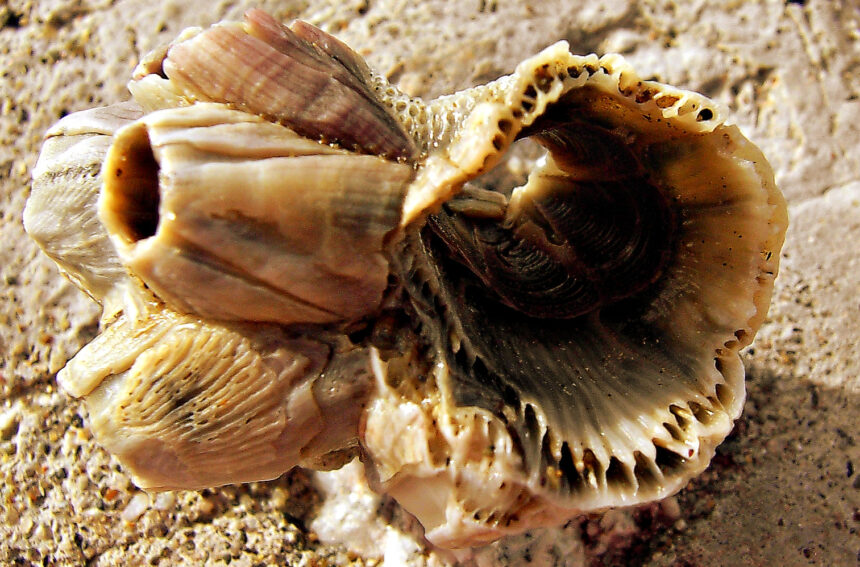

Have you ever walked along a rocky shore and noticed small, cone-shaped shells glued to the surfaces? Or perhaps you’ve seen a ship’s hull or a whale’s skin covered in these strange creatures. You were likely looking at a barnacle arthropod, one of the most misunderstood and fascinating animals in the ocean. While they might look like simple mollusks, such as clams or mussels, barnacles are actually crustaceans. This means they are more closely related to crabs, lobsters, and shrimp than you might think. Their unique lifestyle, complex anatomy, and vital role in marine ecosystems make them a subject of endless curiosity. This article will dive deep into the world of the barnacle arthropod, uncovering the secrets of these super-strong, stationary sea creatures.
Key Takeaways
- Barnacles are Arthropods: Despite their shell-like appearance, barnacles are crustaceans within the phylum Arthropoda, related to crabs and lobsters.
- Unique Lifestyle: Barnacles live a sessile (stationary) adult life, attaching themselves to hard surfaces and filter-feeding from the water.
- Complex Life Cycle: They begin as free-swimming larvae before undergoing a dramatic transformation to their adult form.
- Ecological Importance: The barnacle arthropod plays a significant role in marine food webs and as an ecosystem engineer, creating habitats for other small organisms.
- Economic Impact: Barnacles cause biofouling on ships and marine structures, leading to significant economic costs for removal and prevention.
What Exactly is a Barnacle Arthropod?
At its core, a barnacle arthropod is a marine crustacean belonging to the infraclass Cirripedia. The term “arthropod” refers to a massive phylum of animals characterized by an exoskeleton, a segmented body, and paired jointed appendages. This group includes insects, spiders, and crustaceans. Placing barnacles in this category often surprises people because their adult form—a hard, calcareous shell—hides their true nature.
Inside that protective shell, the barnacle’s body reveals its arthropod heritage. It has jointed legs, known as cirri, which it uses for feeding. Unlike its mobile cousins like crabs and shrimp, the adult barnacle arthropod is sessile, meaning it is permanently fixed to one spot. This unique adaptation for a stationary life is what sets it apart from most other crustaceans. They essentially build a limestone fortress around themselves and spend their lives upside down, kicking food into their mouths with their feathery legs. This sessile lifestyle is a remarkable evolutionary strategy that has allowed them to thrive in some of the most challenging environments in the ocean, from the splash zone of rocky shores to the deep sea.
Distinguishing Barnacles from Mollusks
It’s a common mistake to confuse barnacles with mollusks like limpets or oysters. Both groups can have hard outer shells and attach to rocks. However, a closer look at their biology reveals stark differences. Mollusks, like snails and clams, typically have a soft, unsegmented body and often a muscular “foot” for movement. Their shells are grown differently and are part of their body structure in a way that is distinct from the plates of a barnacle.
The definitive proof of a barnacle’s identity as an arthropod lies in its larval stages. Before settling down, a young barnacle arthropod is a free-swimming larva that looks very much like the larva of a crab or shrimp. It has jointed limbs, a segmented body, and an exoskeleton that it molts as it grows. This mobile phase of its life is a clear giveaway to its crustacean lineage. Only after finding a suitable home does it undergo a radical metamorphosis, cementing its head to the surface and building the familiar shell plates that define its adult appearance. So, while they may live a mollusk-like life, their family tree is firmly rooted with the arthropods.
The Unique Anatomy of a Barnacle
The body plan of a barnacle arthropod is a marvel of adaptation. Imagine a shrimp-like creature deciding to glue its forehead to a rock, build a protective house around itself, and spend the rest of its life kicking its feet in the water to catch food. That’s essentially a barnacle.
The Outer Shell: A Protective Fortress
The most recognizable feature of a barnacle is its shell, which is composed of several calcium carbonate plates. These plates fit together to form a cone-like structure that protects the soft-bodied animal inside from predators and from drying out during low tide. There are two main types of barnacles, distinguished by their shell structure:
- Acorn Barnacles: These are the most common type seen on rocks and piers. They build their shells directly onto the surface, forming a volcano-shaped fortress.
- Gooseneck Barnacles: These barnacles have a fleshy, muscular stalk, or peduncle, that attaches to the surface. The main body and its protective plates are at the end of this stalk, resembling a strange-looking flower or a goose’s neck.
The top of the shell has a movable “door” made of two smaller plates, called an operculum. The barnacle can open this door to extend its feeding appendages and close it tightly when threatened or exposed to air.
The Inner Body: An Upside-Down Crustacean
Inside this fortress, the barnacle arthropod lives in a position unique among crustaceans. Its body is oriented upside down, with its feathery legs, called cirri, pointing upwards. These cirri are covered in fine bristles called setae, which act like a net. When the tide is in, the barnacle opens its operculum and rhythmically extends and retracts its cirri, combing the water for plankton and other small organic particles. This filter-feeding method is incredibly efficient, allowing the barnacle to capture microscopic food floating by in the current. The legs then pass the collected food toward the mouth, which is located deep within the shell. This entire feeding process is a beautiful, rhythmic dance that sustains the seemingly inactive creature.
The Fascinating Life Cycle of the Barnacle Arthropod
The journey from a free-swimming larva to a stationary adult is one of the most dramatic transformations in the animal kingdom. The life cycle of a barnacle arthropod has two distinct larval stages before it settles into its adult form.
Stage 1: The Nauplius Larva
The life of a barnacle begins as a tiny, free-swimming larva called a nauplius. After hatching from an egg brooded within the parent’s shell, the nauplius is released into the water column. This microscopic larva has a single eye, three pairs of appendages for swimming, and is a member of the zooplankton community. It swims and feeds on phytoplankton, molting its exoskeleton several times as it grows. The nauplius larva is phototactic, meaning it is attracted to light, which keeps it near the surface where food is plentiful. This stage can last for several weeks, during which the larva is vulnerable to a wide range of predators.
Stage 2: The Cyprid Larva
After its final naupliar molt, the barnacle arthropod transforms into its second larval form: the cyprid larva. This stage is specialized for one critical task: finding a permanent home. The cyprid is non-feeding; it survives on energy reserves built up during the nauplius stage. It has a more complex body, including a bivalved shell (similar to a tiny clam), compound eyes, and a pair of antennules modified for exploring surfaces. The cyprid larva sinks toward the seafloor and begins an intensive search for a suitable place to settle. It “walks” across surfaces like rocks, ship hulls, and even other animals, using its antennules to sense the texture, chemical cues, and presence of other barnacles.
Finding the Perfect Home
The choice of a settlement spot is the most important decision a barnacle will ever make. The cyprid is incredibly selective, as this decision is irreversible. It looks for several key factors:
- Surface Texture: It prefers slightly rough surfaces where its cement can get a strong grip.
- Water Flow: It needs an area with enough water movement to bring food but not so strong that it could be dislodged.
- Chemical Cues: The cyprid can detect a protein left by other barnacles. Settling near others ensures it is in a good location and has potential mates nearby.
Stage 3: Metamorphosis and Adulthood
Once the perfect spot is found, the cyprid performs its final, irreversible act. It secretes a powerful glue from cement glands located at the base of its antennules and firmly attaches its head to the surface. This “barnacle cement” is one of the strongest natural adhesives known.
Following attachment, the barnacle arthropod undergoes a rapid and profound metamorphosis. It sheds its bivalved shell, its swimming appendages are lost, and its body reorients into the upside-down adult position. It begins to secrete the calcium carbonate plates that will form its permanent, protective shell. The feathery cirri develop, and the barnacle begins its new life as a sessile filter-feeder. From this point on, it will never move again.
Reproduction: A Unique Challenge for a Stationary Animal
Being glued to one spot for your entire adult life presents a significant challenge when it comes to reproduction. A barnacle arthropod cannot simply get up and find a mate. To overcome this, barnacles have evolved a fascinating reproductive strategy.
Most barnacle species are hermaphrodites, meaning each individual possesses both male and female reproductive organs. However, they generally avoid self-fertilization. To mate, a barnacle uses an incredibly long, extendable penis—the longest of any animal relative to its body size—to reach out and transfer sperm to a neighboring barnacle. This is why cyprid larvae prefer to settle near other adult barnacles; proximity is key for successful reproduction.
Once fertilized, the eggs are brooded within the parent’s mantle cavity. They develop there until they hatch into nauplius larvae and are released into the sea to start the cycle anew. The ability to act as either a male or a female at any given time doubles the reproductive opportunities for each barnacle arthropod in a dense colony.
The Ecological Role of Barnacles
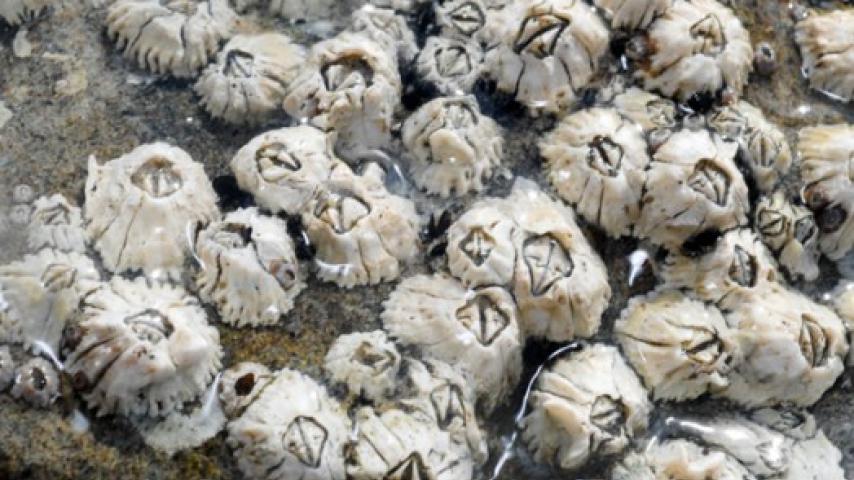
Barnacles are far more than just passive occupants of coastal real estate. They play a surprisingly dynamic role in marine ecosystems, acting as both food sources and habitat creators.
Barnacles as a Food Source
From their larval stages to their adult form, barnacles are an important link in the marine food web. As planktonic larvae, they are consumed by a vast array of filter-feeders, from small fish to baleen whales. As adults, their tough shells protect them from many predators, but not all. Certain species of sea stars, whelks (a type of sea snail), and some fish have specialized mouthparts or methods to prey on adult barnacles. Shorebirds, like turnstones, can also pry them off rocks during low tide. The constant predation pressure on barnacles helps regulate their populations and transfers energy up the food chain.
Barnacles as Ecosystem Engineers
The presence of a dense colony of barnacles can fundamentally change a habitat. This makes the barnacle arthropod an important “ecosystem engineer.” Their rough, textured shells create a complex three-dimensional surface on otherwise smooth rocks. This new microhabitat provides shelter for a host of smaller organisms, such as tiny snails, worms, algae, and other crustaceans, protecting them from predators and harsh wave action. By creating this structural complexity, barnacles increase the overall biodiversity of the intertidal zone. When you look closely at a patch of barnacles, you are seeing a miniature, bustling city of marine life.
The Economic Impact of the Barnacle Arthropod
While fascinating, the tenacious nature of the barnacle arthropod can cause significant problems for humans, a phenomenon known as biofouling.
Biofouling on Ships and Marine Structures
The tendency of barnacles to attach to any hard submerged surface makes them a major nuisance for the shipping and marine industries. When barnacles colonize a ship’s hull, they create drag, which reduces the ship’s speed and efficiency. To maintain speed, the ship must burn more fuel, leading to increased operational costs and higher carbon emissions. It is estimated that severe biofouling can increase fuel consumption by as much as 40%. Companies spend billions of dollars annually on cleaning ship hulls and applying special anti-fouling paints to prevent barnacles and other organisms from settling. Keeping up with the latest advancements in this area is a constant focus for industry leaders, much like how tech companies stay updated on trends discussed at sites like https://siliconvalleytime.co.uk/.
The same problem affects other marine structures, including intake pipes for power plants, offshore oil rigs, and aquaculture equipment. A heavy accumulation of barnacles can block pipes, add immense weight to structures, and interfere with the operation of sensitive instruments.
Barnacles in Research and Technology
The remarkable properties of the barnacle arthropod have also made it a subject of intense scientific interest. Researchers are particularly focused on understanding the powerful adhesive secreted by the cyprid larva. Barnacle cement is waterproof, non-toxic, and sets incredibly quickly in saltwater. Scientists are trying to replicate its properties to develop new biocompatible glues for medical and dental applications, such as for mending bones or closing wounds without stitches. Unlocking the secrets of this natural superglue could lead to major technological breakthroughs.
Table: Comparison of Barnacle Types
|
Feature |
Acorn Barnacle |
Gooseneck Barnacle |
|---|---|---|
|
Scientific Name |
Sessilia (Order) |
Pedunculata (Order) |
|
Attachment |
Directly to the surface |
Attached via a fleshy stalk (peduncle) |
|
Shape |
Volcano or cone-shaped |
Fleshy stalk with a shelled body on top |
|
Common Habitat |
Rocks, piers, ship hulls, whales |
Floating debris, buoys, ship hulls |
|
Feeding Method |
Extends cirri from the top opening |
Extends cirri from the plates at the end of the stalk |
Frequently Asked Questions (FAQ)
Q1: Can a barnacle move once it is attached?
No, once a barnacle arthropod attaches to a surface and undergoes metamorphosis into its adult form, it is permanently fixed in that spot for the rest of its life. The only mobile stages are the nauplius and cyprid larval forms.
Q2: Do barnacles feel pain?
Barnacles have a simple nervous system, but they lack a brain and the complex structures associated with consciousness and the sensation of pain as humans understand it. They can react to stimuli, such as touch or changes in light, by retracting into their shells, but this is considered a reflexive action rather than a conscious experience of pain.
Q3: How long do barnacles live?
The lifespan of a barnacle arthropod varies widely by species and environmental conditions. Some smaller, intertidal species may only live for a year or two, while some larger, deep-water species are thought to live for 5 to 10 years, and potentially even longer.
Q4: Are any barnacles edible?
Yes, certain species of barnacles are considered a delicacy in some parts of the world. The gooseneck barnacle (Pollicipes pollicipes), found along the coasts of Spain and Portugal, is highly prized for its fleshy stalk, which is said to taste like a cross between lobster and clam.
Q5: How do barnacles breathe?
Barnacles breathe through their cirri, the same feathery appendages they use for feeding. The cirri have a large surface area rich in blood vessels, allowing for gas exchange to occur directly with the surrounding water. When the tide is out, they seal their shells tightly to trap moisture and can survive for hours until the water returns.
Conclusion: More Than Just a Shell
The humble barnacle arthropod is a testament to the incredible diversity and adaptability of life in the ocean. From a free-swimming, planktonic youth to a stationary, fortress-dwelling adult, its life cycle is a story of profound transformation. Far from being a simple pest on the bottom of a boat, the barnacle is a sophisticated crustacean with a complex anatomy, a clever reproductive strategy, and a vital role in the health of marine ecosystems. They are ecosystem engineers, a crucial food source, and a source of inspiration for future technologies. The next time you see these small, conical shells, take a moment to appreciate the dynamic and surprising creature living inside. To learn even more about their place in the animal kingdom, you can find extensive information about their classification as a barnacle arthropod on resources like Wikipedia, which details their unique position within the crustacean family.