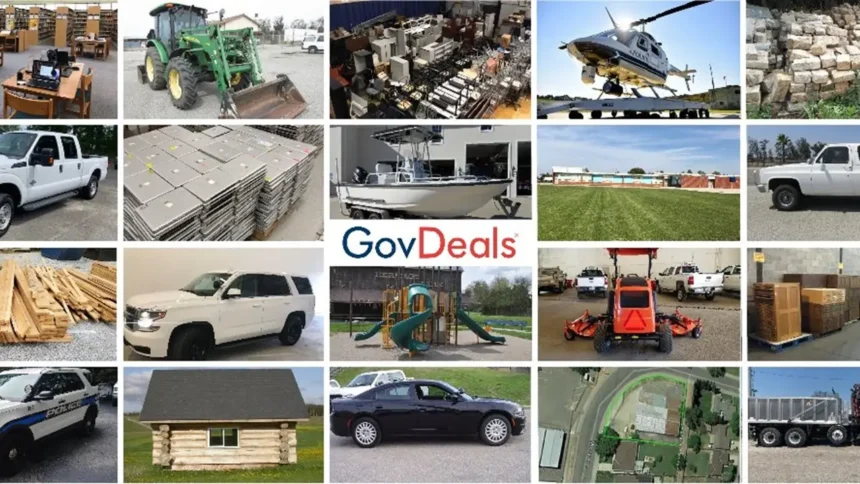

Have you ever wondered what happens to all the old police cars, school buses, and office furniture when the government is done with them? They don’t just disappear into thin air. Instead, they often end up on a massive online marketplace where regular people like you can buy them for a fraction of their original cost. Welcome to the world of govdeals, a place where savvy shoppers find incredible bargains on everything from heavy machinery to kitchen equipment.
This platform is essentially an online auction house specifically for government surplus. Imagine eBay, but the sellers are city councils, police departments, and state agencies. Whether you are a small business owner looking for affordable equipment or a car enthusiast hunting for a fleet vehicle, govdeals is a goldmine waiting to be explored.
In this guide, we are going to walk you through exactly how to navigate this platform. We will cover how to register, how to place smart bids, and what to watch out for so you don’t end up with a lemon. By the time you finish reading, you’ll be ready to start your own treasure hunt.
Key Takeaways
- govdeals is a legitimate auction site for government surplus items.
- You can find vehicles, real estate, electronics, and unique items.
- Registration is free, but you must verify your identity.
- Always inspect items (or read reports carefully) before bidding.
- Payment and pickup usually have strict deadlines.
What Exactly Is GovDeals?
To put it simply, govdeals is an online liquidity services marketplace. It provides services to government agencies that allow them to sell surplus and confiscated items via the Internet. It’s a win-win situation. The government agencies get to clear out their warehouses and lots without the hassle of hosting a physical auction, and the public gets access to assets that still have plenty of life left in them.
Unlike some other auction sites that might feel sketchy or unregulated, govdeals is highly transparent. You know exactly which agency is selling the item, whether it’s the City of Atlanta or a small school district in Ohio. This transparency builds trust. You aren’t buying from an anonymous seller; you are buying from a public entity. The variety of items is staggering, ranging from the mundane (stacks of laptops) to the bizarre (confiscated jewelry or even entire airplanes).
Why Government Agencies Sell Surplus
Government agencies operate on budgets and cycles. Police cars are retired after a certain mileage, school computers are upgraded every few years, and road maintenance trucks are replaced. These items aren’t necessarily broken; they just don’t fit the agency’s current needs or standards. Instead of scrapping them, agencies use govdeals to recoup some of the taxpayers’ money. This revenue often goes right back into the agency’s budget to help fund new equipment or community programs.
How to Get Started with GovDeals
Getting started on govdeals is surprisingly straightforward, but it does require a few steps to ensure security. The first thing you need to do is visit their website and look for the registration button. It is free to join, which is a huge plus. You don’t need a special license to buy most items, although some restricted items might require specific credentials.
Once you fill out the basic form with your name, address, and contact information, the platform will verify your details. This is crucial because a bid is a legally binding contract. They need to know you are a real person who intends to pay if you win. Sometimes, there is a manual verification process for new bidders, so don’t wait until five minutes before an auction ends to create your account. Get set up early so you are ready to strike when you see a deal.
Creating a Buyer Account
When you set up your account, make sure your information matches your official ID. If you win an auction, the agency releasing the item will likely ask for identification that matches the buyer’s account. Discrepancies here can cause major headaches during pickup. You will also want to set up your notification preferences. govdeals allows you to subscribe to alerts for specific categories or locations, ensuring you never miss a local auction.
The Wide Variety of Items Available
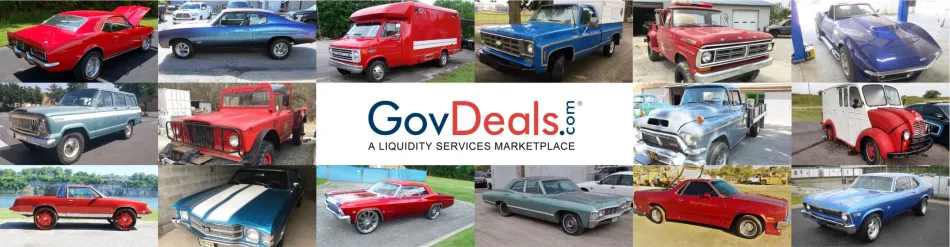
One of the most fun aspects of browsing govdeals is the sheer unpredictability of the inventory. While vehicles are the most popular category, they are just the tip of the iceberg. You can furnish a small office, equip a restaurant, or even start a landscaping business with the items found here.
The inventory changes daily. One day you might see a listing for a decommissioned fire truck, and the next day you might find a pallet of unused printer toner. This constant rotation keeps the site fresh and exciting for regular visitors. It also means you need to check back often if you are looking for something specific.
Top Categories on GovDeals
|
Category |
Typical Items Found |
Who Buys This? |
|---|---|---|
|
Vehicles |
Police cruisers, ambulances, buses |
Taxi services, collectors, families |
|
Heavy Equipment |
Excavators, tractors, forklifts |
Construction firms, farmers |
|
Computers |
Laptops, servers, monitors |
Resellers, schools, startups |
|
Office Furniture |
Desks, chairs, filing cabinets |
Small businesses, home offices |
|
Medical |
Hospital beds, dental chairs |
Clinics, training schools |
Finding the Best Deals Near You
Location is everything when it comes to saving money on govdeals. Why? Because shipping is rarely included. In almost every case, the buyer is responsible for picking up the item. If you win a cheap car for $500 but it’s located three states away, the cost of transport might eat up all your savings.
The website has a robust search feature that allows you to filter by zip code or state. This is incredibly useful. You can set a radius of 50 or 100 miles from your home to see what is available within driving distance. Buying local allows you to inspect the item in person (if allowed) and makes retrieval much simpler and cheaper.
Using Advanced Search Filters
Don’t just rely on the homepage. Use the advanced search options to narrow down your hunt. If you are looking for a car, you can filter by make, model, year, and even mileage. If you are looking for a laptop, you can search for specific brands like Dell or Apple. The more specific you are, the less time you’ll waste scrolling through irrelevant listings. However, sometimes keeping it broad (like searching just “truck”) helps you find mislabeled items that others might miss.
Understanding the Bidding Process
Bidding on govdeals can be an adrenaline rush, but you need to keep a cool head. Most auctions run for a specific period, usually a week or two. You can see the current high bid and the minimum bid increment. Unlike some sites where you can snipe an item at the last second, many govdeals auctions have a feature called “auto-extension.”
If a bid is placed in the final few minutes of an auction, the time is extended (usually by a few minutes). This prevents sniping and gives everyone a fair chance to counter-bid. This mimics a live auctioneer saying “Going once, going twice…” It ensures the seller gets the best price, but it requires buyers to pay attention until the very end.
Proxy Bidding Explained
To avoid sitting at your computer all day, you can use proxy bidding. This is where you enter the maximum amount you are willing to pay. The system will then bid on your behalf, increasing the price only enough to beat the other bidders, up to your maximum. This is a great way to stick to your budget. If the bidding goes over your max, the system stops, and you don’t spend more than you planned.
How to Inspect Items Before You Bid
This is perhaps the most important rule of buying on govdeals: Inspect before you buy. Most listings will say “sold as is, where is.” This means there are no warranties and no returns. If the transmission falls out of the car on the drive home, that is your problem, not the seller’s.
However, most agencies allow potential buyers to come and look at the items during specific hours. The listing will usually provide a contact name and phone number to schedule an inspection. If you live close enough, always take advantage of this. Bring a mechanic if you are looking at a vehicle. Start the engine, check the tires, and look for rust.
Decoding Listing Descriptions
If you cannot inspect an item in person, you must rely on the photos and description. Read every word carefully. Look for phrases like “runs and drives” versus “needs repair” or “for parts only.”
- “Starts with a boost”: Means the battery is dead, but it might have other electrical issues.
- “Removed from service running”: It worked when they stopped using it, but it might have been sitting for months.
- “Cracked glass”: Usually visible, but check if it’s a structural issue.
Payment and Fees: What to Expect
Winning the auction is only half the battle. Once you receive the “You Won!” notification, the clock starts ticking. govdeals has strict timelines for payment. Usually, you have 5 business days to pay for the item.
You also need to be aware of the fees. There is often a “Buyer’s Premium” added to the final bid price. This is a percentage (typically between 5% and 12.5%) that goes to the platform, not the seller. So, if you bid $1,000 and the premium is 10%, you actually owe $1,100. Always factor this into your maximum bid so you don’t get a surprise bill.
Accepted Payment Methods
Payment methods can vary by agency, but most accept wire transfers, credit cards (for smaller amounts), and PayPal. Some agencies might accept cashier’s checks. The specific payment instructions will be in the auction listing. Never send cash through the mail. Ensure you follow the specific payment instructions on your invoice to avoid delays.
Picking Up Your Winnings
After you have paid, you will receive a Buyer’s Certificate. This is your golden ticket. You cannot pick up your item without it. The listing will specify the removal deadline, which is usually 10 days after payment. If you don’t pick it up in time, you could forfeit the item and your money, or be charged storage fees.
You are responsible for all labor and equipment needed to remove the item. If you bought a heavy industrial lathe, don’t expect the city employees to help you lift it into your truck. You need to bring your own crew, forklift, or moving dolly. For vehicles, make sure you have a way to transport them legally, such as a trailer or a temporary tag.
Dealing with Title Transfers
For vehicles, the title transfer paperwork is handled at the time of pickup. The agency will sign over the title to the name on the Buyer’s Certificate. Make sure your account details match the name you want on the title. If you are buying for a business, the account should be in the business name.
Avoiding Scams and Pitfalls
While govdeals itself is a legitimate site, you still need to be a smart consumer. The biggest “scam” is simply your own lack of due diligence. Buying a car without reading that it has a blown head gasket is not a scam; it’s a mistake on the buyer’s part.
Be wary of third-party emails claiming to be from govdeals asking for payment outside the platform. All legitimate communication and payment instructions should come through the official website or the verified contact person listed on the auction.
Tips for a Safe Transaction
- Verify the seller: Check the seller’s other listings to see if they are a legitimate government agency.
- Check the location: Ensure the item is actually where the listing says it is.
- Read the Q&A: Most listings have a Q&A section where other users ask questions. The answers often contain crucial details about the item’s condition.
Selling on GovDeals: A Brief Overview
While most of us use the site to buy, it is worth noting that govdeals is a powerful tool for sellers too. It is primarily designed for government entities, but it helps them achieve transparency and fair market value. They don’t have to guess what an old tractor is worth; the market decides.
This efficient system saves taxpayer money. Instead of paying storage fees for old equipment, agencies turn liabilities into cash assets. It also prevents accusations of favoritism, as the auction process is open to the public and fully auditable.
Comparison: GovDeals vs. Other Auction Sites
How does govdeals stack up against other popular auction sites like eBay or specialized auto auctions? The main difference is the source of the inventory. On eBay, you are dealing with private sellers who might exaggerate the condition of an item. On govdeals, the descriptions are usually blunt and factual because the government employees have no incentive to lie. They just want the item gone.
Another difference is the “as is” nature. eBay has strong buyer protection policies. govdeals generally does not. Once you buy it, you own it, warts and all. This higher risk is often balanced by significantly lower prices.
Pros and Cons Table
|
Feature |
GovDeals |
Private Auction Sites |
|---|---|---|
|
Seller Trust |
High (Government Agencies) |
Varies (Private Individuals) |
|
Price |
Often Lower |
Market Value |
|
Returns |
No Returns (As-Is) |
sometimes Accepted |
|
Shipping |
Buyer Arranges Pickup |
Often Shipped to You |
|
Fees |
Buyer’s Premium Added |
Included or Added |
Tips for Buying Vehicles on GovDeals
Vehicles are the bread and butter of govdeals. Police interceptors are popular because they are well-maintained mechanically, even if they have high mileage or holes in the dash where equipment was mounted. However, be aware that these cars have lived a hard life.
Idle hours are a key metric for police cars. A car might show 100,000 miles, but if the engine has been idling for 5,000 hours, it has significantly more wear than a civilian car with the same mileage. Look for listings that provide idle hours in the description or photos of the dashboard gauges.
Understanding “Decommissioned”
When a vehicle is decommissioned, all police decals, lights, and sirens are removed. This often leaves residue or holes in the bodywork. The back seats of police cruisers are often plastic and might need to be replaced for civilian comfort. Don’t expect a showroom-ready car; expect a project that requires some elbow grease.
Real Estate and Land Auctions
Yes, you can even buy land and houses on govdeals. These are often properties seized for back taxes or surplus land owned by the city. Buying real estate online is risky but potentially rewarding.
Always visit the property. Pictures can be deceiving, and you need to see the neighborhood and the condition of the structure. Also, do a title search. Ensure there are no other liens or encumbrances on the property that you will inherit. Real estate auctions often have higher deposit requirements and stricter closing timelines.
The Nuances of Tax Deeds
Some properties are sold as “tax deeds.” This means you are buying the property because the previous owner didn’t pay taxes. These transactions can be complex legal matters. It is highly recommended to consult with a real estate attorney before bidding on these types of listings to ensure you understand exactly what rights you are acquiring.
Electronics and Computer Equipment
Schools and offices upgrade their tech frequently. This floods govdeals with pallets of laptops, desktops, and monitors. This is a great opportunity for resellers or people who need cheap computers for a project.
However, these are often sold in bulk. You might have to buy a lot of 10 laptops to get the one you want. Also, hard drives are almost always removed or wiped for security reasons. You will likely need to buy new hard drives and install an operating system yourself.
Testing and Condition
Because these items are often sold in bulk lots, they are rarely tested individually. The listing might say “powered on” or “removed from working environment.” This is a gamble. Out of 10 laptops, 2 might be broken. Calculate this failure rate into your bid price.
Success Stories: What People Are Finding
If you browse online forums, you will find plenty of people bragging about their govdeals scores. One user might have found a high-end commercial espresso machine for $200 that just needed a new seal. Another might have bought a box of “assorted jewelry” from a police evidence room and found a vintage gold watch worth thousands.
For tech enthusiasts, finding enterprise-grade servers for pennies on the dollar allows them to build incredible home labs. The thrill of the hunt is a big part of the appeal. It’s like a garage sale, but on a massive, industrial scale. You can even read more about tech trends and insights at Silicon Valley Time, where innovation meets opportunity.
FAQ: Frequently Asked Questions
Q: Is GovDeals open to the public?
A: Yes! While some specific items might be restricted to law enforcement or authorized dealers, the vast majority of auctions are open to anyone who registers.
Q: Can I return an item if it doesn’t work?
A: Generally, no. Items are sold “as is, where is.” This is why inspecting the item or reading the description carefully is so important.
Q: How much does it cost to register?
A: Registration is completely free. You only pay if you win an auction.
Q: Does GovDeals ship items?
A: govdeals does not ship items. However, some sellers might offer shipping for small items, or you can hire a third-party shipping company to pick up and deliver the item for you.
Q: What is a Buyer’s Premium?
A: It is an extra fee added to your winning bid, usually a percentage of the final price, which goes to the auction platform.
Conclusion
Navigating govdeals can feel like learning a new language at first, but once you understand the rhythm of the auctions, it becomes an addictive way to shop. Whether you are looking for a reliable work truck, affordable computer equipment, or just a unique conversation piece, this platform offers opportunities you won’t find anywhere else.
Remember the golden rules: inspect before you bid, factor in the fees, and have a plan for pickup. With a little patience and due diligence, you can secure high-quality government surplus items for a fraction of their retail value. It’s a smart, eco-friendly way to recycle assets and save money.
So, go ahead and create your account. Browse the listings in your local area. You never know what hidden treasure might be sitting in a government warehouse just a few miles down the road, waiting for a new home.
For more information on general auction practices, you can check out this resource from Wikipedia: Auction.