




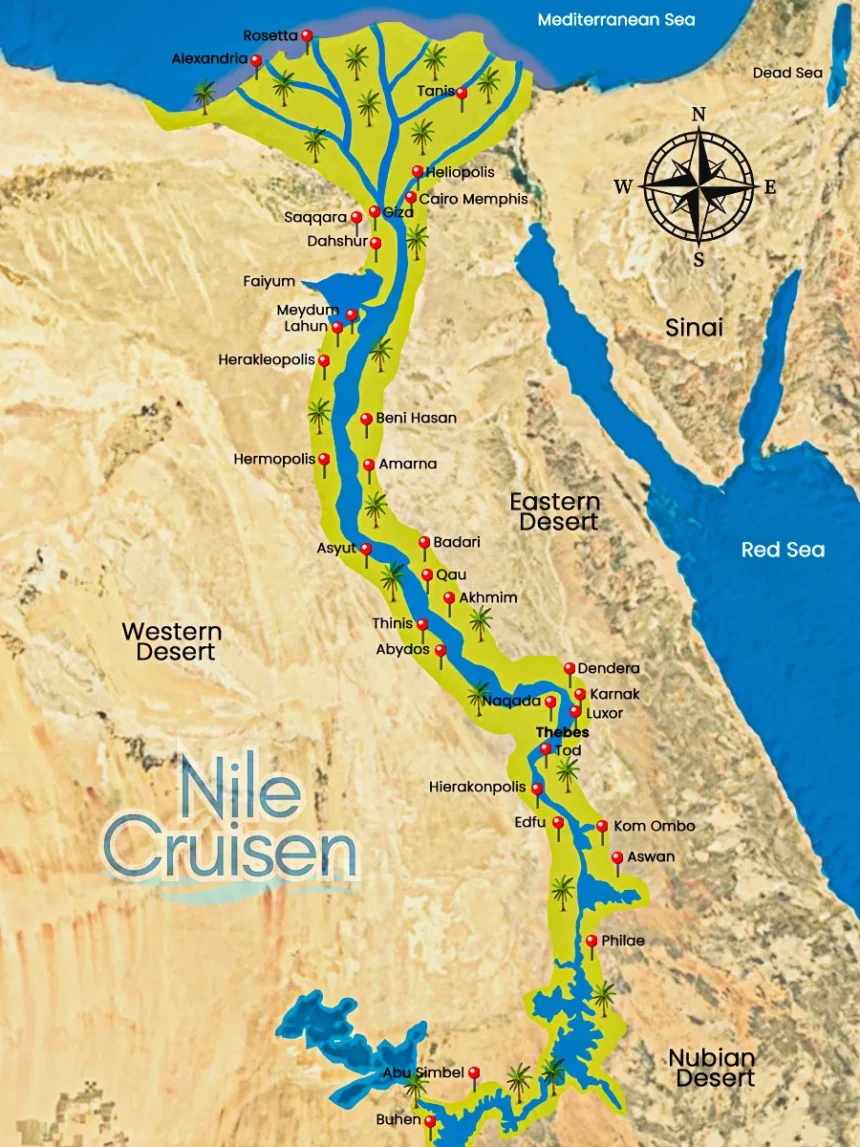

How long is the Nile River? It stretches roughly 6,650 to 7,088 kilometers (about 4,130 to 4,404 miles), which makes it one of the longest rivers on Earth. That’s a huge range, and there’s a good reason for it. Let me walk you through the whole story.
A Quick Overview of the Nile
The Nile is a giant. It winds its way through northeastern Africa and empties into the Mediterranean Sea. For thousands of years, it has shaped how people live, farm, and travel across the region.
Here’s the thing though. Measuring a river this big isn’t as simple as pulling out a tape measure.
Read more: Life Swings: Why the Ups and Downs Are What Make Us Who We Are
So, How Long Is the Nile River Exactly?
The most commonly cited length sits between 6,650 km and 7,088 km. Some sources round it to about 4,130 miles, while others push closer to 4,404 miles.
Why the gap? Rivers have many branches, twists, and starting points. Depending on where scientists decide the “source” begins, the total length can shift by hundreds of kilometers.
To be honest, that’s normal for big rivers. Even the Amazon has the same debate.
Why Measuring a River Is Tricky
Picture a river system with many small streams feeding into it. The question becomes: where does the “main” river actually start?
Different teams pick different starting points. Some follow the farthest headwater. Others use a more traditional source. That choice changes the final number.
That’s why you’ll see “how long is the Nile River” answered slightly differently across websites.
Key Facts About the Nile River
Here’s a quick table to make things easy.
|
Feature |
Detail |
|---|---|
|
Length |
~6,650–7,088 km (4,130–4,404 miles) |
|
Location |
Northeastern Africa |
|
Main tributaries |
White Nile and Blue Nile |
|
Countries it touches |
11 |
|
Flow direction |
Northward |
|
Mouth |
Mediterranean Sea |
|
Notable feature |
One of the longest rivers on Earth |
Which Direction Does the Nile Flow?
This one surprises a lot of people. The Nile flows north.
Most folks assume rivers always flow south, but that’s just a common myth. Water flows downhill, and the land in this part of Africa is higher in the south. So the river runs upward on the map, toward the Mediterranean.
The Two Main Branches: White Nile and Blue Nile
The Nile has two major tributaries that come together to form the river we know.
The White Nile
The White Nile is often seen as the longer branch. It begins in the Great Lakes region of central Africa and provides a steady, year-round flow of water.
The Blue Nile
The Blue Nile starts in the highlands of Ethiopia. What’s interesting is that it carries most of the water and rich sediment, especially during the rainy season.
These two branches meet in Sudan, near the city of Khartoum, and continue as one river from there.
The 11 Countries the Nile Flows Through
The Nile basin touches 11 countries. That’s a lot of shared water.
These include Tanzania, Uganda, Rwanda, Burundi, the Democratic Republic of the Congo, Kenya, Ethiopia, Eritrea, South Sudan, Sudan, and Egypt.
Because so many nations rely on it, the Nile is more than a river. It’s a lifeline that connects communities across borders.
A Little History of the Nile
The Nile has a story that goes back thousands of years. Ancient Egyptian civilization grew right along its banks.
Every year, the river would flood and leave behind rich soil. Farmers used that soil to grow crops in an area that would otherwise be desert.
Without the Nile, ancient Egypt as we know it probably wouldn’t have existed.
Why the Nile Mattered So Much
Think about it. You’ve got a dry, harsh landscape, and then this ribbon of water cuts right through it.
That water meant food, trade routes, and fresh drinking supplies. It’s no wonder cities and temples popped up along its path.
The river even played a role in religion and daily rituals for the ancient Egyptians.
The Nile Today
The river still matters just as much now. Millions of people depend on it for drinking water, farming, and electricity.
Big dams, like the Aswan High Dam, help control flooding and generate power. But they’ve also sparked plenty of debate between countries about who gets to use the water.
Managing such a long river shared by 11 nations is no small task.
How Long Is the Nile River Compared to Other Rivers?
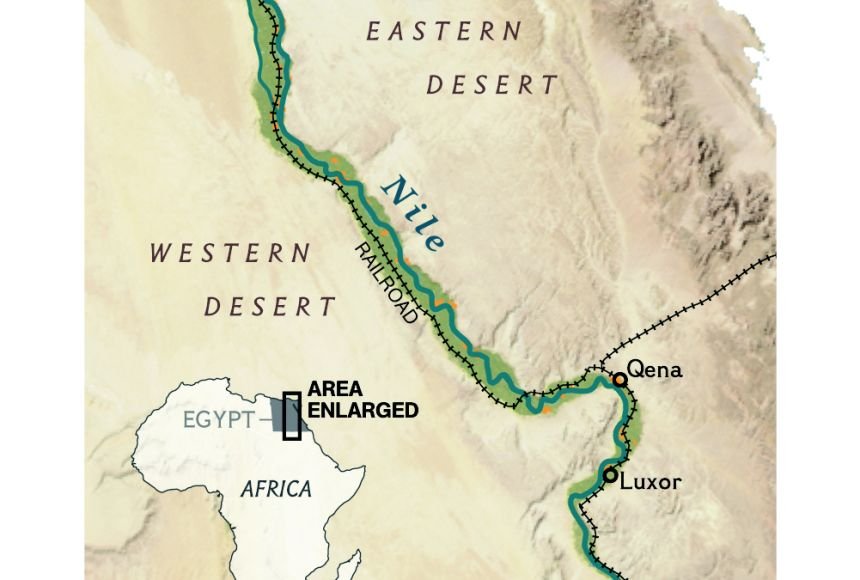
For a long time, the Nile held the title of the longest river in the world. The Amazon in South America is its closest rival.
Some scientists argue the Amazon might actually be longer, depending on how you measure it. The debate isn’t fully settled.
Still, when people ask how long is the Nile River, the answer places it right at the top of the list.
What Makes the Nile So Special
It’s not just about length. The Nile carries a mix of history, culture, and raw natural power.
It supports wildlife, farmland, and huge populations. Few rivers on Earth influence so many lives across such a wide stretch of land.
That combination is what makes it stand out.
Fun Details You Might Not Know
Here are a few things that often surprise people.
The Nile Delta, where the river meets the sea, is one of the most fertile regions in Egypt. Crocodiles and hippos have lived in parts of the river for ages. And the yearly flooding was so important that ancient Egyptians built their calendar around it.
Small facts like these make the river even more fascinating.
Frequently Asked Questions
How long is the Nile River in miles?
The Nile is roughly 4,130 to 4,404 miles long, depending on the source you check and how the length is measured.
Is the Nile the longest river in the world?
It’s traditionally ranked as the longest, though some studies suggest the Amazon may edge it out. The measurement method makes a big difference.
What are the two main tributaries of the Nile?
The two main branches are the White Nile and the Blue Nile. They join together in Sudan to form the main river.
Which way does the Nile flow?
The Nile flows north. It travels toward the Mediterranean Sea, which is why it seems to run “up” the map.
How many countries does the Nile pass through?
The Nile basin touches 11 countries across northeastern and central Africa, from Tanzania all the way to Egypt.
Final Thoughts
So, how long is the Nile River? The short answer is somewhere between 6,650 and 7,088 kilometers, or about 4,130 to 4,404 miles. The exact number depends on how you measure it.
What really stands out isn’t just the length though. It’s how much this river has shaped human history and still supports life today across 11 different countries.
If you want to explore even more detailed facts and figures, you can read the full breakdown on the Nile River Wikipedia page. It’s a great next step if this topic caught your interest.