







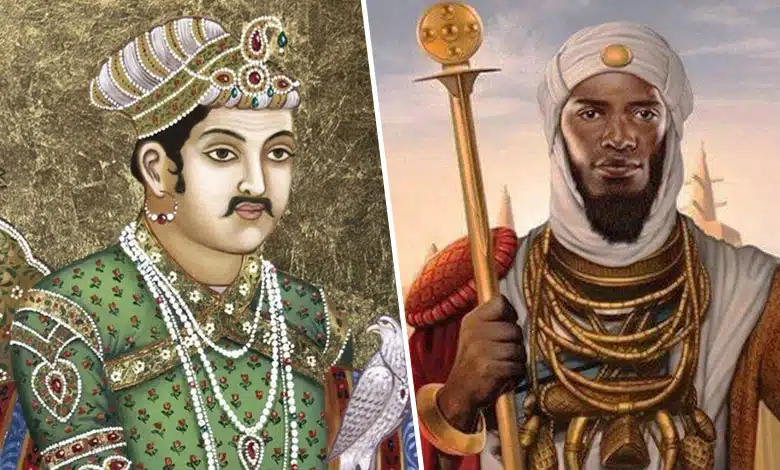

When you think of the richest people in history, names like Elon Musk, Jeff Bezos, or perhaps John D. Rockefeller probably come to mind. But what if I told you that an African king from the 14th century makes today’s billionaires look almost modest in comparison? The topic of the mansa musa net worth is one that continues to amaze historians, economists, and everyday curious readers alike. This historical figure controlled so much wealth that modern experts often describe it as completely incalculable.
To truly understand how a single ruler could amass such an astronomical fortune, we have to travel back in time to the golden age of the Mali Empire. During this period, West Africa was the epicenter of global trade, and Mansa Musa held the keys to its most precious resources. In this comprehensive guide, we will explore everything you need to know about this legendary king, how he built his empire, and exactly why his riches are still talked about hundreds of years later.
Key Takeaways
- Mansa Musa was the ruler of the Mali Empire during the 14th century, controlling a massive portion of the world’s wealth.
- The staggering mansa musa net worth was primarily built on the vast natural resources of West Africa, specifically gold and salt.
- His famous pilgrimage to Mecca showcased his wealth to the world, literally crashing the economy of Egypt by giving away too much gold.
- Modern estimates suggest his wealth would easily surpass $400 billion today, though many historians consider his fortune to be genuinely unquantifiable.
Read more: The Surprising George Foreman Net Worth Story
Who Was Mansa Musa?
Before we can dive into the specifics of his bank account, we need to understand the man behind the gold. Mansa Musa, whose first name translates roughly to “King” or “Emperor,” ruled the Mali Empire from 1312 to 1337. He came to power after his predecessor, Abu Bakr II, embarked on a grand expedition across the Atlantic Ocean and never returned. Once Musa took the throne, he wasted no time expanding the borders of his empire, absorbing important cities like Timbuktu and Gao.
Under his rule, the Mali Empire stretched across massive parts of West Africa, covering areas that today include modern-day Mali, Senegal, Gambia, Guinea, Niger, Nigeria, Chad, and Mauritania. This expansion was not just about land; it was a strategic move to control the most vital trade routes of the era. The king was a devout Muslim, and his faith played a massive role in how he governed his people and spent his vast riches. He was known for being a wise, just, and incredibly generous ruler who transformed his empire into a global center of culture, religion, and commerce.
Understanding the True Mansa Musa Net Worth
When modern financial experts try to calculate the mansa musa net worth, they quickly run into a unique problem: his wealth was simply too vast to put a firm number on. While some historians estimate his fortune to be around $400 billion adjusted for inflation, others argue that this number falls drastically short of reality. His wealth was not sitting in a bank account; it was tied to the land he controlled and the endless natural resources it produced.
To put this into perspective, the king had personal access to roughly half of the Old World’s total supply of gold during his reign. Whenever he needed funds, he simply had more gold mined. This level of absolute control over a universally desired commodity meant that his purchasing power was practically infinite. Unlike modern billionaires whose net worth fluctuates with the stock market, Musa’s wealth was tangible. It was measured in pure gold, massive estates, and an army of hundreds of thousands of men. The sheer scale of his riches makes it almost impossible for modern minds to fully grasp.
The Source of His Incredible Wealth
You might be wondering how one person could gather so much wealth in an era before modern industry and global banking. The secret to the legendary mansa musa net worth lies in the dirt of West Africa. The Mali Empire sat directly on top of some of the most lucrative trade routes in the world, connecting the interior of Africa with the Mediterranean coast and, by extension, Europe and the Middle East.
Musa acted as the ultimate middleman and controller of these routes. He taxed every ounce of goods that passed through his borders. Furthermore, he owned all the gold nuggets found in the empire by law, leaving only gold dust for the common people to trade. This brilliant, if authoritative, economic policy ensured that the royal treasury was constantly overflowing. Let’s break down the two main pillars of his economic superpower: gold and salt.
Gold Production in the Mali Empire
Gold was the absolute lifeblood of the Mali Empire’s economy. During the 14th century, Europe and the Middle East were facing severe shortages of precious metals, making African gold highly sought after. Mansa Musa controlled three massive gold fields: Bambuk, Boure, and Galam. These mines produced hundreds of thousands of pounds of pure gold over the years.
Because the king claimed ownership of all large gold pieces, the central treasury grew at an astonishing rate. Miners would work tirelessly to extract the precious metal, which was then transported via camel caravans across the Sahara Desert. This constant, heavy flow of gold into the royal vaults is the primary reason why the mansa musa net worth reached such mythical proportions. He quite literally had more gold than he knew what to do with.
The Salt Trade Monopoly
While gold is flashy, salt was arguably just as important to the Mali Empire’s wealth. In the ancient world, salt was essential for preserving food, retaining water in harsh climates, and maintaining general health. It was so valuable that it was frequently traded ounce-for-ounce with gold.
Mansa Musa controlled the legendary salt mines of Taghaza, located in the middle of the Sahara Desert. Caravans would load up giant slabs of salt and transport them south, where the commodity was scarce. By controlling both the gold coming from the south and the salt coming from the north, Musa created an impenetrable economic monopoly. He profited from both ends of the most critical trade network of the Middle Ages, cementing his status as the richest man to ever live.
The Famous Pilgrimage to Mecca
If there is one event that cemented Mansa Musa’s wealth in the history books, it was his famous Hajj, or pilgrimage to Mecca, in 1324. As a devout Muslim, the king was required to make this journey at least once in his life. But Musa did not travel lightly. He turned this religious duty into the most extravagant display of wealth the world had ever seen.
His caravan reportedly consisted of 60,000 men, including 12,000 enslaved people, all dressed in fine silk and carrying staves of pure gold. He brought along 80 camels, each carrying between 50 and 300 pounds of gold dust. As he traveled through Egypt and the Middle East, he handed out gold to the poor, bought out local markets, and built new mosques every Friday, regardless of where he was. The sheer spectacle of this journey put the Mali Empire on the map—literally. Soon after his return, European mapmakers began drawing him on maps holding a large gold nugget.
Spending That Broke Economies
The stories of Musa’s generosity during his pilgrimage are legendary, but they had a serious downside for the people he visited. When the king arrived in Cairo, he gave away so much gold that he accidentally ruined the local economy. The sudden influx of the precious metal caused its value to plummet dramatically.
Prices of everyday goods skyrocketed because gold was suddenly practically worthless. It took the region over a decade to recover from the massive inflation caused by this single royal visit. To help fix the disaster he created, Musa actually borrowed gold back from Egyptian lenders at high interest rates on his journey home, simply to remove it from circulation. This event remains the only recorded time in history that one person single-handedly controlled the price of gold across the entire Mediterranean region.
The Impact on Gold Prices in Cairo
Let’s dive a little deeper into the economic chaos in Cairo. The drop in gold prices was not just a minor inconvenience; it was a devastating financial crash. Historians estimate that the price of gold in the region dropped by over 20% in a matter of days. Merchants who had hoarded gold suddenly found themselves holding a devalued asset.
This financial shockwave affected trade far beyond Egypt, rippling out to the coastal trading cities of Italy and the Middle East. It perfectly illustrates the staggering scale of the mansa musa net worth. When your spare change is enough to crash the economy of one of the world’s most powerful regions, your wealth defies modern comprehension. It is a fascinating case study in hyperinflation, driven entirely by extreme, uncalculated generosity.
Comparing Mansa Musa Net Worth to Modern Billionaires
It is human nature to want to compare the past to the present. When we look at the incredible fortunes of today’s tech moguls and business tycoons, how do they actually stack up against the legendary king of Mali? While calculating historical wealth involves a lot of guesswork and inflation adjustments, the comparisons are truly mind-boggling.
Modern billionaires measure their wealth in stock options, company valuations, and diversified portfolios. Mansa Musa measured his wealth in physical gold, land, and resources. To give you a better idea of how these fortunes compare, we have put together a table looking at the estimated net worths of both historical and modern figures.
|
Name |
Source of Wealth |
Estimated Net Worth (Adjusted for Inflation) |
|---|---|---|
|
Mansa Musa |
Gold and Salt Trade (Mali Empire) |
$400 Billion+ (Often deemed incalculable) |
|
John D. Rockefeller |
Standard Oil |
$340 Billion |
|
Andrew Carnegie |
U.S. Steel |
$310 Billion |
|
Elon Musk |
Tesla, SpaceX |
$200 – $250 Billion (Fluctuates) |
|
Jeff Bezos |
Amazon |
$150 – $170 Billion (Fluctuates) |
Elon Musk and Jeff Bezos vs. Mansa Musa
Today, Elon Musk and Jeff Bezos frequently trade places as the richest people in the world. Their combined net worth frequently hovers around $400 billion. However, even if you combined their massive fortunes, they would still likely fall short of the true mansa musa net worth.
Furthermore, Musk and Bezos cannot simply liquidate their assets. If they tried to sell all their stock at once, the value of their companies would crash. Mansa Musa, on the other hand, held vast amounts of liquid wealth in the form of gold dust and nuggets. He didn’t have to worry about shareholder meetings or market crashes; his wealth was absolute and entirely at his disposal. While modern billionaires build spaceships and massive e-commerce networks, Musa built an empire that shaped the course of African history.
Historical Wealth Comparisons (Rockefeller, Rothschild)
When looking back at more recent history, figures like John D. Rockefeller and the Rothschild family often come up in discussions about extreme wealth. Rockefeller’s control over the American oil industry gave him a net worth equivalent to about $340 billion today. He was incredibly powerful, but his wealth was still tied to a single, newly developing industry.
Mansa Musa’s wealth was fundamentally different. Because he lived in a time when monarchies held absolute power, there was no separation between his personal wealth and the state’s wealth. He essentially owned the entire economy of West Africa. While the Rothschild family amassed a massive fortune through global banking over several generations, Musa held unparalleled purchasing power during his single reign. In the grand scheme of human history, his financial dominance remains completely unmatched.
What Did He Do With All That Money?
It is easy to assume that someone with limitless wealth would spend their days living in pure luxury, isolated from the rest of the world. While Mansa Musa certainly enjoyed the finer things in life, he was also a visionary leader who invested heavily in his empire. He understood that true power wasn’t just about hoarding gold; it was about building a legacy that would outlast him.
Following his pilgrimage to Mecca, Musa brought back brilliant minds from across the Islamic world. He hired architects, scholars, poets, and teachers to help him modernize and transform the Mali Empire. He poured his vast fortune into urban development, education, and religion. His goal was to turn his kingdom into the intellectual and cultural capital of the African continent, and thanks to his immense budget, he largely succeeded.
Building Timbuktu into an Educational Hub
One of the most lasting impacts of the mansa musa net worth was the transformation of the city of Timbuktu. Before Musa, Timbuktu was a modest trading post. Under his direction, it blossomed into a booming metropolis and a global center for Islamic learning.
He funded the construction of the Sankore University, which quickly became one of the most prestigious educational institutions in the world. At its peak, the university housed hundreds of thousands of manuscripts and accommodated up to 25,000 students from all over the globe. Scholars traveled from far and wide to study mathematics, astronomy, law, and religion. Musa’s financial backing ensured that the brightest minds were well-compensated, making Timbuktu synonymous with knowledge and enlightenment.
Architectural Marvels and Mosques
In addition to education, Musa spent a massive fortune on architecture. He wanted his cities to reflect the glory of his empire. He commissioned famous architects, such as Abu Ishaq al-Sahili from Andalusia, to design stunning buildings across Mali. Musa reportedly paid al-Sahili 200 kilograms of gold just to design one mosque!
The most famous of these structures is the Djinguereber Mosque in Timbuktu, which still stands today. Made entirely of earth, organic materials, and wood, this unique architectural marvel showcases the distinct Sudano-Sahelian building style. Musa built mosques in virtually every major city he controlled, spreading his religious beliefs while simultaneously providing his people with beautiful spaces for community and prayer. These buildings stand as physical testaments to how he used his wealth to build a lasting cultural legacy.
The Decline of the Mali Empire After His Death
Despite his incredible success, the immense wealth of the Mali Empire did not last forever. Mansa Musa passed away in 1337, leaving his kingdom to his sons. Unfortunately, they lacked their father’s political skill and economic foresight. The central authority of the empire began to weaken, and various provinces started to rebel and break away.
Furthermore, the very thing that made the empire rich—the trade routes—began to shift. New maritime routes discovered by European explorers eventually bypassed the trans-Saharan caravans, devastating the local economy. Invading forces, internal conflicts, and poor leadership eventually led to the collapse of the once-mighty empire. However, the legendary tales of the king’s unimaginable wealth survived, passed down through generations of storytellers and historians.
Frequently Asked Questions (FAQ)
Q: Exactly how much was the mansa musa net worth?
A: Most historians estimate it at roughly $400 billion when adjusted for modern inflation. However, many experts agree that his wealth is truly incalculable because he owned a massive portion of the world’s gold supply and controlled all the major trade routes in West Africa.
Q: How did Mansa Musa make his money?
A: He generated his incredible fortune primarily by controlling the massive gold and salt trade routes across the Sahara Desert. He taxed everything that moved through his empire and maintained a strict monopoly over gold nuggets.
Q: Did Mansa Musa really crash the economy of Egypt?
A: Yes! During his pilgrimage to Mecca, he gave away and spent so much gold in Cairo that the massive influx of the metal caused its value to plummet, resulting in severe inflation that took over a decade to correct.
Q: Are there any surviving buildings that Mansa Musa built?
A: Yes, the Djinguereber Mosque in Timbuktu, which he commissioned, still stands today and remains an active place of worship and a UNESCO World Heritage site.
Conclusion
The story of the king of Mali is much more than just a tale about money. It is a fascinating glimpse into a golden age of African history, a time when trade, culture, and education flourished under a visionary leader. While we may never be able to pin down the exact down-to-the-penny number of the mansa musa net worth, the sheer scale of his riches remains an awe-inspiring historical fact. He used his immense wealth to shape the world around him, leaving behind a legacy of magnificent architecture and scholarly excellence that survived long after his empire fell.
From crashing the gold markets of Cairo to turning Timbuktu into a beacon of knowledge, his life proves that sometimes reality is far more unbelievable than fiction. If you want to learn even more about this incredible historical figure and his lasting impact on global history, you can check out more details on Wikipedia.