




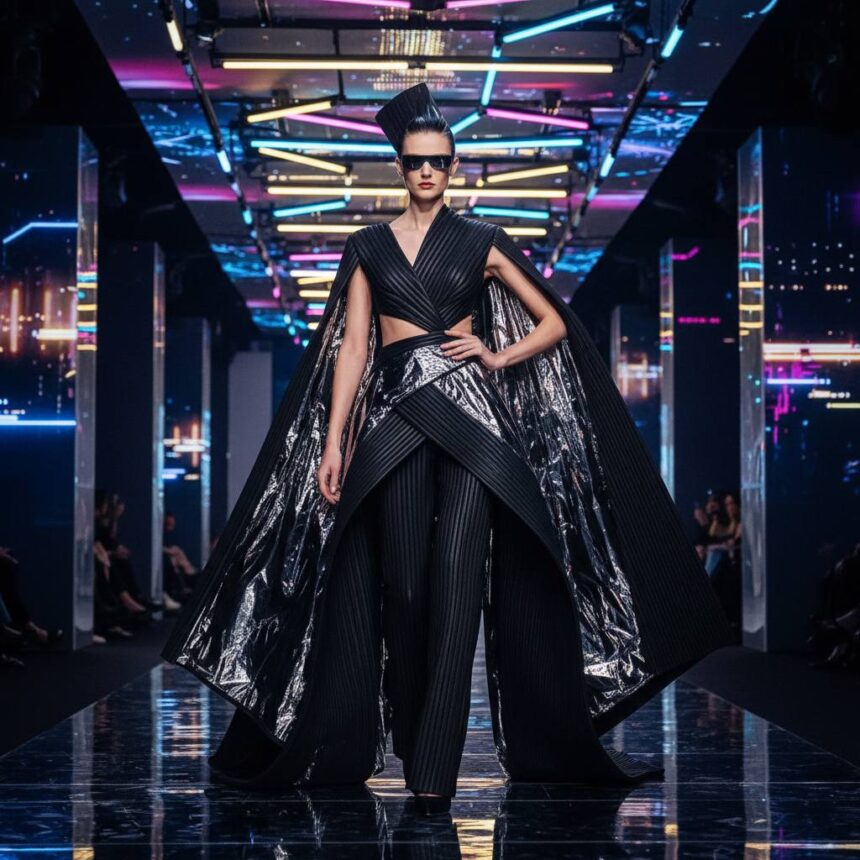

Quick answer: Avant Garde Fashion is a highly experimental style of clothing that prioritizes artistic expression over traditional functionality. By utilizing unconventional materials, dramatic proportions, and deconstruction, designers create wearable art that challenges mainstream beauty standards and pushes the boundaries of the fashion industry.
The fashion industry typically focuses on creating garments that are practical, wearable, and ready for retail. However, a distinct and revolutionary branch of clothing design exists purely to challenge these commercial norms. This realm is driven by radical creativity, where garments are conceptual statements rather than basic apparel.
Avant Garde Fashion invites us to question the very definition of clothing, pushing us to see garments as both an artistic canvas and a medium of cultural commentary. It’s much more than what you wear; it’s a statement, a movement, and — for many — a way of life. Across history, progress in clothing design has not come from staying safe, but rather from those who have dared to break the rules. These innovators willfully distort silhouettes, challenge construction methods, and even prompt society to rethink what we consider wearable.
To understand this movement, we must look beyond standard seasonal trends and embrace wearable art. This aesthetic approach transforms the human body into a canvas for sculptural forms and philosophical messaging. It requires audiences to question what constitutes clothing, forcing a reevaluation of traditional silhouettes and construction techniques.
By analyzing the pioneers of this movement and the innovative silhouettes they create, we can better appreciate how Avant Garde Fashion continuously disrupts the status quo. This guide breaks down the core elements, the legendary designers, and the cultural impact of this uncompromising approach to high fashion.
What is Avant Garde Fashion?
Avant Garde Fashion is defined by its forward-thinking, boundary-pushing approach to clothing design. Instead of focusing on everyday wearability, it emphasizes conceptual fashion, utilizing extreme proportions, asymmetric cuts, and dramatic volume to make a visual or political statement.
The term “avant-garde” comes from French military terminology, referring to the vanguard — the troops that march ahead of the rest of the army. In the context of fashion design, it represents the designers who lead the industry into uncharted territory. These creators reject mainstream consumerism, opting instead to produce haute couture that acts as a critique of society, gender norms, and traditional beauty standards.
Avant Garde Fashion is inherently about challenging the boundaries of what is accepted as beautiful, practical, or commercial. Instead of designing clothing to blend in, avant-garde designers aim to stand out. Their work is often provocation — in form, in message, and in material.
When observing runway shows dedicated to this experimental style, viewers often see garments that obscure the body rather than flatter it. Designers achieve this by manipulating fabric, altering traditional tailoring rules, and employing techniques like deconstruction. This results in wearable art that often belongs in museums just as much as it does on the catwalk.
Avant-garde pieces question not just the boundaries of fashion, but also assert broader conversations around gender, politics, technology, and art. Many collections reference social issues — such as sustainability, gender fluidity, or even the role of technology in daily life. Thus, avant-garde is not just an aesthetic, but also a movement fueled by activism, commentary, and cultural critique.
The Essence of Avant-garde Style: Materials and Textures
The foundation of any avant-garde garment lies in its materials. Designers in this space frequently abandon standard cotton, silk, or wool to experiment with textures that provoke a visceral reaction. The choice of material often dictates the garment’s structural integrity, allowing for the creation of rigid, architectural shapes that defy gravity.
By contrasting soft, flowing fabrics with harsh, industrial elements, creators generate tension within a single outfit. This juxtaposition is a hallmark of Avant Garde Fashion, where a delicate tulle skirt might be paired with a heavy, molded bodice. The textural experience is just as important as the visual impact, creating a multi-sensory encounter for both the wearer and the observer.
Modern avant-garde designers are known for blending organic and synthetic materials. For instance, Iris van Herpen combines natural silk with 3D-printed polymers to produce surfaces that resemble natural forms — water, bone, or flower petals — yet have never existed in the world before. Such dualities create layered stories within each garment.
Unconventional Materials in Fashion Design
To achieve truly innovative silhouettes, designers frequently turn to unconventional materials that are rarely seen in traditional tailoring. These materials offer structural possibilities that standard textiles cannot provide.
A prime example is the use of rubber, which can be molded, stretched, and sculpted to create garments with an aggressive, futuristic aesthetic. Similarly, industrial plastics like PET (polyethylene terephthalate) and Mylar are frequently manipulated to craft highly reflective, rigid, or transparent pieces. These materials allow designers to construct garments that look like modern armor, transforming the wearer’s silhouette entirely. By utilizing non-traditional substances, Avant Garde Fashion continuously redefines the physical limits of clothing design.
Sustainable practices have also become a key focus area in avant-garde. Designers are using recycled materials (such as repurposed plastics or fibers derived from ocean waste) and integrating technology such as photosensitive fabric or conductive textiles, turning garments into interactive sculptures. This fusion of sustainability and innovation ensures that avant-garde fashion remains not only visually arresting but also culturally relevant, challenging fashion to be more environmentally conscious.
Texture is paramount. Whether it’s a sharply structured neoprene dress, an aluminum mesh jacket, or a hand-painted latex tunic, each material imposes its own rules. Sometimes materials render garments nearly unwearable — and yet, that’s precisely the point: to stretch the expectations of comfort, movement, and aesthetics.
Key Designers Shaping the Industry
The evolution of conceptual fashion is driven by visionary designers who refuse to conform to commercial expectations. These individuals treat their collections as artistic exhibitions, utilizing the runway to showcase their philosophical and aesthetic perspectives.
Yohji Yamamoto: The Poet of Black
Yohji Yamamoto is a master of avant-garde tailoring, famous for his profound dedication to the color black and his oversized, draped silhouettes. His work prioritizes the space between the fabric and the body, a concept known in Japanese as “Ma.”
By rejecting the tight, body-conscious styles prevalent in Western fashion, Yohji Yamamoto creates garments that offer protection and anonymity to the wearer. His masterful use of asymmetry and raw edges has cemented his status as a pioneer of deconstruction in the fashion industry. His collections consistently prove that clothing does not need to be restrictive to be beautiful. Lines are blurred, and the wearer gains a mysterious, poetic silhouette that challenges viewers to find beauty in the undefined and the deconstructed.
Rick Owens: Gothic Glamour
Rick Owens combines grunge, gothic architecture, and high-end luxury to create a distinctively dark and powerful aesthetic. Often referred to as the “Lord of Darkness,” his designs feature exaggerated proportions, dropped crotches, and asymmetrical leather jackets.
His approach to Avant Garde Fashion heavily features a muted color palette dominated by black, dust, and earth tones. Rick Owens utilizes luxurious but distressed fabrics, blending them to create garments that look simultaneously ancient and futuristic. His runway presentations are legendary for their theatricality, further emphasizing the rebellious nature of his experimental style.
Owens’s commitment to building a strong personal brand has made him influential beyond just fashion: his take on unconventional materials and his willingness to challenge social expectations about masculinity and gender fluidity have made his collections instantly recognizable.
Rei Kawakubo and Deconstruction
As the founder of Comme des Garçons, Rei Kawakubo is arguably the most influential figure in modern conceptual fashion. She introduced the concept of deconstruction to the Paris runways in the 1980s, showcasing garments that were intentionally distressed, torn, and asymmetrical.
Rei Kawakubo actively challenges the traditional Western ideals of glamour and beauty. Her designs often feature lumps, bumps, and distorted silhouettes that completely obscure the natural human form. By questioning the very purpose of clothing, her wearable art forces audiences to look beyond superficial aesthetics and confront the intellectual intent behind the garments.
Kawakubo’s work is sometimes polarizing — and intentionally so. Her art is not just to be worn, but to be discussed, debated, and even criticized. She is also known for encouraging collaboration with other artists and designers, proving the strength that comes from blurring the boundaries between creative professions.
Alexander McQueen’s Legacy
Alexander McQueen brought a dark, romantic, and highly theatrical sensibility to high fashion. His collections were deeply personal, often drawing inspiration from history, nature, and his own psychological struggles.
Known for his impeccable tailoring and dramatic runway shows, Alexander McQueen seamlessly blended traditional Savile Row techniques with shocking, aggressive elements. He frequently utilized unconventional materials like shells, feathers, and medical slides to create garments that were both beautiful and terrifying. His legacy continues to influence a new generation of designers who view Avant Garde Fashion as a medium for intense emotional storytelling.
Iris van Herpen and Future Tech
Dutch designer Iris van Herpen leverages new technologies to craft highly sculptural, science-inspired works. Her use of 3D printing has pushed the limits of what’s physically possible in garment creation. She integrates themes of biomimicry and physics, creating experimental style that echoes both nature and fantasy.
Avant Garde Fashion’s Influence on Culture and Music
Avant Garde Fashion extends far beyond the runway, heavily influencing popular culture, visual arts, and the music industry. Musicians and performers frequently adopt this experimental style to craft distinct visual identities that separate them from mainstream pop stars.
Artists like Lady Gaga, Björk, and David Bowie have famously worn avant-garde creations to red-carpet events and during global tours. By wearing highly conceptual haute couture, these cultural icons bring obscure fashion movements to a massive public audience. This symbiotic relationship helps musicians elevate their performance art while simultaneously providing avant-garde designers with global exposure.
Avant Garde Fashion has also embedded itself in film and visual arts. Costume designers for movies like “The Fifth Element” or “Black Panther” have pulled directly from avant-garde archives, helping to normalize boundary-pushing design for mainstream audiences. Even brands that typically cater to commercial styles, such as Gucci or Balenciaga, often borrow elements from avant-garde — including bold graphics, asymmetry, and deconstruction — for their seasonal collections.
Streetwear has also drawn inspiration from avant-garde. The line between avant-garde and casual fashion is increasingly blurred, with pieces such as oversized coats, experimental sneakers, or androgynous tailoring becoming everyday staples for fashion enthusiasts.
The Role of Technology and 3D Printing
Modern Avant Garde Fashion is heavily intertwined with technological advancement. Designers are no longer limited to sewing machines and traditional fabric manipulation; they now use digital modeling and advanced manufacturing techniques to create previously impossible structures.
The Dutch designer Iris van Herpen, as noted, is a leading pioneer in this space. She seamlessly merges traditional haute couture craftsmanship with cutting-edge technology like 3D printing and laser cutting. Iris van Herpen creates complex, biomimetic garments that mimic natural phenomena like water splashing or skeletal structures. Her use of advanced polymers and digital fabrication represents the future of wearable art, proving that technology is the new frontier for conceptual fashion.
Technology in avant-garde is not just about form, but also usability. Designers experiment with smart textiles — such as fabrics that respond to light, temperature, or movement. Others are exploring the possibilities of digital fashion and virtual reality, using 3D modeling to create fashion experiences that exist only online, further expanding the realm of wearable art into cyberspace.
Technology also aids in sustainability. The use of precise, low-waste production methods, zero-waste patterning, or upcycling techniques amplifies the eco-conscious message, aligning avant-garde even more closely with current cultural concerns.
Defying Gender Norms through Experimental Design
One of the most powerful aspects of Avant Garde Fashion is its historical and ongoing commitment to dismantling gender binaries. Traditional fashion heavily relies on strictly defined menswear and womenswear categories, but avant-garde designers actively blur or entirely erase these lines.
By utilizing androgynous silhouettes, oversized tailoring, and unisex collections, this experimental style challenges societal expectations regarding how men and women should dress. Designers strip away gendered signifiers, allowing the garments to be appreciated purely for their sculptural and artistic merit. This approach not only revolutionizes the fashion industry but also promotes a more inclusive and progressive cultural mindset.
The normalization of skirt-wearing for men, unisex suit tailoring, or gender-fluid fabric choices all stem from avant-garde ideas gradually entering the mainstream. Well-known fashion houses such as Comme des Garçons, Palomo Spain, and Y/Project have developed entire collections based on these concepts.
Safety, Comfort, and Everyday Wearability
A practical question arises: Is avant-garde wearable in daily life? For many, the answer is nuanced. While runway pieces may prioritize concept over comfort, contemporary designers often translate these bold ideas into more practical, ready-to-wear pieces. Take the oversized blazers or drop-crotch trousers found in both high fashion and streetwear stores — these are descendants of avant-garde experiments, tailored for safe, comfortable use.
Furthermore, some designers now approach safety as a creative boundary. They incorporate high-visibility fabrics, flame-retardant materials, or even personal-protection technology (such as airbag jackets and garments with built-in sensors). In this way, avant-garde serves both an aesthetic and a functional purpose, pushing the conversation forward in fashion’s responsibilities to the modern world.
Key Elements of Avant Garde vs. Traditional Fashion
| Feature | Avant Garde Fashion | Traditional Fashion |
| Primary Goal | Artistic expression, conceptual messaging, pushing boundaries. | Functionality, commercial viability, everyday wearability. |
| Silhouettes | Asymmetrical, exaggerated, distorted, obscuring the natural body form. | Symmetrical, fitted, designed to flatter traditional body shapes. |
| Materials | Unconventional materials (e.g., rubber, Mylar, PET), rigid textures. | Standard textiles (e.g., cotton, wool, silk, denim). |
| Production | Often handmade, unique pieces, haute couture, small-scale production. | Mass production, ready-to-wear, standardized sizing. |
| Target Audience | Collectors, museums, fashion critics, performing artists. | General consumers, retail shoppers, mainstream market. |
Where to Experience and Buy Avant Garde Fashion
Most avant-garde clothing is available only in special boutiques, museum shops, or designer’s flagship stores. Some notable avant-garde retailers include Dover Street Market, LN-CC, and SSENSE. Online, you can find both new and archival pieces on platforms like Farfetch and Grailed.
Vintage and fashion archives are invaluable resources, home to rare pieces by essential designers such as Martin Margiela or Viktor & Rolf. Many avant-garde garments become collectibles over time, further blurring the line between fashion and fine art.
Several cities are recognized hubs for avant-garde design: Tokyo, Paris, London, and New York all host renowned designers, galleries, and pop-up experiences.
Fashion exhibitions at major museums (such as the MET Costume Institute, the V&A, and the Palais Galliera) frequently showcase seminal avant-garde collections, making them accessible to a wider audience.
5 Most Searched FAQs
What is the main purpose of Avant Garde Fashion?
The main purpose of Avant Garde Fashion is to serve as wearable art and to challenge the conventions of the fashion industry. It prioritizes artistic expression, intellectual concepts, and political commentary over everyday functionality and commercial retail sales. Often, it seeks to provoke thought, challenge social conventions, and offer new perspectives on identity and culture.
Is Avant Garde Fashion meant to be worn?
While Avant Garde Fashion is technically designed for the human body, it is not always meant for daily, practical wear. Many pieces are created specifically for runway shows, theatrical performances, editorial photoshoots, or museum exhibitions to demonstrate a designer’s creative vision. However, elements of avant-garde inevitably trickle down into everyday wear through ready-to-wear collections and collaborations.
Who are the most famous avant-garde designers?
The most prominent figures in Avant Garde Fashion include Rei Kawakubo, Yohji Yamamoto, Rick Owens, Alexander McQueen, and Iris van Herpen. These designers are celebrated for their radical approaches to silhouette, materials, and deconstruction. Other notable names include Gareth Pugh, John Galliano, Hussein Chalayan, and Martin Margiela.
How does technology impact experimental style?
Technology significantly impacts experimental style by providing new methods of creation, such as 3D printing, laser cutting, and digital modeling. Designers like Iris van Herpen and Hussein Chalayan use these tools to craft complex, structural garments out of unconventional materials that would be impossible to make by hand. Digital fashion and virtual shows are now growing, offering new avenues for creativity.
Where can I buy avant-garde clothing?
You can purchase avant-garde clothing at high-end designer boutiques, specialized luxury retailers, and conceptual fashion archives. Brands like Rick Owens and Comme des Garçons have flagship stores globally, while luxury platforms like SSENSE and Farfetch curate extensive collections of conceptual fashion. Occasionally, select collaborations with streetwear brands or mainstream retailers make avant-garde accessible to a broader audience.
The Future of Experimental Style
The landscape of clothing design is constantly shifting, but Avant Garde Fashion will always remain the vital testing ground for new ideas. As we look ahead, the intersection of sustainability, digital fashion, and advanced bio-materials will likely define the next wave of experimental style.
Upcoming designers are experimenting with zero-waste patterns, biodegradable textiles, and digital-only garments made for avatars. The conversation around what defines clothing continues to expand, incorporating activism, forward-thinking aesthetics, and cross-disciplinary work that blends art, technology, and performance.
By continually challenging the boundaries of what is possible, these visionary creators ensure that fashion remains a dynamic and provocative art form. For those looking to explore this world further, engaging with fashion archives, visiting museum exhibitions dedicated to wearable art, and studying the archives of designers like Alexander McQueen and Yohji Yamamoto are excellent next steps. The avant-garde movement invites us all to rethink our relationship with the clothes we wear and the messages we project.