



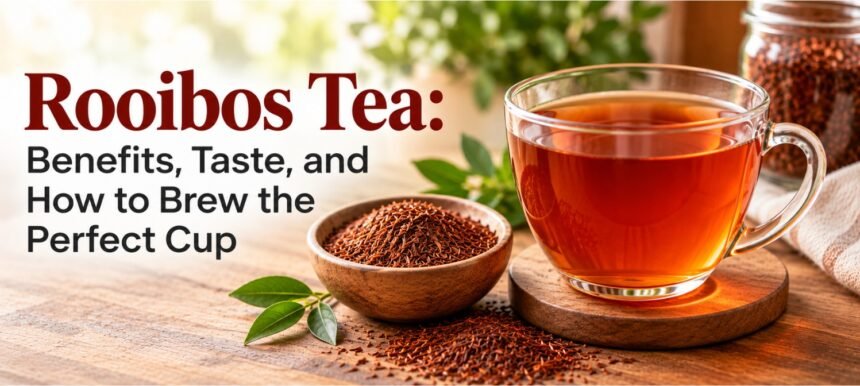

If you love a warm cup of tea in the evening but don’t want caffeine keeping you awake, rooibos tea is worth a try. It’s naturally sweet, deep red in the cup, and gentle on the stomach. It’s also one of the few teas you can drink at 10 p.m. without thinking twice.
In this guide, you’ll learn what rooibos tea is, what it tastes like, which benefits are backed by evidence and which are overhyped, how to brew it properly, and who should be careful with it.
What Is Rooibos Tea?
Rooibos tea is an herbal tea made from the leaves of Aspalathus linearis, a shrub that grows almost exclusively in the Cederberg mountains of South Africa’s Western Cape. The name comes from Afrikaans and means “red bush,” which is why you’ll often see it sold as red bush tea. You can read more about the plant’s background on Wikipedia.
Rooibos isn’t a true tea. Black, green, and white teas all come from the Camellia sinensis plant. Rooibos comes from a completely different shrub, which is why it’s called a tisane or herbal tea. That difference explains its biggest selling point: it has no caffeine at all.
Red Rooibos vs. Green Rooibos
The leaves are harvested, bruised, and left to oxidize in the sun. That process turns them reddish-brown and creates the familiar sweet, woody flavor. Green rooibos skips the oxidation step. It tastes lighter and grassier, and it’s usually a bit more expensive. Most of what you’ll find on supermarket shelves is the red kind.
What Does Rooibos Tea Taste Like?
People often describe it as mellow, slightly sweet, and a little nutty, with notes of honey, caramel, or vanilla. It has none of the bitterness that black tea can develop when it’s over-steeped, so it’s very forgiving.
If you’re used to strong chai, rooibos may taste mild at first. But it works well as a base. It holds up to milk, cinnamon, cardamom, and ginger, which makes it a natural fit if you grew up with spiced milk tea. Many people find it an easy bridge away from heavily caffeinated drinks.
Rooibos Tea Benefits: What the Evidence Actually Says
Search online and you’ll find claims that rooibos tea cures everything from allergies to cancer. The reality is more modest, but there are still good reasons to drink it.
It’s Naturally Caffeine-Free
This is the clearest benefit. If caffeine makes you jittery, raises your heart rate, or disrupts your sleep, a caffeine-free tea is a practical swap. You can drink rooibos in the evening, and it’s a good option for people cutting back on coffee.
It Contains Antioxidants
Rooibos contains plant compounds called polyphenols, including aspalathin and nothofagin, which are rare outside this plant. Lab studies show these compounds have antioxidant activity. Keep in mind that antioxidant activity in a test tube doesn’t automatically translate into proven health outcomes in people.
It May Support Heart and Blood Sugar Health
Some small human studies suggest rooibos may improve certain markers, such as cholesterol levels and blood vessel function. Animal and lab research on blood sugar is also promising. However, these studies are small and short. Treat rooibos as a healthy habit, not a treatment.
It’s Low in Tannins
Rooibos has far fewer tannins than black or green tea. Tannins can interfere with iron absorption and make tea taste bitter or astringent. Because rooibos is low in them, it’s often considered a better choice for people who are watching their iron intake. It’s also less likely to upset a sensitive stomach.
It’s a Hydrating, Zero-Calorie Drink
Plain rooibos has virtually no calories or sugar. If you struggle to drink enough water, a flavorful cup of rooibos can help you stay hydrated without adding anything extra.
How to Brew Rooibos Tea Perfectly
Good rooibos is easy to make. Here’s a simple method:
- Measure: Use about one heaped teaspoon of loose leaf, or one tea bag, per cup (roughly 250 ml).
- Heat the water: Rooibos can handle fully boiling water. Unlike green tea, it won’t turn bitter.
- Steep: Let it sit for 5 to 7 minutes. For a stronger, richer cup, go up to 10.
- Strain and serve: Drink it plain, or add milk, honey, or a squeeze of lemon.
Rooibos Latte and Iced Rooibos Tea
For a rooibos latte, brew a double-strength cup and top it with steamed milk and a little honey or vanilla. For iced rooibos tea, brew it strong, let it cool, and pour it over ice with orange slices or mint. It stays smooth even when chilled and doesn’t turn cloudy or bitter the way some black teas do.
Tips for Better Flavor
- Use a lid while steeping to keep the aroma in.
- Try a stick of cinnamon or a few slices of fresh ginger for a spiced version.
- Store your leaves in an airtight container away from light and moisture.
Are There Any Rooibos Tea Side Effects?
For most people, rooibos tea is very safe. Still, a few cautions apply:
- Allergies: Rarely, people react to rooibos. Stop drinking it if you notice itching, hives, or swelling.
- Medications: If you take medication, especially for liver conditions, ask your doctor first. A few isolated case reports have linked heavy rooibos intake to liver issues, though the evidence is very limited.
- Pregnancy and breastfeeding: Rooibos is generally considered safe in normal amounts because it’s caffeine-free, but it’s sensible to check with your doctor or midwife.
Moderation matters. Three to four cups a day is a common amount in studies and everyday use.
How to Choose Good Rooibos Tea
Quality varies a lot. When you shop, look for:
- Loose leaf or whole-leaf bags: These tend to taste smoother than dusty, fine-cut bags.
- A clear origin: Reputable brands state that the tea comes from South Africa.
- Organic or fair-trade labels: These can signal better growing and sourcing practices.
- No unnecessary additives: Flavored blends can be lovely, but check that sweeteners and artificial flavors aren’t covering up low-grade leaf.
If you’re new to it, start with a plain red rooibos before moving on to flavored blends like vanilla, orange, or chai-spiced versions.
Frequently Asked Questions About Rooibos Tea
Does rooibos tea have caffeine?
No. Rooibos tea is naturally caffeine-free because it doesn’t come from the tea plant (Camellia sinensis). That makes it a good choice for evenings.
Is rooibos tea good for you?
Yes, as part of a balanced routine. It provides antioxidants, has no calories when served plain, and is gentle on digestion. It isn’t a cure for any condition, and many of the studies behind the stronger claims are small.
What is rooibos tea good for?
People drink it mainly as a caffeine-free alternative to black tea or coffee, as a soothing bedtime drink, and as a low-tannin option for sensitive stomachs.
Can you drink rooibos tea every day?
For most healthy adults, yes. A few cups daily is generally considered fine. If you have a medical condition or take regular medication, talk to your doctor.
Does rooibos tea taste like regular tea?
Not really. It’s smoother, sweeter, and less bitter than black tea, with a nutty, honey-like character.
Final Thoughts: Is Rooibos Tea Right for You?
Rooibos tea is an easy, comforting drink. It’s caffeine-free, naturally sweet, hard to over-brew, and flexible enough for hot cups, iced pitchers, and lattes. The health benefits are real but modest, so enjoy it for the taste and the calm it brings to your day, with the antioxidants as a bonus.
Ready to try it? Pick up a small pack of plain red rooibos, steep it for six minutes, and see how it fits your routine. If you already drink it, share your favorite way to prepare it in the comments below.