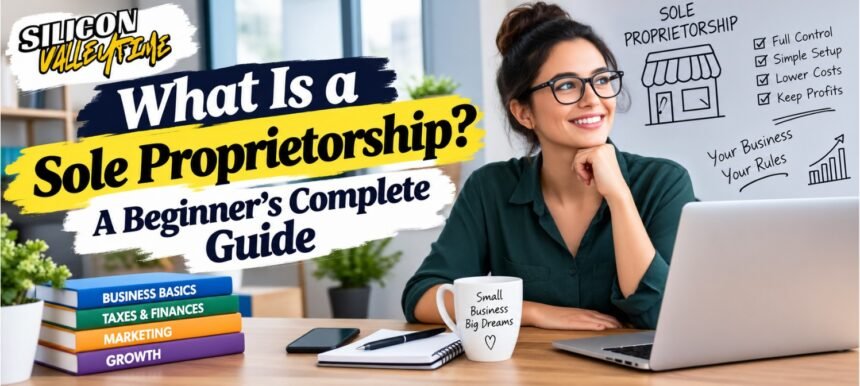

Starting a business does not always require a large team, office, or complex company structure. For many freelancers, shop owners, consultants, and independent professionals, a sole proprietorship can be one of the simplest ways to operate a business.
But what exactly is a sole proprietorship, how does it work, and what should a new business owner know before choosing this structure? This guide explains the basics, benefits, risks, setup process, taxes, and common questions in simple terms.
What Is a Sole Proprietorship?
A sole proprietorship is a business owned and operated by one person. The owner and the business are generally treated as the same legal entity, meaning the owner receives the business income and is also responsible for its debts and obligations.
It is a common business structure for people who want to start small without creating a separate corporation or limited liability company.
For example, imagine Sara starts a freelance graphic design business by herself. She finds clients, creates designs, receives payments, and manages expenses. If she operates the business as a sole proprietorship, she is the sole owner and makes the business decisions.
A sole proprietorship is often attractive because it can be simple to start, easy to manage, and relatively inexpensive. However, its biggest drawback is that the owner may have personal responsibility for business debts and liabilities.
Quick definition: A sole proprietorship is a business structure in which one individual owns and controls the business, receives its profits, and is generally personally responsible for its business obligations.
For additional background, readers can also explore the Wikipedia entry on sole proprietorship.
Why Is a Sole Proprietorship Important?
Choosing a business structure affects how a business is managed, taxed, registered, and protected. A sole proprietorship matters because it gives one person direct control over the business.
For a beginner, this can make business ownership easier to understand.
Some common reasons people consider this structure include:
- Simple ownership: One person owns the business.
- Direct control: The owner usually makes the main decisions.
- Easy management: There are fewer formal management requirements than with many larger business structures.
- Direct access to profits: Business profits generally belong to the owner.
- Lower startup complexity: Depending on local laws, formation can be relatively straightforward.
However, rules differ by country and state. Registration, licensing, taxation, and reporting requirements should always be checked with the relevant government authority.
Key Features of a Sole Proprietorship
Before choosing this structure, it helps to understand its main characteristics.
1. One Owner
The defining feature is that there is one individual owner. Unlike a partnership, there are no co-owners sharing ownership of the business.
2. Full Management Control
The owner normally controls daily operations, pricing, suppliers, marketing, hiring, and other business decisions.
This can be useful for entrepreneurs who prefer to make decisions without consulting business partners.
3. Business Profits Go to the Owner
The owner generally receives the profits generated by the business after allowable expenses and applicable taxes.
There is no separate group of shareholders dividing the profits.
4. Personal Liability Can Be a Major Risk
One of the most important issues is liability.
Because a sole proprietorship generally does not create a separate legal entity from its owner, business debts can potentially become the owner’s personal responsibility.
For example, if a business cannot pay a legitimate debt, the owner’s personal assets may be exposed depending on local law and the circumstances.
5. Simple Tax Structure
In many jurisdictions, sole proprietors report business income through their personal tax system rather than filing taxes as a completely separate corporate taxpayer.
The exact treatment varies by location, income level, and business activity.
Benefits of a Sole Proprietorship
A sole proprietorship can offer several advantages, particularly for small or newly established businesses.
Easy to Start
Compared with more complex business structures, a sole proprietorship may require less paperwork and fewer formalities.
However, the owner may still need business licenses, permits, tax registration, or other approvals.
Low Startup Costs
There may be fewer formation expenses because the owner does not necessarily need to establish a separate corporation.
The actual cost depends on the location and type of business.
Complete Control
The owner has direct authority over business decisions. This can make it easier to respond quickly to customers and market changes.
Simple Business Management
There are usually fewer ownership and governance requirements than those associated with corporations.
This makes the structure appealing to freelancers and small business owners who want to focus on serving customers rather than managing complex corporate procedures.
Direct Connection With Customers
For independent professionals, a sole proprietorship can work well because the business is often closely connected to the owner’s personal skills and reputation.
Disadvantages and Risks
A sole proprietorship is not suitable for every situation. Its simplicity comes with important limitations.
Unlimited Personal Liability
This is the biggest concern for many business owners.
If the business has certain debts or legal obligations, the owner may be personally responsible. The level of protection depends on applicable law and circumstances.
Limited Access to Investment
Because there is only one owner, raising money by selling ownership interests is generally more difficult than it can be for some incorporated businesses.
Business Continuity
The business may be closely tied to the owner. If the owner stops operating, the business may also stop unless it is transferred or reorganized.
Growth Can Become More Complicated
A sole proprietorship can work well for a small operation, but owners planning to hire employees, attract investors, take on significant debt, or expand substantially may eventually consider another structure.
How to Start a Sole Proprietorship
The exact process depends on where you live and what type of business you operate. A general process looks like this:
Step 1: Choose a Business Idea
Identify what you will sell and who your customers will be.
Examples include:
- Freelance writing
- Graphic design
- Photography
- Consulting
- Online retail
- Home-based services
- Tutoring
Step 2: Choose a Business Name
You may operate under your personal name or choose a business name.
If you use a name other than your legal name, local rules may require you to register it.
Step 3: Check Registration Requirements
Contact the appropriate government authority to determine whether you need:
- Business registration
- A tax identification number
- Local permits
- Professional licenses
- Sales tax registration
Step 4: Separate Business and Personal Finances
Even when the law does not require a separate business bank account, keeping business transactions organized can make accounting and tax preparation much easier.
Step 5: Track Income and Expenses
Keep accurate records of sales, invoices, receipts, operating costs, and other financial information.
Good recordkeeping can help you understand whether the business is actually making money.
Step 6: Understand Your Tax Obligations
Learn which taxes apply to your business and when payments or filings are due.
Because tax rules differ significantly between jurisdictions, consider consulting a qualified tax professional for advice specific to your situation.
Sole Proprietorship vs. LLC
A common question is whether a sole proprietorship or LLC is better.
They are different structures, and the right choice depends on factors such as liability, taxes, costs, administration, and future business plans.
| Feature | Sole Proprietorship | LLC |
|---|---|---|
| Owners | Generally one | One or more |
| Setup | Often simpler | Usually requires formal formation |
| Control | Direct owner control | Managed according to LLC structure |
| Liability protection | Generally limited | Often provides liability protection |
| Administration | Usually simpler | Usually more formal |
| Tax treatment | Varies by jurisdiction | Varies by jurisdiction |
An LLC may provide liability protection that a sole proprietorship generally does not, but it can involve additional costs and compliance requirements.
Who Should Consider a Sole Proprietorship?
This structure may be worth considering for someone who:
- Is starting a small business alone
- Wants a simple business structure
- Has relatively low startup costs
- Wants direct control
- Is testing a business idea
- Works as an independent professional or freelancer
However, businesses with significant liability exposure or plans for rapid expansion may need to examine other structures carefully.
FAQs About Sole Proprietorship
What is the main advantage of a sole proprietorship?
The main advantage is simplicity. One person owns and controls the business, and the structure can have fewer formation and administrative requirements than more complex business entities.
What is the biggest disadvantage of a sole proprietorship?
The major disadvantage is potential personal liability. Because the business and owner are generally not separate legal entities, the owner may be personally responsible for certain business debts and obligations.
Can one person own a sole proprietorship?
Yes. A sole proprietorship is specifically designed around one individual owner.
Do sole proprietors pay taxes?
Yes. Business owners generally have tax obligations on their business income. The exact filing method, deductions, and applicable taxes depend on the owner’s location and circumstances.
Is a sole proprietorship good for a small business?
It can be useful for certain small businesses, especially those operated by one person with relatively straightforward operations. However, owners should consider liability, taxes, licensing, and future growth before choosing it.
Can a sole proprietor hire employees?
In many jurisdictions, a sole proprietor can hire employees. However, doing so can create additional payroll, tax, employment, and reporting responsibilities.
Can a sole proprietorship become an LLC?
In many jurisdictions, a business owner can change from a sole proprietorship to an LLC or another business structure. The exact procedure depends on local laws and the owner’s circumstances.
Conclusion
A sole proprietorship can be a straightforward way for one person to start and operate a business. It offers direct control, relatively simple administration, and a clear connection between the owner and business.
At the same time, personal liability is an important consideration. Before starting, entrepreneurs should research local registration rules, licenses, taxes, insurance, and other legal requirements.
If your business is small and you are operating alone, learning how a sole proprietorship works can be a useful first step. As the business grows, you can then review whether another legal structure better fits your goals.